Thank God It’s Monday 13

In 1935, e.e. cummings self-published a book of poetry. Because 14 publishers had said no thanks, he called the book No Thanks and dedicated it to the 14 of them:

cummings, who was very concerned about how his poems were displayed on the page,  produced this image on a typewriter. I know how to do that. You count the letters and spaces in a line, divide by two, and backspace backspace backspace from the center of the paper. It helps to only use lines that contain an odd number of letters.

There’s a lingering bitterness in what cummings did. Bitterness is useless. I get aggravated but I try not to be bitter. The 47 editors who rejected the story I wrote about in yesterday’s post might have done so because it wasn’t the sort of thing they publish. It was too long. It was too short. It was too Jewish. It was not enough Baptist. They had already read three similar stories. They were dealing that day with an audit, a toothache, or a bad love deal. Maybe they just didn’t like it. Whatever the reason, there’s nothing I can do about it…except copy e.e. cummings!

If at first you don’t succeed, try, try again. Then give up.

I just published a story called “Waiting for Mishy” in a magazine called Uncharted. I mention this for two reasons. First, I’m thrilled! Second, I want to briefly tell you the story of this story.

I started writing it in 2022. I finished it in 2023. I sold it in January of 2026. Uncharted posted it last week. By literary standards, that is faster than a speeding bullet.

And in the three years I spent trying to find a home for “Waiting for Mishy,” it was rejected 47 times.

Obviously, there are three things you need as a writer:

  1. A place and time to write.
  2. Persistence.
  3. An armor-plated psyche.
  4. When I first started writing, this list included typewriter ribbons.

You can do your life’s work in 30 minutes a day. You can do it in 15. You can write in a room of your own, at your kitchen table, at a coffee shop, in a library, or, like one writer I knew, in the back of a car.

You can write for a few years and then give up because everything is moving at about the same speed as a cat sleeping in a sunbeam. You can give up because you fear the rejection the way you fear the Reaper. Or you could follow Robert A. Heinlein’s fifth rule of writing: You must keep what you write on the market until it is sold.

[Note to the ghost of Heinlein: In 2021, I sold a story called “Schmitt Takes the Night Off” to The Buckman Journal (it’s behind a paywall) (not a problem for you, since you’re a ghost) that was rejected 69 times over 11 years.]

Rejection, I must remind you, is the river in which we swim. “You will write many more failures than successes,” Richard Bausch said. “You never ask yourself anything beyond, ‘Did I work today?’ ”

Or, as Jeff Lieber put it, “Write every day about something you give a shit about.”

Be patient.

How do you keep readers reading?

Brandon Sanderson is an insanely popular author who gives talks on writing. You can find them on YouTube, the home of all contemporary learning. Although I am unlikely to read any of his books, the important thing to me is that Sanderson has a knack for punchy summaries of how fiction works.

In one of his talks, he said that the characters people love and want to follow generally share three characteristics:

  • They are proactive.
  • They are capable.
  • They are relatable.

But not equally so. A protagonist, in Sanderson’s view, is good at one, so-so at a second, not good at a third. Mr. or Ms. Protagonist might even believe he or she is good at something when, in truth, they suck the phone.

I’m not sure I buy this, but it’s as good a place as any to start a discussion. I have two examples, one for, one against. Let’s see how they stack up.

Fails the Sanderson test: Aragorn, the heir of Isildur.

Proactive: Are you joking? Aragorn, when The Fellowship of the Ring opens, is not a king, he’s a Ranger. His only job responsibilities are smoking a pipe and hanging in pubs. When he’s finally kicked into motion, he can’t even find a clean shirt or a barber.

Capable: Yes. He’s the greatest fighter of the Third Age of Middle-Earth, capable of defeating orcs, ghosts, witch kings, Uruk-hai, octopi, and various other beasties.

Relatable: No again. The man is not only handsome, he’s invincible and irresistible. If he wanted to, he could have not one but two girlfriends: Arwen, and, as a back-up singer, Éowyn. The man who is wary of commitments will always attract the women who want one.

Aces the Sanderson test: Me!

Proactive: Yes. I’m a chess player. I wanted to get better at chess, so I studied with a chess master.

Capable: After two sessions my teacher told me, “You have no shortage of ideas, all of them bad.”

Relatable: I am admitting this.

So would I make a better protagonist than Aragorn? Despite my good looks and my boyish mop of hair, the answer is no. Tolkien humanized Aragorn by surrounding him with a team of dimwits, wannabes, and party animals. (Except for Legolas, Aragorn’s sexless, elven shadow. Why not one of the half-wild, funky elves who join the humans for the Battle of Helms Deep? Those elves rocked.)

If I were your protagonist, you’d have to go the other way and surround me with a team of people who know what they’re doing. For example, my wife and our dogs. I don’t know how many people would read such a book. I know my wife would refuse to be in it.

I mention this because I have begun the revision of the first draft of my novel. My first task is to do something about my hero. Critics from the American Federation of Protagonists have described him as “insufficiently involving,” “an emotional mystery,” and “what the heck was he thinking?”

While I was writing the first draft, this thought from Jane Smiley pulled me through:

“Every first draft is perfect because all the first draft has to do is exist. It’s perfect in its existence. The only way it could be imperfect would be to NOT exist.”

Now that I’m working on the revision, I am holding to these words from Judy Blume:

“I’m a rewriter. If I died during a first draft, nobody would know what I was trying to do, including me. I’m learning with my first draft.”

Remember: The rewriting is the fun part. As Crash Davis tells Nuke LaLoosh in Bull Durham, “Let’s have some fun out here! This game’s fun, OK? Fun goddammit!”

What grasshoppers have to do with fame

Louisa May Alcott’s Little Women marches on. The story of Meg, Jo, Beth, and Amy has not been out of print since it was published in 1868 and no one can get enough of it, even though Laurie married the shallow sister, Amy, rather than the exciting and weird one, Jo. Laurie was not the first man to be hypnotized by a great pair of legs.

Alcott lived for another 20 years. Little Women’s instant success transformed her from a scrabbling, scribbling freelance writer who had to support her family and her parents into a writer who never had to worry about money again. She still had a publisher, though, and, like all publishers, they demanded a sequel: Little Men, which appeared in 1871. Little Men was my introduction to the March family. I found this treasure in the attic of my grandparents’ house, left behind by one of my aunts (five sisters with their own book club). Being a kid in 1871 was not like being a kid a century later, and yet the story immediately engulfed me.

[Heretical intrusion: Little Men aims lower than Little Women and it’s never going to gather a fan club, but it’s a better piece of writing overall. Nobody in Little Men spends a hundred pages swanning around Europe, falling in and out love with idiots.]

In 1886, Alcott’s publisher prevailed on her to write a third book. She didn’t want to. She never set out to write a trilogy, and she was sick of these people, particularly Amy and Laurie. The result, Jo’s Boys, is what critics thoughtfully term “dreadful.” I read it in 2004 because I had given myself a reading theme of 19th-century American novels. I read all three books. I’m glad I didn’t start with Jo’s Boys because reading that one killed my theme. I rinsed my brain with someone’s memoir of their sex life.

“It is a strong temptation to the weary historian,” Alcott writes in Jo’s Boys, “to close the present tale with an earthquake which should engulf Plumfield and its environs so deeply in the bowels of the earth that no youthful Schliemann could ever find a vestige of it.”

After a brief rundown of how everyone turned out, Alcott concludes:

“And now, having endeavoured to suit everyone by many weddings, few deaths, and as much prosperity as the eternal fitness of things will permit, let the music stop, the lights die out, and the curtain fall for ever on the March family.”

Even in a doorstop like Jo’s Boys, Alcott’s talent is evident in three consecutive chapters, “Emil’s Thanksgiving,” “Dan’s Christmas,” and “Nat’s New Year,” in which she easily and convincingly handles a murder, German high society, and a shipwreck. What all those situations are doing in the same book is another issue.

A star is born, and she’s not happy about it

I’m writing about Jo’s Boys because of an early chapter, “Jo’s Last Scrape,” in which the author shows us what life was like for Jo Bhaer, the celebrity, in 1886—Jo of course being a stand-in for Louisa May Alcott. Her fans adored her. They sought her autograph, her advice, her money, her attention, her heart. “Strangers demanded to look at her, question, advise, warn, congratulate, and drive her out of her wits by well-meant but very wearisome attentions.”

Jo, trying to write, was beseiged in her own home, and it didn’t help that her kind-hearted but dimwitted family let these people in. She hid behind curtains, disguised herself as the maid, climbed out the window. Her own husband, Professor Bhaer, the most useless man in the literature of this country, brought home a troop of 75 young men from the YMCA in the middle of a rainstorm and they had to be entertained, too, because this was 1886 and good manners prevailed. (This being 1886, when the rain stopped, the young men gathered in front of the house and sang a song of farewell.)

If you’ve ever wondered why the McLean House, where Robert E. Lee surrendered to Ulysses S. Grant, is a reproduction, it’s because the souvenir-mad soldiers of both armies ripped the place apart after the surrender was signed.

I don’t ever expect to find super fans collecting sticks or grasshoppers from my yard or asking for an old scrap of my underwear they can weave into a quilt or a rug or reporters spinning fabrications from whatever bit of my life they spy through a half-open door. (All of which happened to Alcott.) I don’t have to disguise myself as the maid we don’t have or jump out a window and land on something in the garden that I’ll hear about later. But these pages from Jo’s Boys are a reminder that a good writer can make a good story from almost anything, and make me laugh 140 years later.

Stop chasing that muse. She’s too fast for you.

Like everyone who drives a car fueled by gasoline, I just topped off my tank and paid more per gallon than I have ever paid in my life.

Will the price I just paid look like a bargain by the end of the summer?

By the end of the summer, will the government force us to pay for gas using crypto?

I miss life when crypto was a dog.

We could all use some inspiration right now. To help myself and other writers, I’ve gone looking for words of encouragement from people who aren’t writers. Borrow from the best!

First up is the mistress of mail art, Melissa Hughes, who works with rubber stamps:

People often tell me they are waiting for inspiration or worse waiting for a “good idea,” as opposed to just an idea that maybe could be made good if it was allowed to be born, but we try to edit in the thinking stage and all that does is shut one down. I used to wait for inspiration, but that is kind of like waiting until it rains to get water to drink.

Don Carr, who died in 1993 and left us with his dreams, was a master of rubber stamps and colored pencils. Don was not afraid of showing up at his desk, grabbing his tools, and going for it. Go in the wrong direction? So what? “The mistake is sometimes more interesting than the intended impression,” he once said.

Babe Ruth would’ve known what Don meant. The Babe believed that every swing and a miss brought him closer to his next homerun.

The fear of error

This brings us to the late Chuck Yungkurth, an engineer by trade and a lover of trains, who wrote an essay with that title for Model Railroader in January 1978. Yungkurth had noticed something he couldn’t understand at his model train club: Armchair modelers. These men claimed they were enjoying the hobby in their own way:

I am skeptical. The stacks of kits and equipment are bound to be depressing. The number of times these would-be modelers turn up disposing everything at the annual auctions in our club leads me to believe that is the ultimate end for these people. The solution is to plan and theorize to a point—and then start construction.

But what if you screw up? Guess what, you will screw up. Babe Ruth knew that strikes are just part of the game. “Model railroading is a hands-on, learn-by-doing business,” Yungkurth wrote. “All really fine modelers can tell horror stories of early blunders…yet all consider these part of the learning process.”

I have to include one writer in this post, so I’m cuing up Garrison Keillor. According to our man Yungkurth, “there are almost no errors or mistakes that cannot be rectified, nor are there any real penalties for failure.” Keillor agrees: “Be bold, thrust forward, and have the courage to fail. After all, it’s only writing. Nobody is going to die for our mistakes or even lose their teeth.”

“Do something—do anything—and don’t be afraid of making mistakes,” Yungkurth wrote. Stop waiting for inspiration, my friend Melissa says. Mistakes might be interesting, and they’ll certainly teach you something, Don Carr knew.

The only secret: Show up at your desk.

  • Fifteen minutes a day.
  • Two hours a day, two days a week.
  • Early every morning or late every night.
  • “Daily writing and one day off”: One of my teachers, Merridawn Duckler.

There’s a schedule that will work for you. You’ll know it when you find it.

Chuck Yungkurth: “Better small than not at all.” This is Tango’s interpretation of me revising my novel. I type; she chews.

Conan, you nut

I thought “geography is destiny” was a quote from an ancient and revered book, such as The Prince, The Art of War, or the Tibetan Book of the Dead. I was surprised to search for its source and discover an Ethopian-American writer named Abraham Verghese who is very much alive and writing.

Do the Tibetans read any fun books?

I bring this up because my editor and my wife have both said that my book lacks specificity. Meaning, why did I make everything up? Where are we really? What state is this?

There are several stories about Robert Louis Stevenson’s inspiration for Treasure Island. Here’s the one I prefer. RLS was painting the walls of a bedroom with his stepson when he was caught by the shape of one of his paintbrush doodles. He expanded it and reshaped it and it looked to him like the map of an unknown land. Next thing you know, we’ve got the books and the movies and one-legged buccaneers with parrots and everyone declaiming “Arrr” and speaking like a Welshman.

Deborah and I have painted many rooms and we’ve done plenty of doodling, including the time we were painting a basement when we realized, wait a second, this is a basement, who cares, and we stopped taping things off and we started rolling into and out of corners and racing around and right over unlucky spiders.

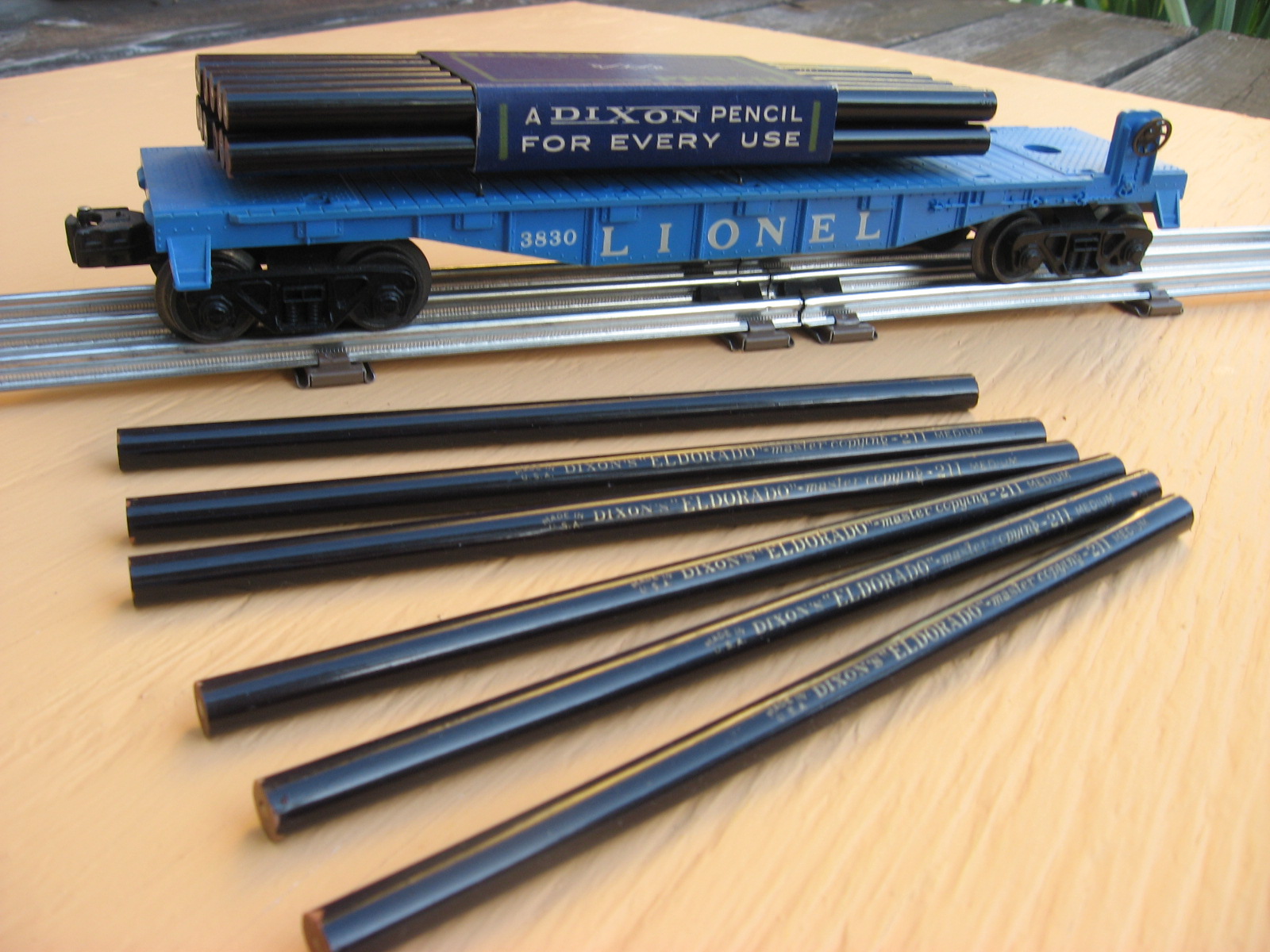
But that’s not where my book began. My book began on my sixth birthday when my father and my Uncle Morry gave me an Lionel electric train set. That was the first step. The second might’ve been right here:

This is a map of the Hyborian Age, invented by Robert E. Howard. It was accompanied by an essay on the civilizations of that time and I found it in the front of a Conan book I read when I was 12.

I soon gave up on Conan, as the formula was too predictable and there were so many writers listed on these things that they felt like a committee or a football club. I’m fairly sure I read Conan the Freebooter and probably Conan the Bootscooter. Howard’s writing was serviceable, certainly on a par with Andre Norton, though I note that Ms. Norton wrote her own books and didn’t require the 14 relief pitchers listed in Conan’s Wikipedia entry. But I never gave up on that map (and that essay).

My point is that, no matter how old you grow, you will never outrun your childhood.

My book is set, not in Hyperborea, Earthsea, or Middle Earth, but in the mythical kingdom of Colorado.

Plot twist!

My first blog started at a Lady Gaga concert in 2009 and deteriorated from there. Eventually I started this blog so I could write about writing, which is the one thing I know a lot about and probably more interesting to people than a blog about picking up after your dog.

In 2013, I participated in the Clarion West Write-a-thon, which I could safely do from the basement of my home when I wasn’t at work, at the park, at the supermarket, trying to maintain a relationship with my wife, etc. My goal for that six-week ultra-marathon was to write 50,000 words. As we neared the end, I opined that this goal might have been “a wee bit optimistic” while trying and failing to kick the nearest dog.

“I do wish I wrote fiction faster, but I don’t,” I admitted in a post dated 23 July 2013. “Marketing writing—that I can do fast. Advertising, editorials, web copy—I’m a speed merchant. These blog posts? Warp factor 6! But when I have to invent characters and situations and see how they play out, I move one. step. at. a. time. Sort of like the way the first primitive Mariners played baseball.”

But I did find that, as with anything you practice, the more you write, the more you will write, and the more you will think about what you’re writing. “There’s a kind of tautness that you should feel within yourself no matter how slow or fast you’re spinning out the reel,” John Updike said.

All day long that summer, and sometimes in the dawn before the alarm exploded, something in the back of my brain was working. I could quote Pink Floyd here (“There’s someone in my head/but it’s not me”), but every practicing writer reports what I reported then: “Objects and actions bubble to the surface, things I can use on a page I’ve already written or one I have yet to write, like a bird finding the right-shaped stick for its nest.”

Yet another reason why employment is bad for you

My years-long training in writing marketing and communications copy made me fast, but it also made me impatient. Know what we think about in Marcom? Tomorrow. Know what we don’t think about in Marcom? Yesterday. I wrote the first draft of a novel. Now you’re saying I have to go back to it? What about the next thing! The newest! The greatest! What about all these leftovers and scraps and ideas I’ve been working on since December?

And so with some difficulty I have returned to the manuscript, which feels as if it spent the winter in the same orbit as Pluto, and to the feedback I have received from three insightful people. The re-entry process is not immediately appealing, but I know what it is, and it’s simple:

Show up.

Return to your pages every day, preferably at the same time every day. Your fingers will unfreeze. The words will arrive. The tautness and the bubbling will return (sorry, I’ve tried on both metaphors and I can’t decide which one to take home). You’ll remember that revision is the fun part. And whatever objects and actions pop up in my brain in the dawn hours, you can be sure I’ll welcome them, right before I grab the alarm clock and throw it across the room.

White punks on dope

This weekend I’m tending to the sick (impaired mobility) and rewriting a story that never went anywhere (impaired narrative). When you’re not on top of your game, life is about as workable as stale Play-Doh. So I’m taking a break to flame a big fat piggy target. No, not Donald Trump, Pam “Smooth Operator” Bondi, or the alarming idea that people might actually want to vote. I refer to the plight of the white male writer as described by Jacob Savage in “It’s Hard Out There for White Male Writers” in Compact, March 21, 2025.

“Over the course of the 2010s, the literary pipeline for white men was effectively shut down,” Savage claims. Normally, I wouldn’t bother with this self-righteous effluvium, but Savage was quoted by columnist Ross Douthat in our paper of record, The New York Times, so I say let’s grab this fucker by the pussy.

(Note: E-ffluvium sounds like my dotcom, where I was going to become a millionaire. However, the first recorded instance in English of effluvium, in the sense of an emanation or a release of something toxic, was in 1651. A shame that William Shakespeare died in 1616. Bill would’ve given effluvium to either Dogberry or Falstaff and he would’ve thought up a hilarious 17th-century rhyme that we’d still be writing papers about today. What that man couldn’t do with six flights of stairs and a runaway harpsichord!)

“White male millennials, caught between the privileges of their youths and the tragicomedies of their professional and personal lives, understand intrinsically that they are stranded on the wrong side of history—that there are no Good White Men,” Savage whines, and in way too many words. Unfortunately for Mr. Savage, his essay appeared a couple of weeks before White Male Millennial Andrew Martin, author of two novels and a short story collection, published a story in The New Yorker.

As I understand it, The New Yorker is the Great White Whale for writers. It certainly is for me. Perhaps the Great White Male Writer still has some lead left in his pencil.

Thus Savage (who, among other things, proves that he knows next to nothing about science fiction, which he calls “a deep authorial remove from the real world”) joins the ranks of white male writers who yearn to be free of some unnamed, unidentified oppression. James Patterson, who has sold more books than anyone since King James and who is about as white and male as a white male can get this side of Mickey Spillane, complained about the same amorphous shit in 2022, a year when only a sad sliver of all books were written by white males: a microscopic 75%.

I’m sure this Tenth Avenue freeze-out was news to three of Patterson’s white male contemporaries, Andy Weir, Chuck Pahlaniuk, and Stephen King, all of whom seem to be coping just fine with the current literary environment despite whatever it is that’s trying to diminish them or cancel them or kidnap them and fly them to a distant planet for nefarious purposes that somehow involve breeding.

Has literature changed radically since Patterson’s privileged bitching in 2022 and Savage’s in 2025? My unscientific research says Yes! Since my last name begins with a B, I looked at the letter B in the list of Knopf Doubleday’s authors. I also threw in a few writers at the end of A and the beginning of C, because reading these things was like eating potato chips. There are 235 of these creatures, and judging by their first names and photos, 135 are white guys. That’s only 57%. Avengers assemble!

And this fortress of white male fortitude is even smaller than it looks because some of the white males on the Knopf list are dead: Richard Adams, Harold Bloom. Some of them are really dead: James M. Cain. Two of them were photographed with their dogs, two wore stupid hats, and one was Bono. Plus Nicholson Baker looks exactly like Frank Herbert and George R.R. Martin. Join us next time for: More white guys.

White males once ruled publishing. They wrote most of the published books, because they were Ernest Hemingway but also because most of the editors were white males. We have many people writing and publishing books today who are not white and not male. If this diverse atmosphere is too competitive for you, perhaps you should try another line of work, like high desert nudist or sub-inspector of nuisances. Or maybe you should work harder and write better? That’s what I’ve always assumed my rejections meant. Just a thought.

Spoilers: I’m white, I’m male, I’m good (or good enough), and I didn’t become a millionaire.

The sun climbs high in the garbage pail sky

In the United States, we are living through the most sustained stretch of violence since 1968, when the North Vietnamese launched the Tet Offensive and blacks rioted in American cities because they wanted their fair share of the American Dream. I was young and I didn’t understand. Stop, children, what’s that sound? Everybody look what’s going down. Now I’m older and I still don’t understand. Why is my country at war with my country? How long will it take to repair all this damage, from Minneapolis to the rest of the world? Longer than my lifetime, and just to warn you, everyone in my family lives to a hundred.

Life is certainly upsetting, and as a small example of my mindset these days, I offer my recent trip to the emergency room. I drove myself, but before jumping in the car I pulled Dark Side of the Moon off the shelf, popped it into the CD slot, and as I backed out of the garage I turned the volume to 11. If I was going to die, I wanted to make sure that Floyd would be the last thing I heard.

(Spoiler alert: I’m fine.)

As Donald Trump continues to transform the United States into a garbage pail (lyrics courtesy of Beck), here in my little corner I find it difficult to write a blog about writing. Who cares what I think? But I keep reminding myself that even in Wold War II, the greatest catastrophe to hit humanity, people wrote books. They sang songs, they recorded music, they acted in plays, they directed movies. They bought tickets to baseball games. There were chess tournaments in Germany and Russia despite the ongoing slaughter of millions by air, land, and sea. I’m still writing. I hope you are, too.

It’s a challenge to end on a positive note. The true positive note will come when we rid ourselves of this soul-suckin’ jerk (again, Beck). But I’ll try.

In December, while waiting for the first draft of my novel to cool on the windowsill so I could carve it up for the second draft, I launched my Word Purge. As I examined all the flotsam and jetsam I had created and abandoned, I found a 900-word fragment about a retired baseball player and his dead mother, wife, and dog. As I read, I realized that this man was recording a podcast and that his house was full of history but not life and the story took off. I found his father. I found his agent. I found his post-baseball career. I found his quest. I now have 7,500 words and a glimmer of where it’s all going.

Where the United States is going is another question. When I listen to Beck, sometimes I think he’s a god and sometimes I think he’s a goober, and sometimes I think both in the same song. His album Mellow Gold captures the times we’re coping with today. Not bad for a record he waxed 30 years ago, when the only music formats were vinyl, cassettes, and CDs, when we didn’t have mobile phones, and when Republicans thought Bill Clinton was a threat to democracy because he cheated on his wife just like they cheated on theirs.

Alex Pretti, murdered by agents of the U.S. Border Patrol, Minneapolis, 24 January 2026. Rest in power.

Greetings from a man who is not stuck in a Birmingham jail

Hello to all my readers. I know you are rockin’ all over the world. Shout-outs to members of the Greenland Defense Force. (Bundle up!) Also to the kind Royal Canadian Navy sailors who showed me around their frigate when they visited Portland, Oregon, for Fleet Week. (When I asked how fast this thing could go, one of them said, “We can get a real rooster tail going!”) And I can’t forget the soldiers, sailors, and airmen of NATO, since I will soon be at war with them. Watch out, NATO, I have most of my hair and I can do as many as one (1) chin-ups.

Here in the United States we are celebrating Martin Luther King, Jr., Day. There is no mail service. The banks are closed. And our homeland has been invaded by our own Homeland Security.

Donald Trump’s attempt to refight the American Civil War doesn’t seem like a good time for the trivia I deal out in this blog: Observations on writing, reports on birthday parties and New Year’s Eve outings, and photos of my corgis, one of whom is relaxed and asleep under my desk. I know this because a few minutes ago, Lucky reached his relaxation release point. Like the Greenland Defense Force, I am ready for noxious odors from bad actors. I lit my emergency three-wick candle. Flame on!

I can only hope that what I write in here gives you a break from what is going on out there.

On Sunday I will present the 8 Disadvantages About Writing and the 1 Reason You Should Ignore Them, as enumerated in Alice Mattison’s The Kite and the String. I’ll also bring you up to date on my book and my Word Purge.

On Monday I’ll introduce a new art feature, because I spent 45 minutes today with Jeff Goins’ Real Artists Don’t Starve and he says I should expand my portfolio. His examples include Michaelangelo, Dr. Dre, and John Lasseter, the director of Toy Story. (Right. I am just like them!) Then I’ll stick to that Sunday and Monday schedule.

Stay safe, everyone. Pray for peace. Donald Trump: Don’t disturb NATO. As your eloquent SecDef phrased it, fuck around and find out.

Optimized for Arctic warfare.