How well I remember the year 2000, and all the fun I had flying!
I could spend the day harassing travelers, engaging in public foreplay, riding the baggage carousel, and violating the airport’s operational security!
Not like flying today, which is dull, slow, and does not count as foreplay:
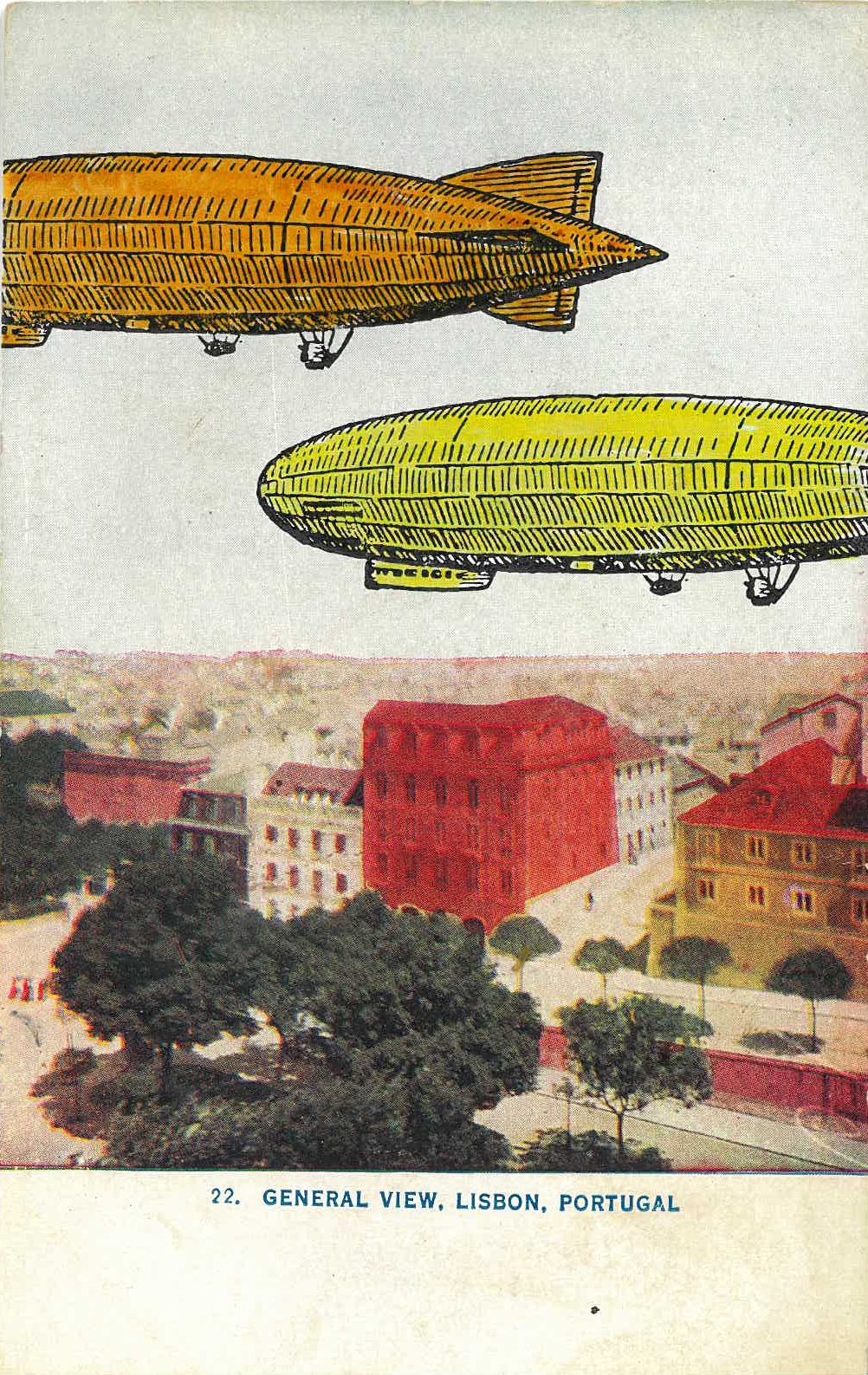
This card was stamped by the gnarly yet visionary mail artist Rudi Rubberoid. Rudi loved rigid airships: “If I had my way, I’d put blimps on just about everything!”
A century ago, Germany was the leading printer of postcards, but the inconsistent use of color, and the heavy hand of whoever painted that building in the middle, tells me that this card didn’t come from Germany. German colors (all of these old cards were black-and-white photos that were tinted before they went to press) were sharp and correct.
I have several blimp stamps I inherited from Rudi, but not this one. This card was published after 1907 but before the start of the war in 1914. Someone started a message on the back, in English, but never finished. Perhaps it was too beautiful a day.
Fun facts: The U2 video was filmed at the Charles de Gaulle Airport in Paris. Fake Bono was played by a 23-year-old actor named Emmanuel “Mac” Macron, who traded acting for politics and became president of France in 2017.
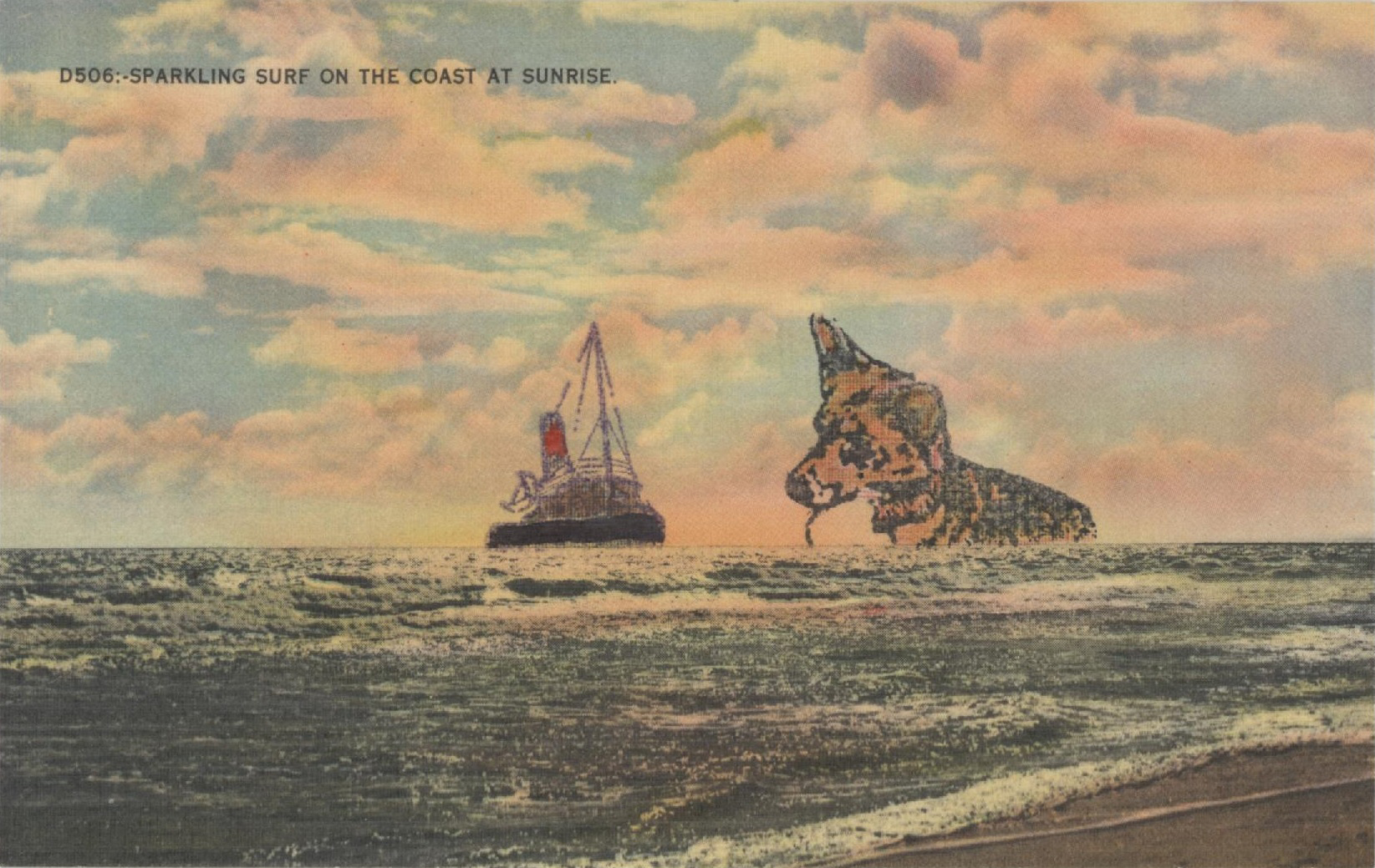
This is the first postcard I ever enhanced. I added the ship and the corgi. The ship’s wake turned out well, and I somehow managed to line it up so that the hull seems to reflect off the water. The card is from the 1930s. I attacked it in the 1990s.
As I prepare for yet another awesome vacation, I am reminded of all the bad writing advice that exists in the world, some of it provided by me. This stands out: “Bring your book on vacation with you.” This tidbit comes from Unstuck: A Supportive and Practical Guide to Working Through Writer’s Block by Jane Anne Straw (2003).
After extensive testing, some of it chronicled in this space, I can attest that this advice is nuts. You are far better off bringing your flip-flops.
However, if you’ve established a daily or almost daily writing practice, there’s no reason to abandon this on your vacation. You can always sneak away for 15 or 30 minutes with your laptop or tablet or pad of paper or Olivetti portable typewriter. I like the final page of the benefits statements I receive from my health insurer, the page that’s printed with THIS PAGE LEFT INTENTIONALLY BLANK.
Describe your day or the inside of your head. Try out openings or a big head-butting scene. It’s all practice and if you never keep any of it, you will eventually write something based on your beach-blanket or poolside scribbles. Good luck. Aloha.
Some postcards are as common as crows. The Tacoma Totem Pole was erected in downtown Tacoma in 1903. This postcard, published in the 1920s, shows up again and again at postcard shows, usually in the bargain box. This has given me multiple opportunities to deface it. Here are two:
was stuck there in the first place because Seattle had already stolen a pole from a tribe in Alaska, set it up in Pioneer Square, and bragged about it.
Tacoma wanted something to brag about, too. At least they didn’t steal it.
My birthday season is in full swing and I couldn’t be happier. We ate dinner in our favorite Italian restaurant, where the food was fab and the waitress was stoned. “May I have a knife?” I asked her, because she had neglected to bring one. She replied, “Yes, for your chicken,” as if congratulating me for understanding utensils. Deborah, as if foreseeing this difficulty, had ordered something vegetarian.
We have a picnic with excellent old friends lined up for the Fourth. I have a writing conference lined up for mid-month, a sort of fantasy baseball camp where I won’t have to depend on my eye-hand coordination. Our main activities will be a) talking about writing, and b) complaining about money.
Meanwhile, look who else is having a birthday: The United States of America! Good work, everyone!
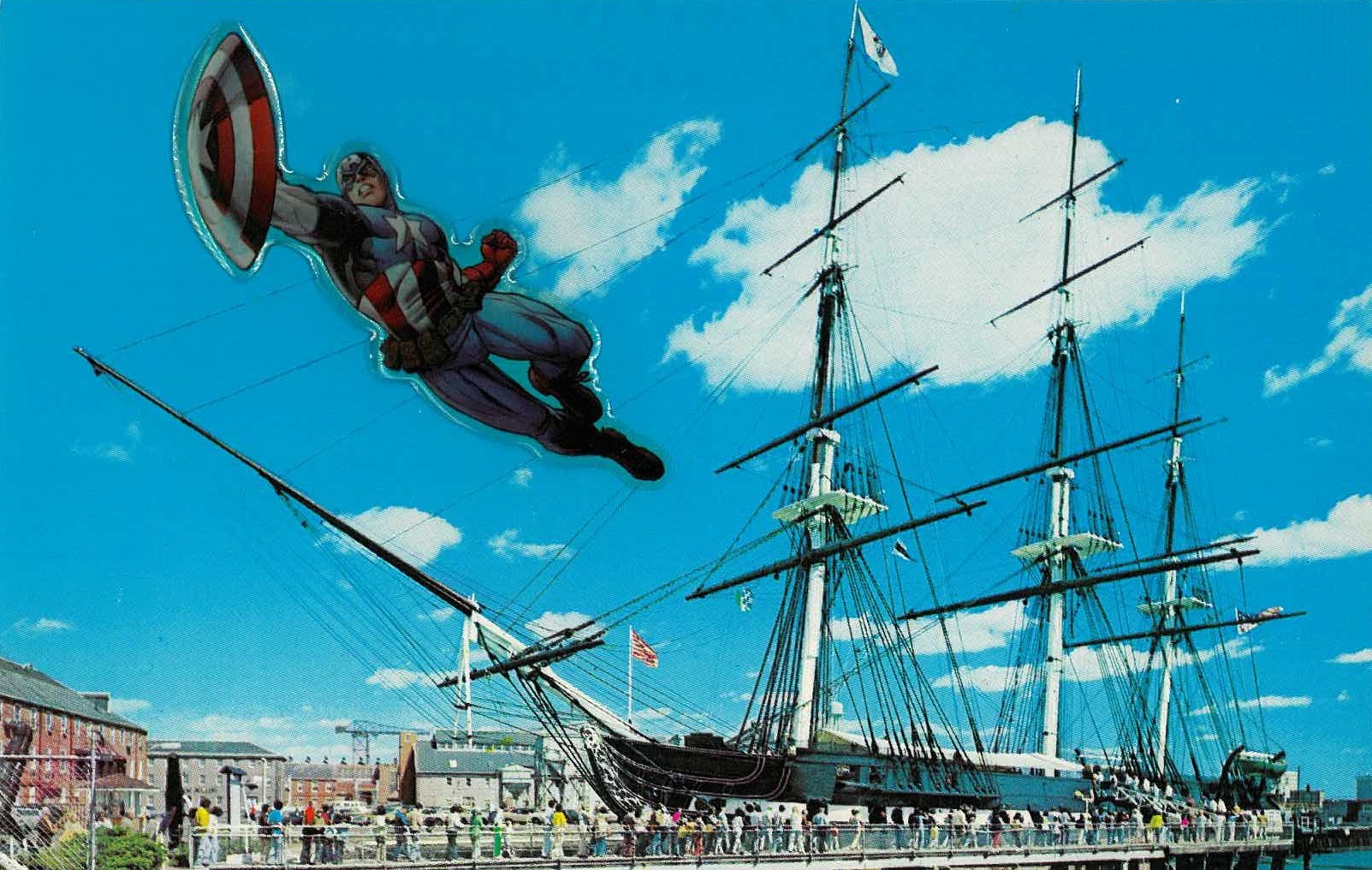
In honor of our nation’s birthday, and because I immigrated to this country from the People’s Republic of Massachusetts, I want to spotlight my favorite boat, the Constitution, as seen in this 1960s postcard from the Charlestown Navy Yard:
Like most things that were built in another century, it’s a miracle that Old Ironsides still exists. It is the oldest active-duty warship still afloat, in our navy or anyone else’s. (HMS Victory, Nelson’s flagship at Trafalgar, is still a commissioned warship, but the British moved her ashore after she was damaged during the Blitz.) For this miracle we can thank Oliver Wendell Holmes Sr. and a poem he wrote in 1830 when he heard that the Navy planned to decommission and scrap the Constitution:
Oh, better that her shattered hulk Should sink beneath the wave; Her thunders shook the mighty deep, And there should be her grave; Nail to the mast her holy flag, Set every threadbare sail, And give her to the god of storms, The lightning and the gale!
In 1830, this was incendiary stuff, and the public rallied to save what was quickly becoming a sacred relic.
On July 4, 2024, the Constitution appeared in the WordPress blog wwiiafterwwii. You may wonder why a sailboat launched in 1797 would appear in a blog devoted to 20th-century war junk. OK, it’s a stretch, but the blog’s creator, the anonymous jwh1975, used his post that day to celebrate our nation’s birthday by profiling the Coast Guard cutter Eagle and the Constitution. The Eagle was formerly a Nazi ship, so that’s her connection to the war. As for the Constitution:
On paper USS Constitution was the flagship of Rear Admiral Felix Gygax, commander of the 1st Naval District which had its GHQ relocated to Boston during WWII. Quite obviously it was not a suitable flagship for commanding the high-intensity, long-range conflict against Germany’s u-boats and was not used as such.
During WWII, the Constitution served as a brig and a storehouse for foreign flags and ceremonial swords. We all have a part to play in this life.
Today, the Eagle is used to train sailors in teamwork. The Constitution, however, simply exists:
USS Constitution is a fully commissioned, active-duty warship. The 83-persons crew are active-duty officers and enlisted sailors. Unlike USCGC Eagle which retains a utilitarian training function, USS Constitution has no mission of any sort. Congress funds its continued active service simply because American voters want this.
Happy birthday, everyone, whether it’s your birthday or not, and remember that telling your stoned waitress it’s your birthday usually results in a free dessert. Smooth sailing to you in the coming year. I’ll be back on Sunday, July 26, somewhat older but hopefully wiser. But I’ll still complain about money.
Some postcards are bizarre. There is no point in altering them. They are perfect:
This card preceded the Mary Poppins movie by approximately 60 years. I call him Marty Poppins. I considered stamping springs under his shoes or adding fireworks, but why? The publisher said it all.
At the time this card was mailed, it was illegal to write anything on the blank side except for the name and address of the recipient. People did it anyway, so the law was changed. Jack, the man who mailed Marty, was a law-abiding citizen.
Other cards cry out for alterations…except for this next one, because whoever mailed it, all those decades ago, added a message that will live forever:
I bought each card because I loved them as they are, not because I thought I could improve them. I can’t improve them.
“There isn’t enough televised chess,” David Letterman said back in the 1990s the night he had a young Garry Kasparov on his show. Everybody laughed, but this is the NBA now. Times have changed.
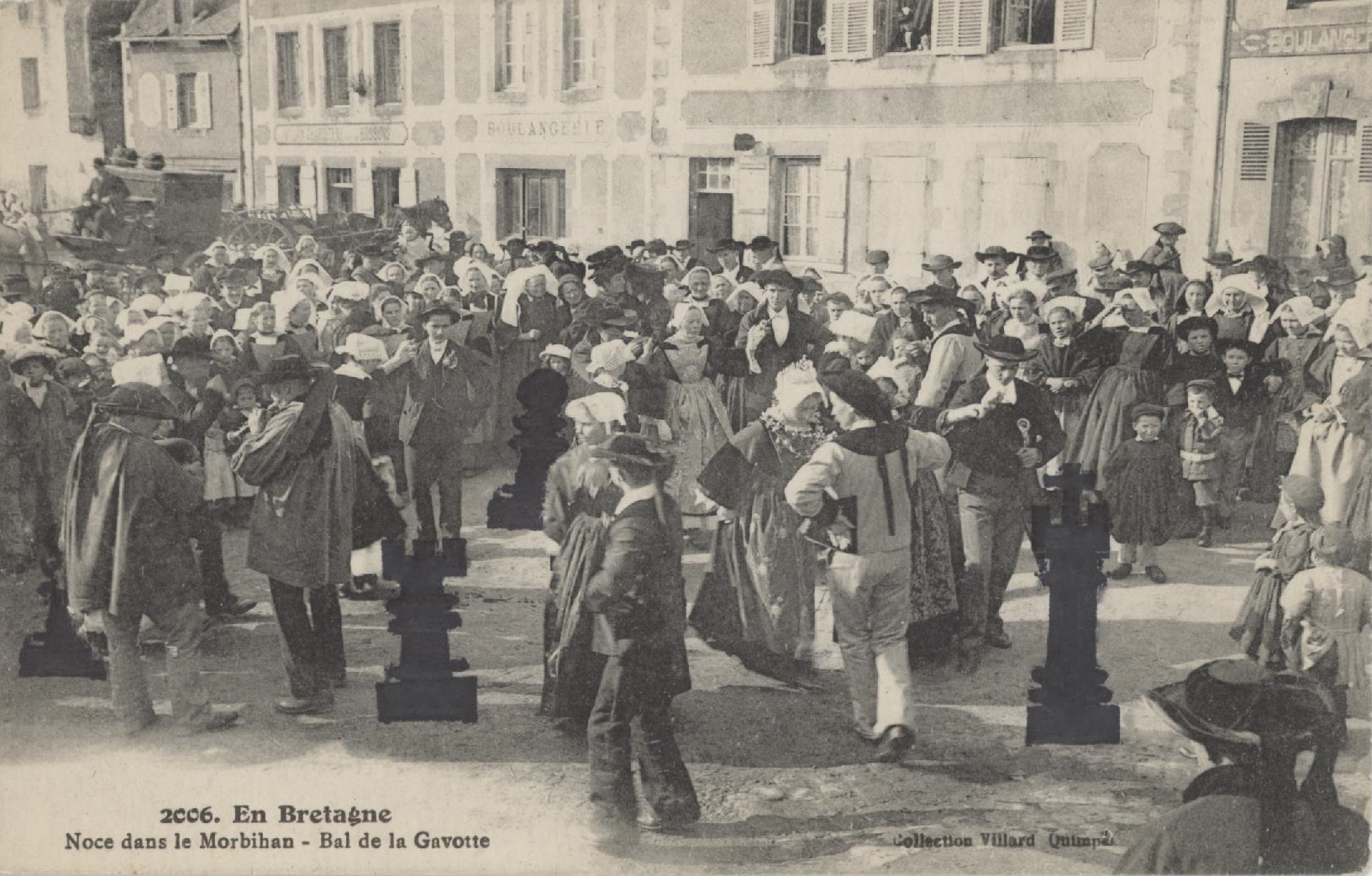
You might think it’s difficult to integrate rubber-stamped chess pieces with the images on old postcards. Think again. It’s easy.
This card is from the early 1900s and shows hundreds of costumed Normans doing the Safety Dance at a wedding in Morbihan. This is a crazy way to dress for a wedding, but it works well with the antiquated design of the chessmen. Everyone is looking in every direction so naturally some of these folks appear to be looking at the pawn, rook, and king.
If Carly Simon’s “You’re So Vain” has popped unbidden into your head, it’s because she rhymed “apricot” with “gavotte.” Yes, I think that’s crazy, too.
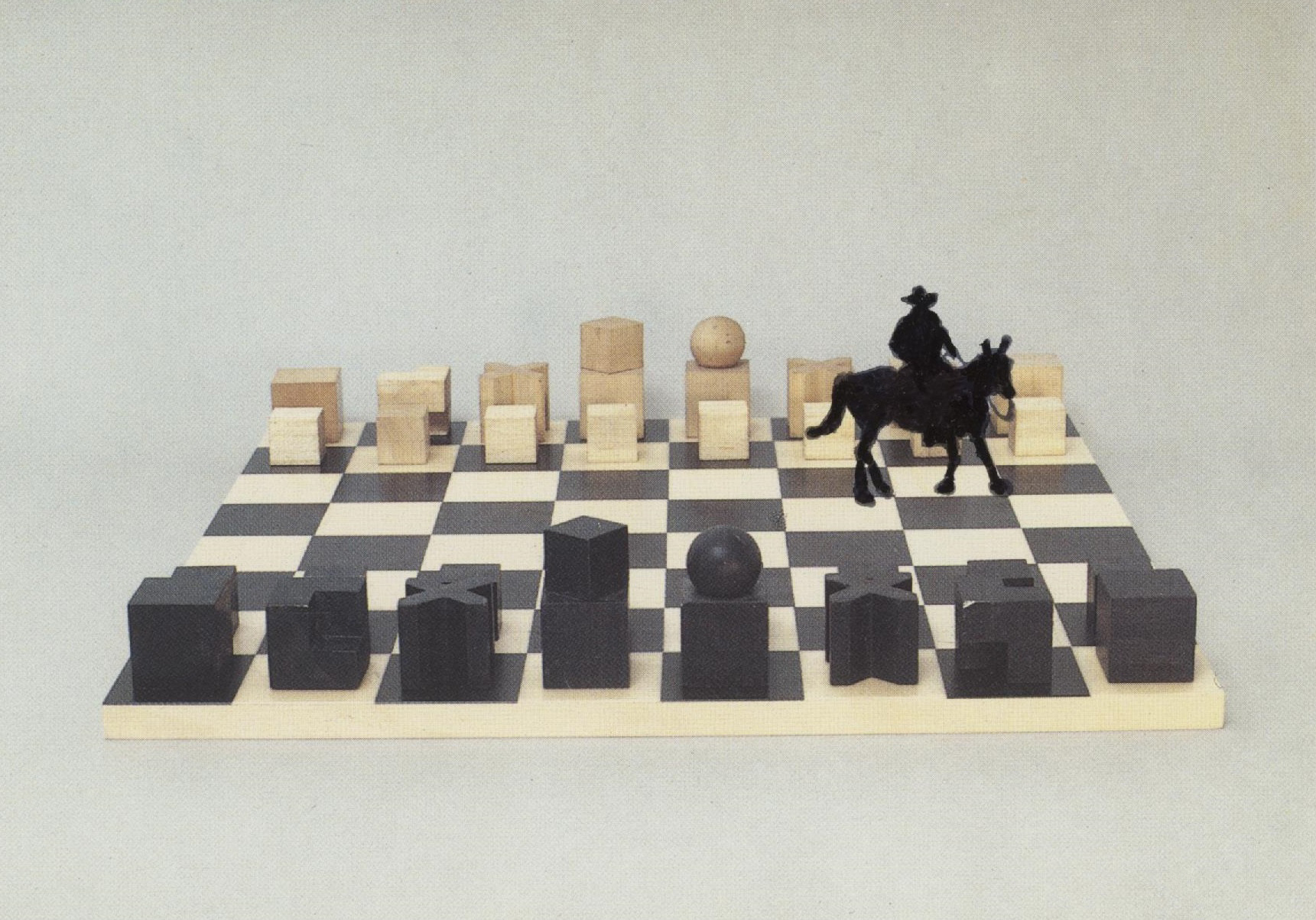
Bauhaus (the German art movement, not the British band) influenced the chess set depicted on this modern postcard. I dressed it up with my friend the cowpoke.
Bauhaus the band has a 28,800-word Wikipedia entry with 282 footnotes, which I believe exceeds the entries for the Seven Years War, the Great Wall of China, and David Letterman.
Donald Trump is confused. First he thought he was Jesus. Then he thought that Jesus was a doctor. And then he thought that he and Jesus could heal the sick by taking their money so they couldn’t pay for a doctor.
Trump is not too clear on his job description. He doesn’t know much about other jobs, either. He said that Pope Leo is “weak on crime.” Trump doesn’t understand that the Pope can’t arrest people. His Holiness can’t even bust wayward altar boys.
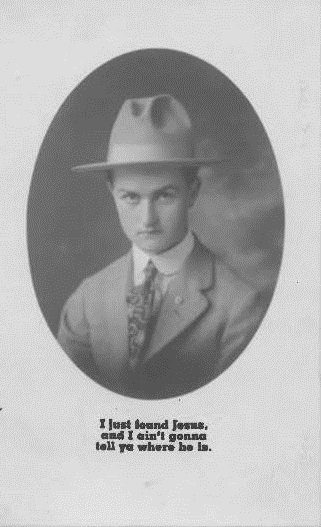
In honor of Donald Trump’s love affair with the Son of God, here’s a postcard from my collection. This card was published before World War I, in the era when you dressed up and visited a photography studio and they turned your photo into postcards. There’s no note on the card to reveal the identity of the man in the hat. If there’s a heaven and he’s in it, I hope this gentleman will forgive me for the caption I gave him.
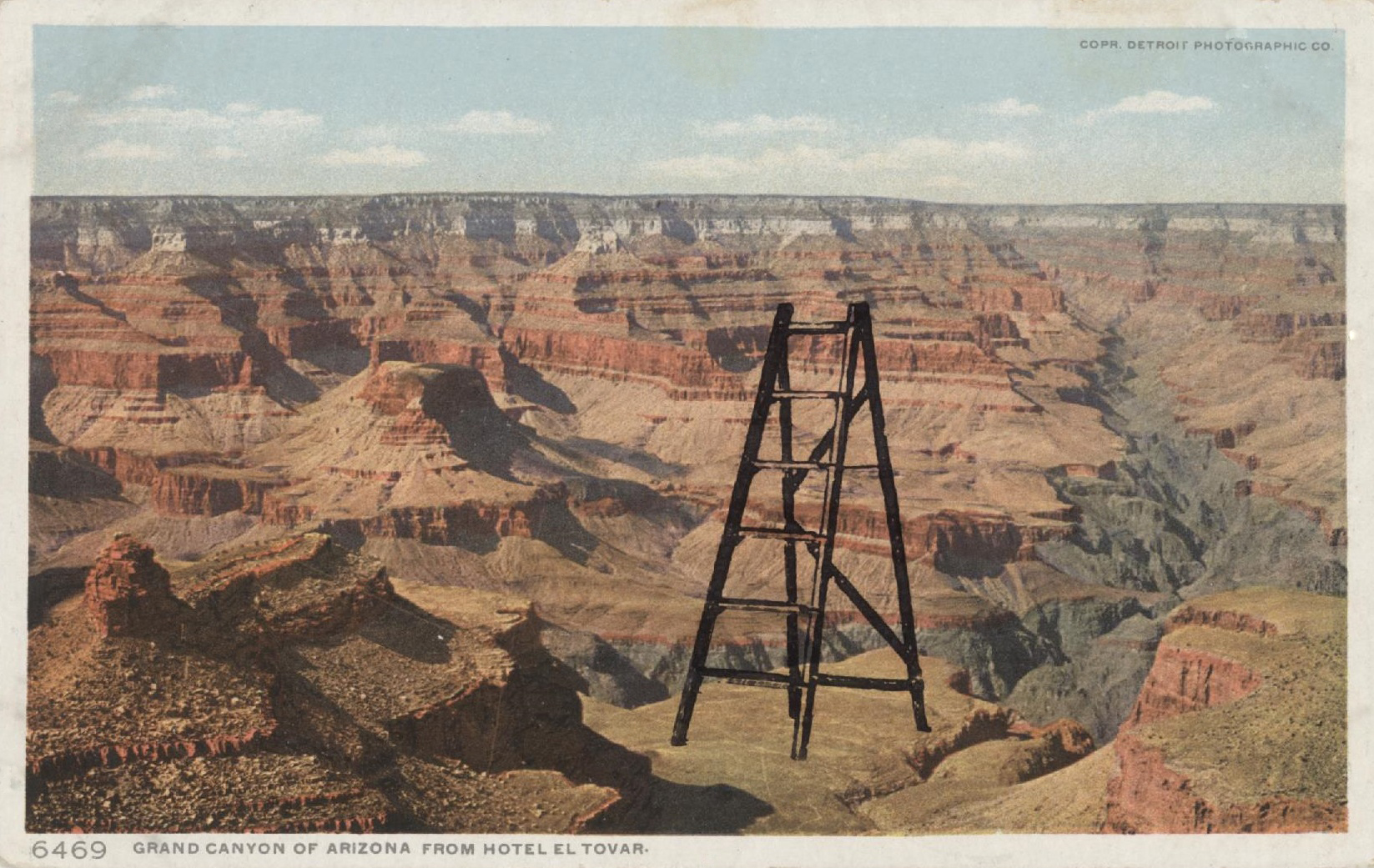
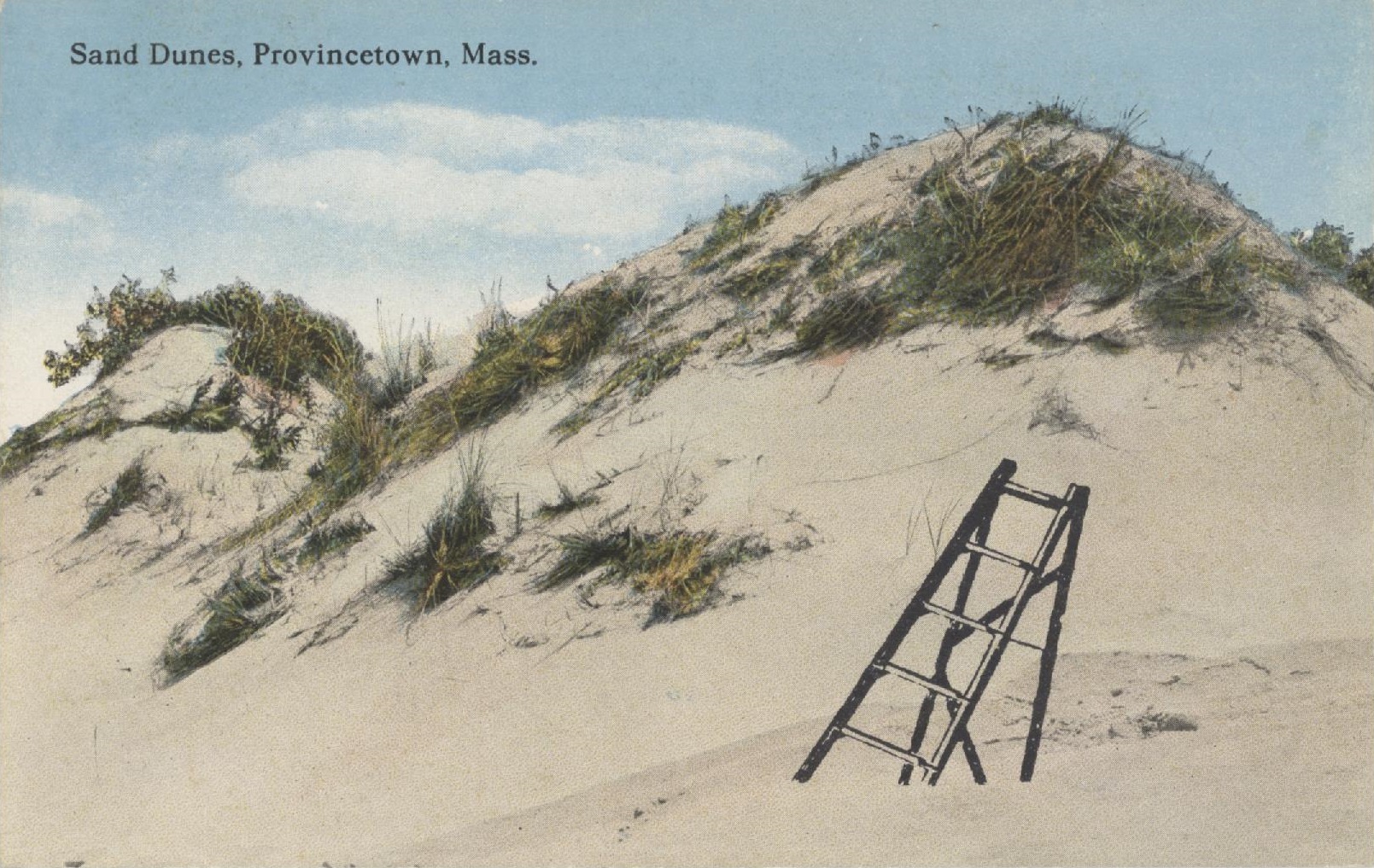
This stamp of an old-fashioned wooden ladder was made by Stamp Francisco. (The owner retired last year and closed her doors.) There’s something about this image that fits almost everywhere.
You can pose people on it or diving and flying off it. You don’t have to restrict yourself to lonely vistas, either.
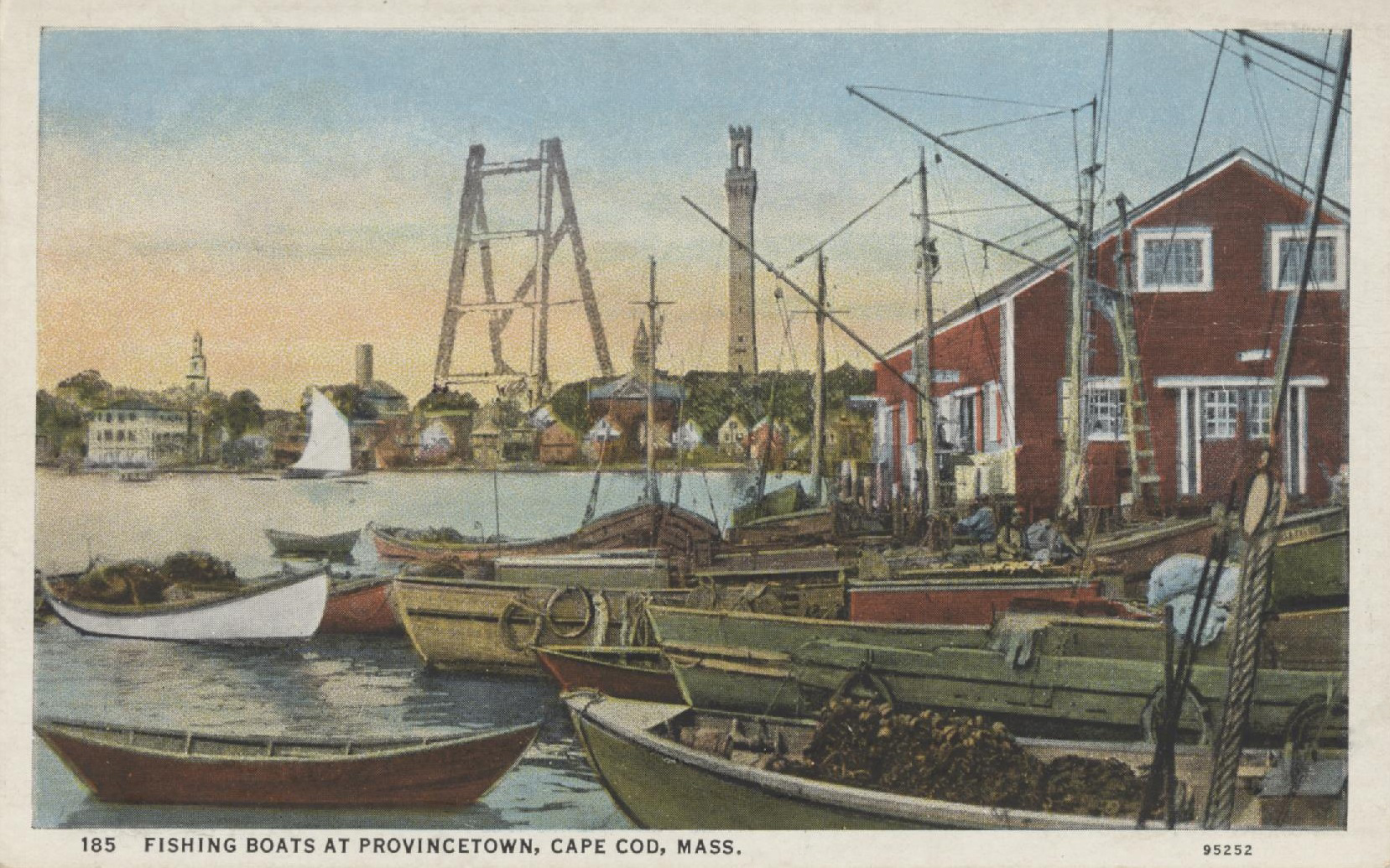
I have climbed that tower. You can’t visit the Cape and not climb it. Too bad they don’t have a ladder.
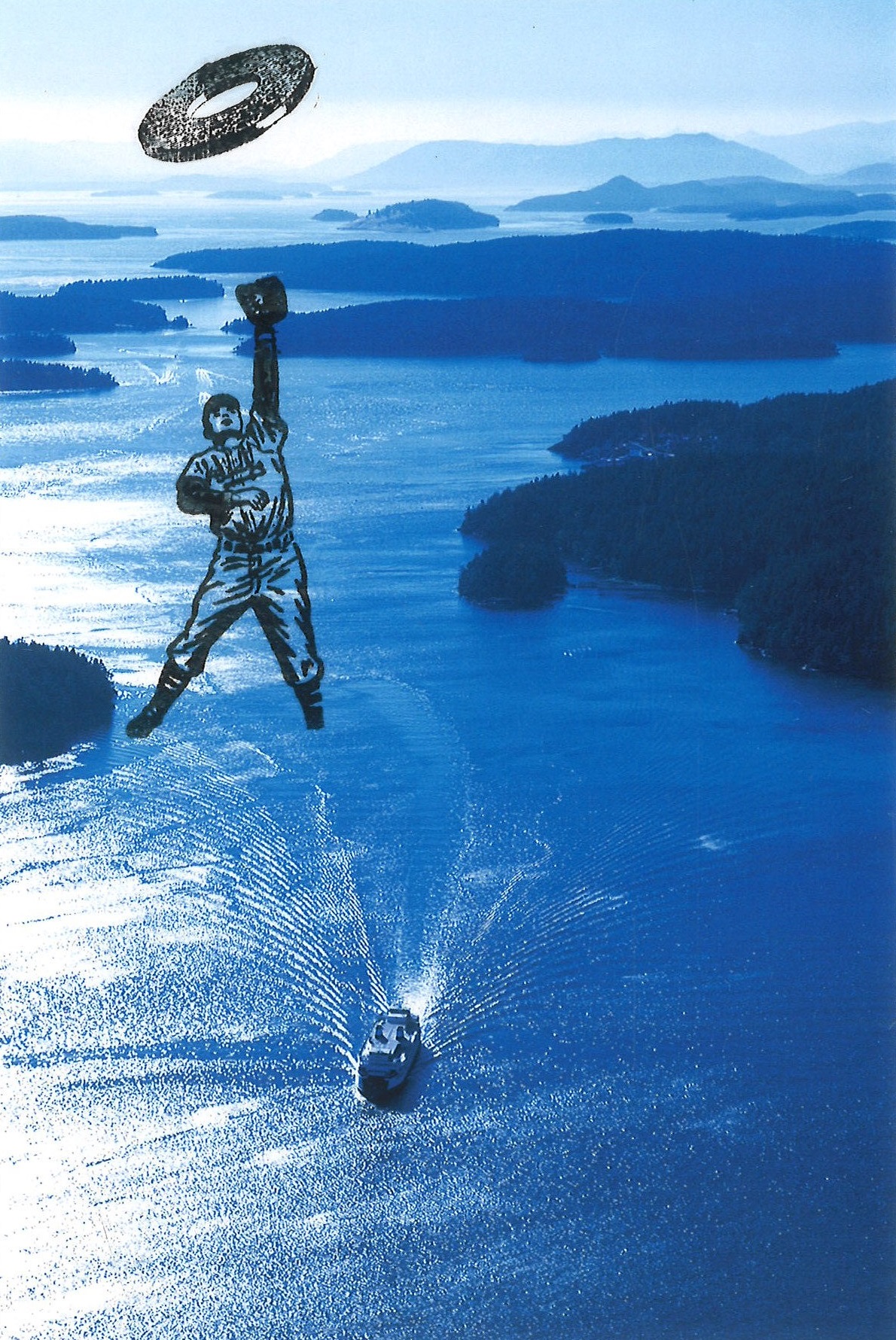
If you decide to make a career out of defacing postcards, you don’t have to confine yourself to antique cards with a paper finish. You can always stamp modern postcards, which have a shiny, slick surface. Collectors call these cards “chromes,” short for Kodachrome.
Caption on the back: “A Washington state ferry navigates Harney Channel in the San Juan Islands.”
The ink on a modern postcard (or a photograph) will never completely dry, though you should be able to color it with markers after a few weeks.
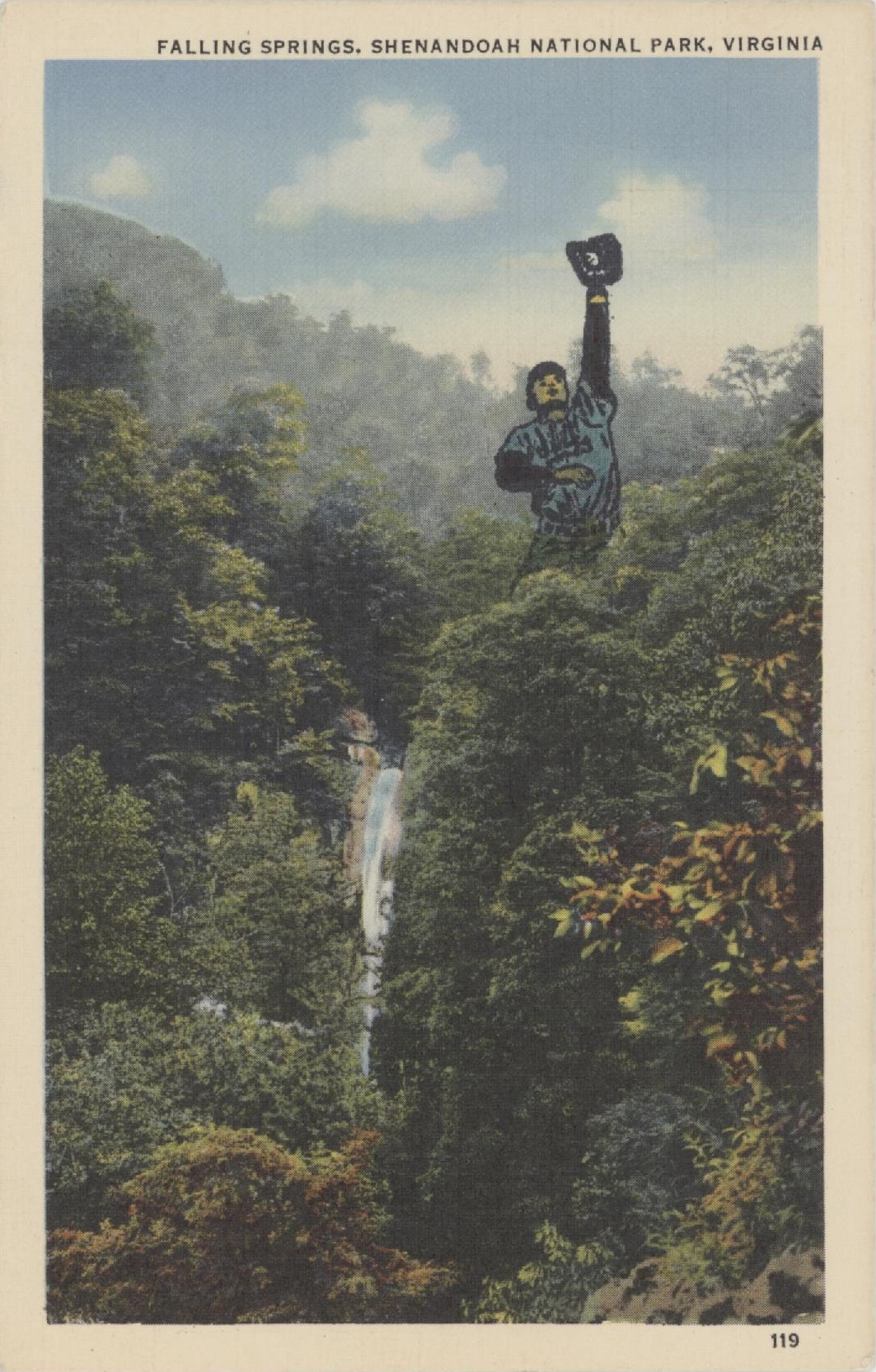
This baseball player is a particularly useful little guy. Here he is on a card from the 1920s:
He’s also good for standing upside down, dancing like no one is watching, holding onto objects while being blown sideways, and chasing through space.
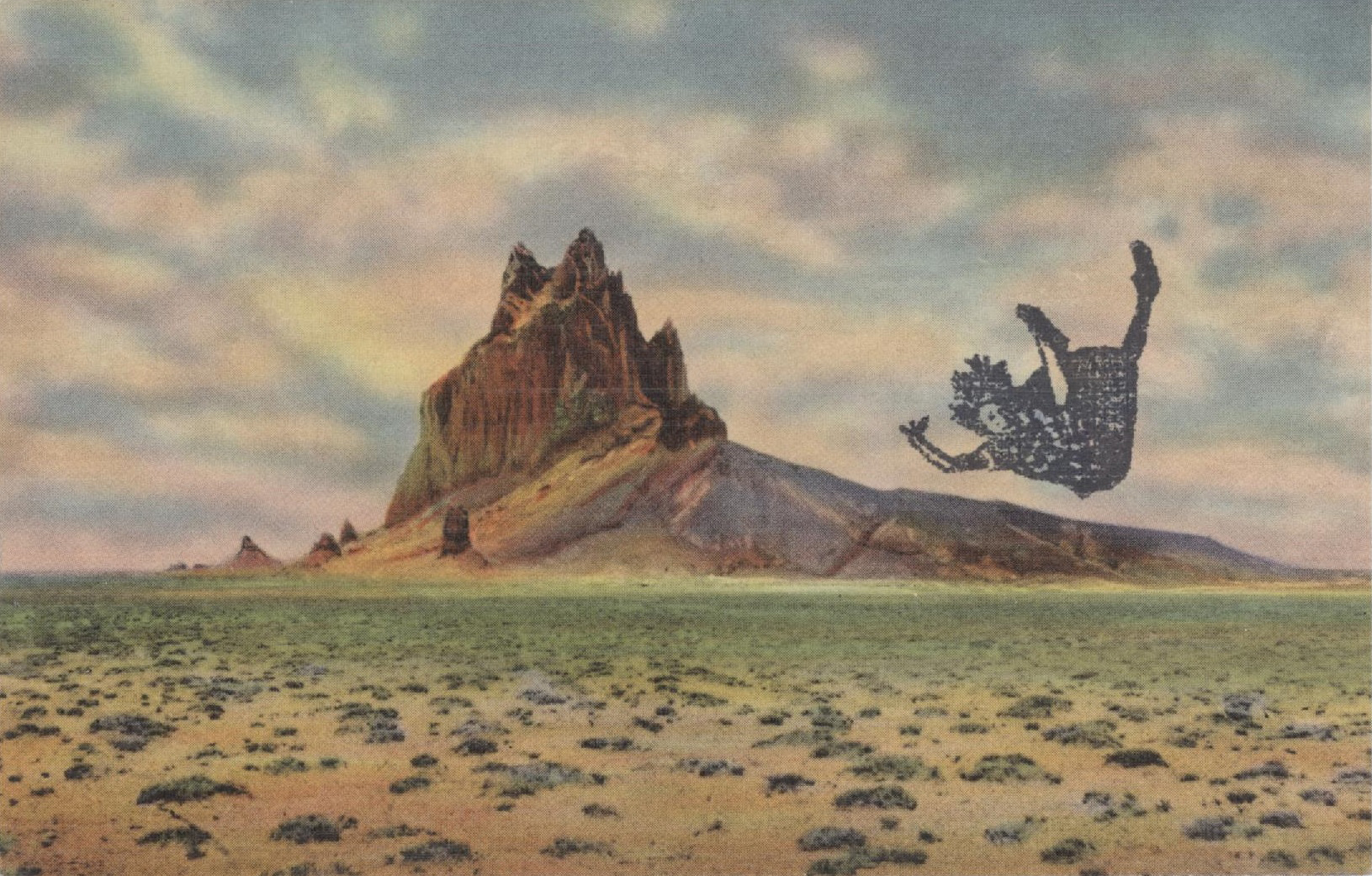
Sometimes I can’t think of what to do to a particular postcard and sometimes the rubber stamp jumps from its drawer and says “Pick me! Pick me!” These 1920s views of the U.S. Southwest are plentiful and painterly. They are fun to stamp because they usually give you a vast expanse of sky to play with.
Looks like an economics chart. This unfortunate lady is heading for the intersection of a supply and demand curve!