Writing my way out of the penalty box

Last month, I spoke with a journalist who told me that journalism was hard to leave. She was attracted to the fast pace, “the quick hits,” and the rewards of daily or weekly publication, “As if someone is handing you cookies.”

I understood what she meant. I enjoy the combination of relief and excitement when I hit a deadline. And I have always enjoyed cookies.

I worked in journalism, where stories were often held up by the race to find one last quote or check one last fact. I also worked in software, where projects were held up by the engineers, who spent most of the day chasing each other with shotguns and starships before finally writing the #@$!&* code.

Now I set my own deadlines. Last month at the Port Townsend Writing Conference, I set one in public. On Tuesday I accepted the challenge of one class with four prompts and on Thursday I read what I’d written at an open mic.

From this experience I deduced that I needed more deadlines in my life. Quick hits, not the long march through the hundreds of pages of my novel that I must revise. So I started revising a story I wrote a few months ago and that I’m unhappy with. Surely I could do this in a week! And surely it would read like that, too.

If I were playing fútbol, the referee would’ve held up a yellow card, pointed at me, and cautioned me for time-wasting and deliberately delaying a restart. Which brings me to Henry Miller’s advice from way back in 1964: “Work on one thing at a time until finished.” Don’t rush off in different directions.
Miller knew what he was talking about. Everything he wrote was banned in his own country until he was 70, but he never stopped writing.  

“Forget the books you want to write,” Miller said. “Think only of the book you are writing.”

And so I return to the book I am writing.

I still want cookies, though.
What I did on my summer vacation

I go to a writing conference every 20 years. So when I go, I had better make the most of it. The Port Townsend Writers’ Conference at Fort Worden, Wash., was the most.

It’s going to take me awhile to digest this experience. All I’ll say this evening is that my week at the conference was inspiring and surprising. I wrote something I never thought I’d write and made connections with people I never thought I’d meet. Fort Worden is a state park, and I walked six miles a day, over a hill, along a beach, out to a lighthouse, through a cemetery, and many laps around the former parade ground.

I spent so much time with the deer that they stopped running from me. In another week, they would’ve invited me to dinner. Fiber. They know.

Fort Worden was once part of a series of forts that guarded the United States against seaborne invasion. This was a good idea when Capt. Horatio Hornblower was trading broadsides with Napoleon. It wasn’t so good after the invention of the aeroplane. But the Coast Artillery Corps built Fort Worden anyway, along with its friends, Forts Casey and Flagler, a “Triangle of Fire” that would destroy any fleet that menaced Seattle.

The only thing that ever menaced Seattle was Tacoma. The Coast Artillery Corps disbanded all three forts by 1953 and then itself. All that’s left today of the mighty CAC are the empty gun emplacements overlooking Puget Sound and the Coast Artillery Museum at Fort Worden. The museum is closing in September. Budget cuts.

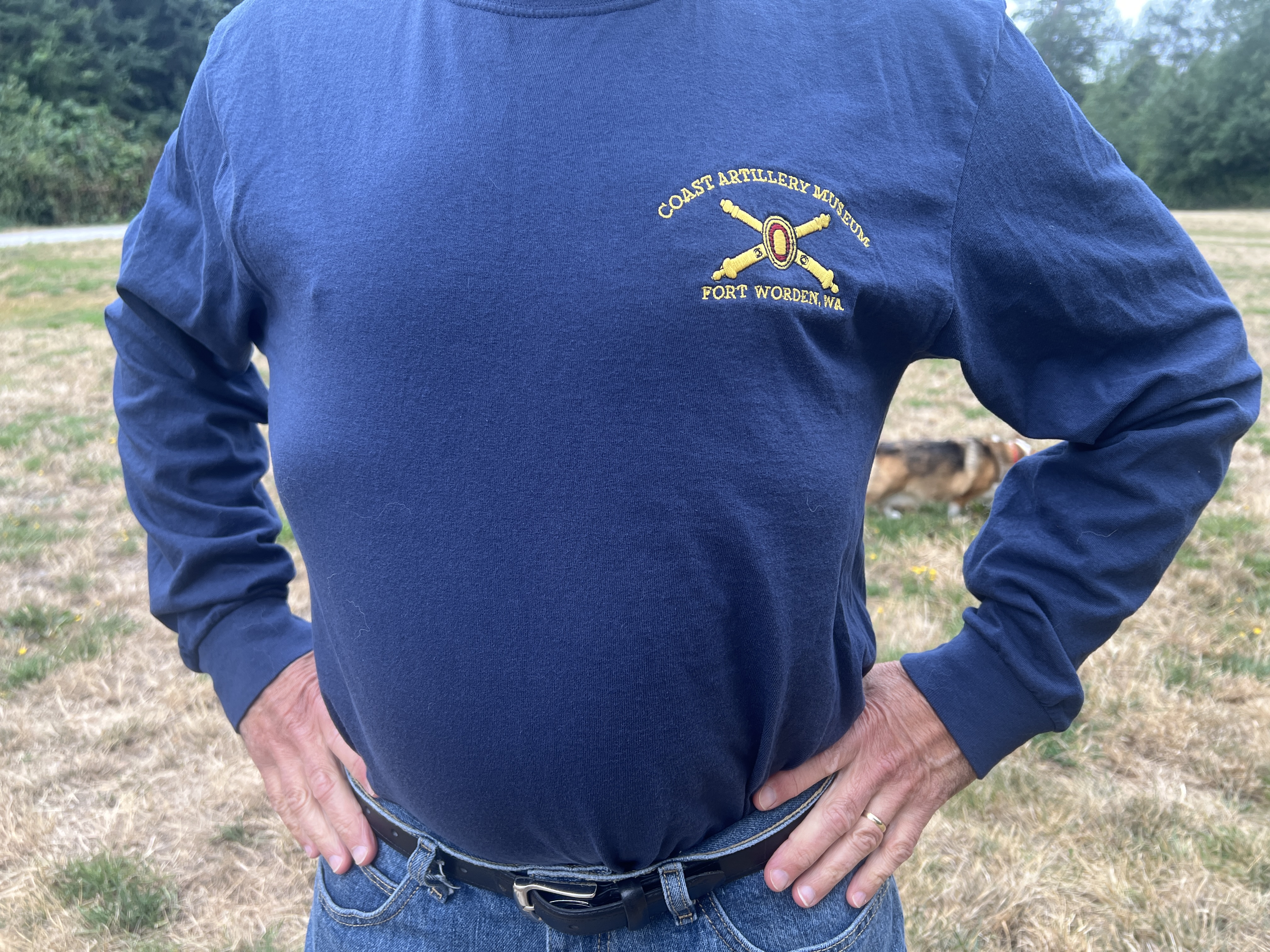
I bought this shirt for half price:

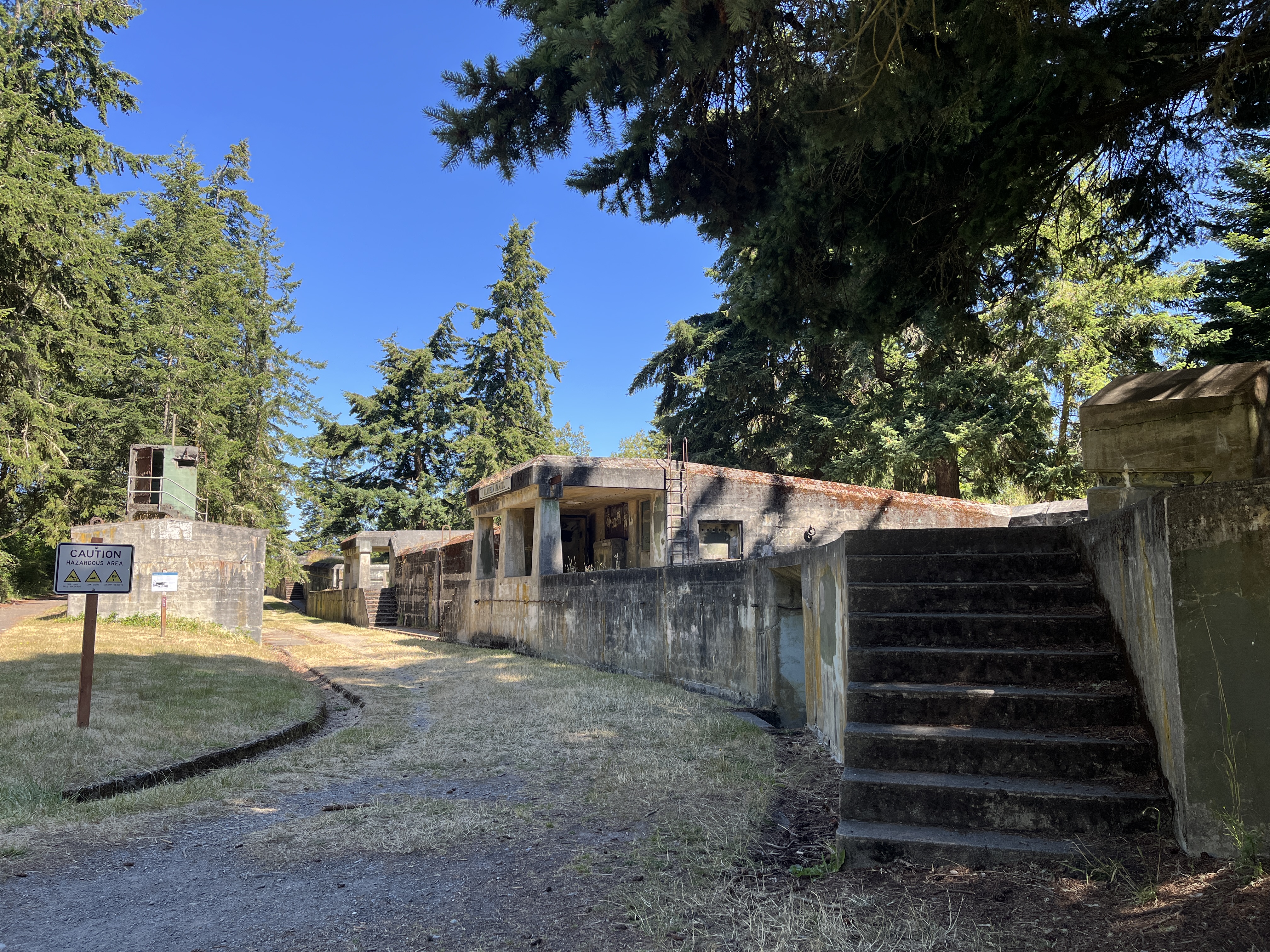
Below is one example of what they built in the 1900s to hold off unnamed enemies. The rooms beneath the fortifications are open to the public. How many teenagers have been deflowered in there?

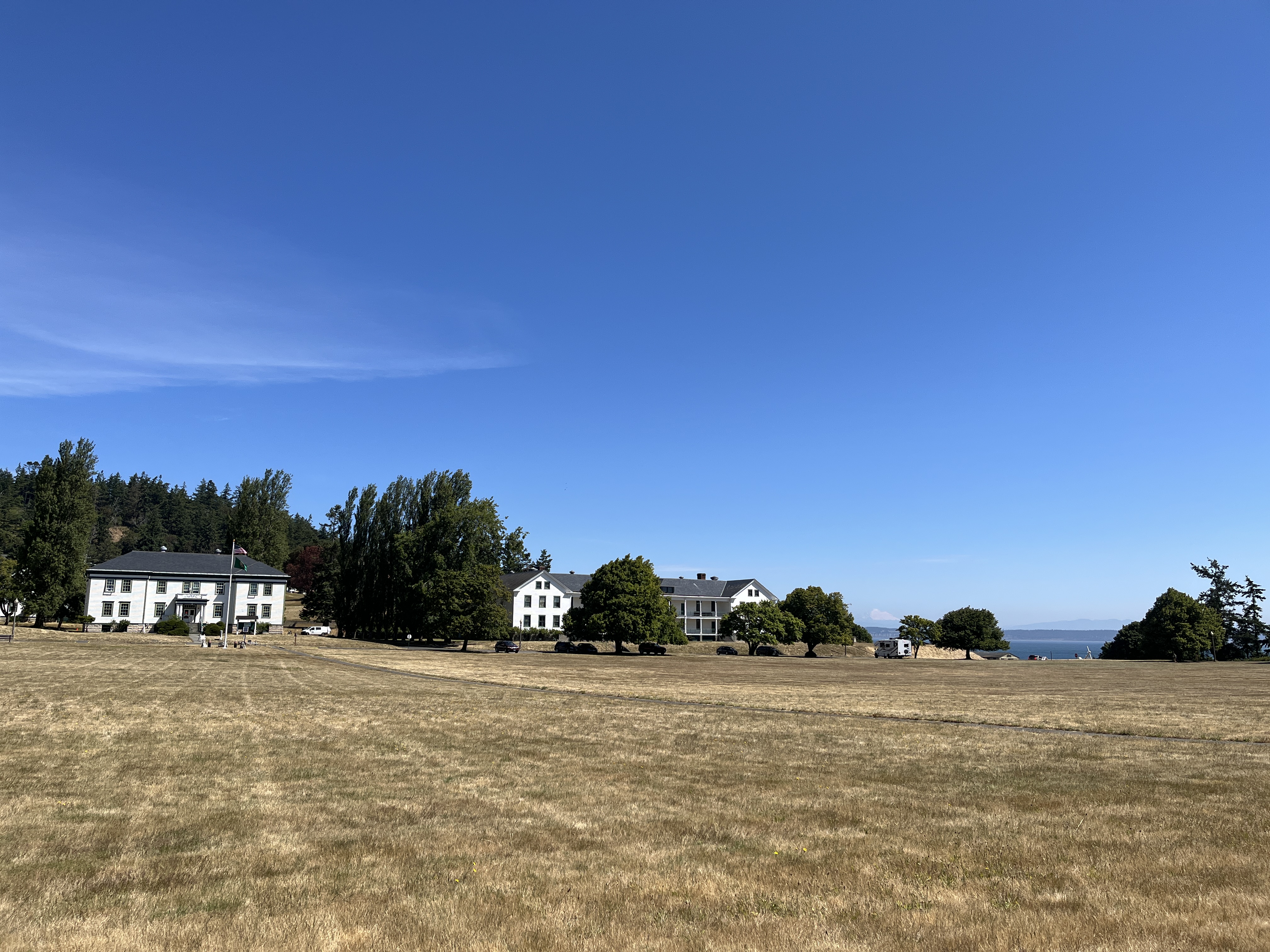
It’s about a mile around the parade ground. In the next photo, the barracks I stayed in is on the right. The cloud in the gap between the trees, to the right of center, is actually Mount Baker, far to the north of Fort Worden and just east of my hometown of Bellingham.

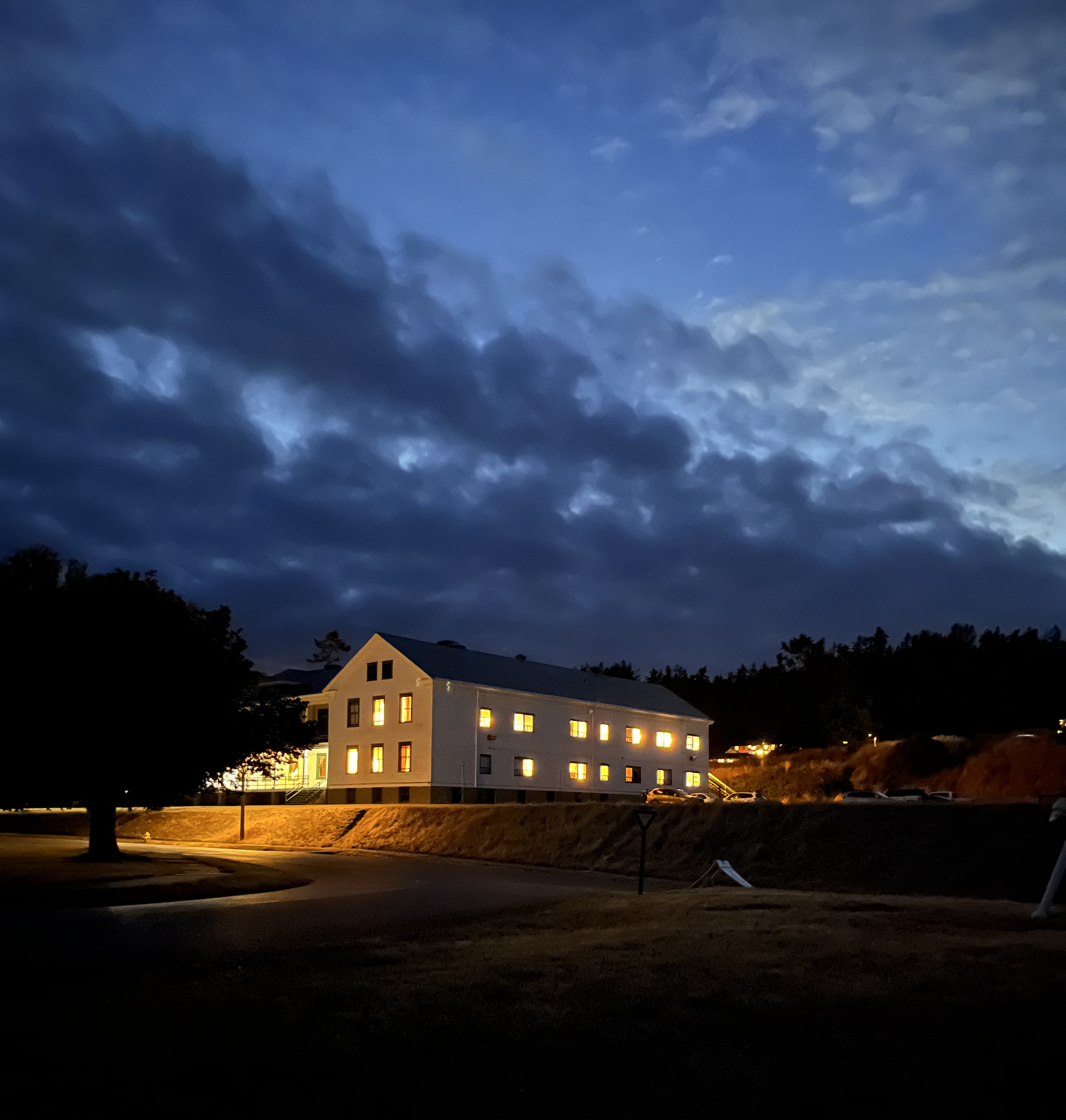
My barracks at night:

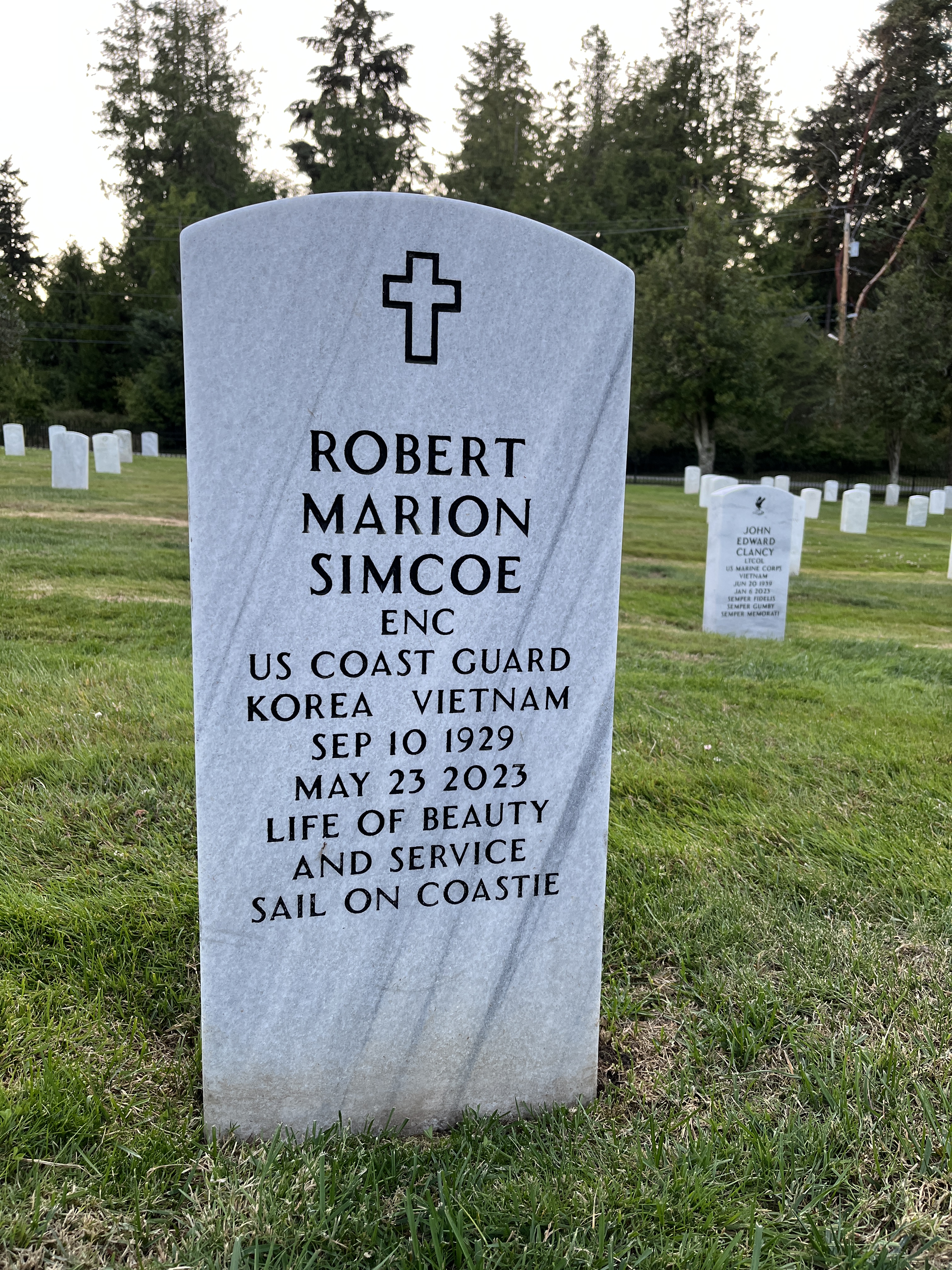
The cemetery, established with the fort, is still in use, for veterans and civilians:

I wrote a lot, learned to refrain from snacking because the cafeteria was closed between meals, talked poetry with the professionals, bantered with best-selling novelists, rocked the room on open mic night, and won the hand of a proud, aloof beauty named Willow. OK, the paw. Willow is a King Charles spaniel, though she might be part Pomeranian. There appears to be some disagreement on this point. I accept her as she is.

I’m happy to be home and ready again to dispense more half-baked wisdom!