Herb Alpert: Whipped cream is still a delight

Herb Alpert & the Tijuana Brass played the Mount Baker Theater in Bellingham, Wash., in October. The Mount Baker was the only thing standing that was older than Herb Alpert, who is 91. Certainly not any of the musicians who made up the Brass, as they were all born after Alpert broke up the original band in 1971.

And I suspect that few, if any, of us in the audience were that old, though from our seats in the front row of the balcony I saw a forest of white heads, as if it had been snowing. Many of them had been bused in from senior centers and homes for the aged and maybe from 1965.

Alpert was lively and happy to be there. (As George Burns used to say at that age, when he opened a gig, “I’m happy to be anywhere.”) He opened the show standing and spent the rest of the night sitting in a swivel chair, blowing that trumpet and conducting the band with one expressive arm and hand.

“I’m playing with the house’s money!” Alpert declared at one point, remarking on his age and the good fortune that has allowed him to mount this tour. And he can still play. A horn player has to warm up his instrument with his first breaths, and Alpert had a few seconds of struggle with each song. But soon enough he was off the starting block. There were notes in the upper stratosphere that he could no longer reach, but overall he was superb and delighted to play for us.

This new edition of the Brass gave the material a respectful reading. They are working jazz professionals who play at a high level, and they added a little extra shading without disturbing our nostalgia or subtracting any fun. They were all impressive, but since I began life as a drummer I want to note that the new boy played an extended solo that, unlike most jazz solos, carried a melody all the way through.

There were a few things I could’ve done without. The flashing lights behind the stage were almost exactly at our eye level. The videos of old TV shows were sometimes distracting, though I loved the loop of Clark’s Teaberry Gum commercials. My wife and her best friend did the “Teaberry Shuffle” on their way into the New York World’s Fair in 1965.

(The digitally restored copy of this video, unavailable on YouTube, was breathtaking.)

I also could have done without “Rise,” Alpert’s only hit from his solo career, in 1979. While listening I realized that “Rise” is the logical culmination of his work with the Tijuana Brass. But even in 1979 I thought it wasn’t interesting enough to sustain its 8 minutes. I would’ve preferred to hear UB40’s “Rat in Mi Kitchen,” from 1986. Alpert provided the trumpet solo and blew the place up. But “Rise” was insanely popular in its time, it gave the new Brass some serious work to do, and Alpert loved playing it, as he loved playing everything that night, so stick a fork in me. I’m done.
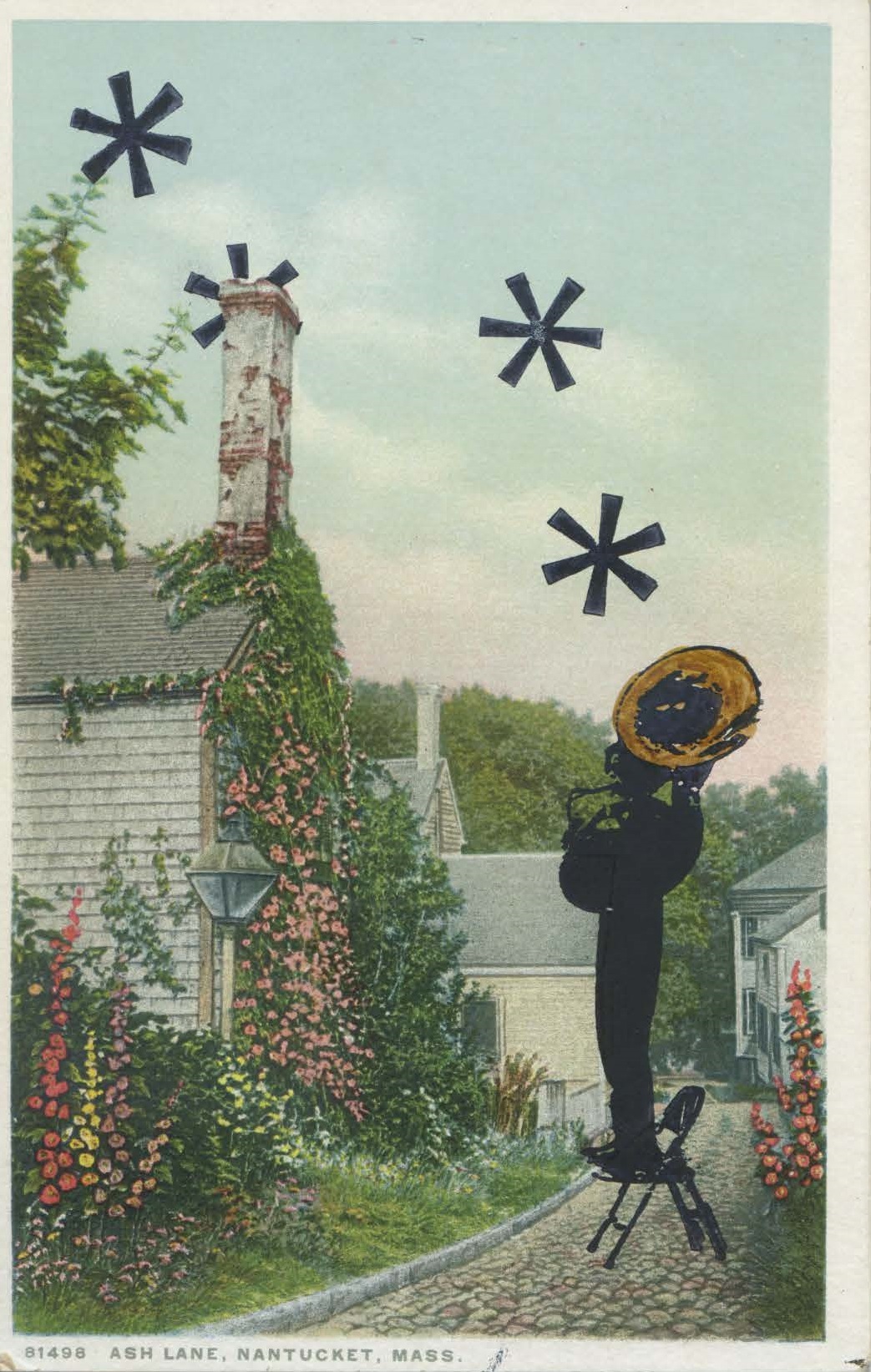
I don’t have a trumpet player in my collection, so Tuba Man will stand in.
Thank God It’s Monday 22

We enjoyed an unexpectedly sunny day here in the blustery Pacific Northwest. We saw a hint of a sunset. We won’t see many of those as we rush headlong into winter.

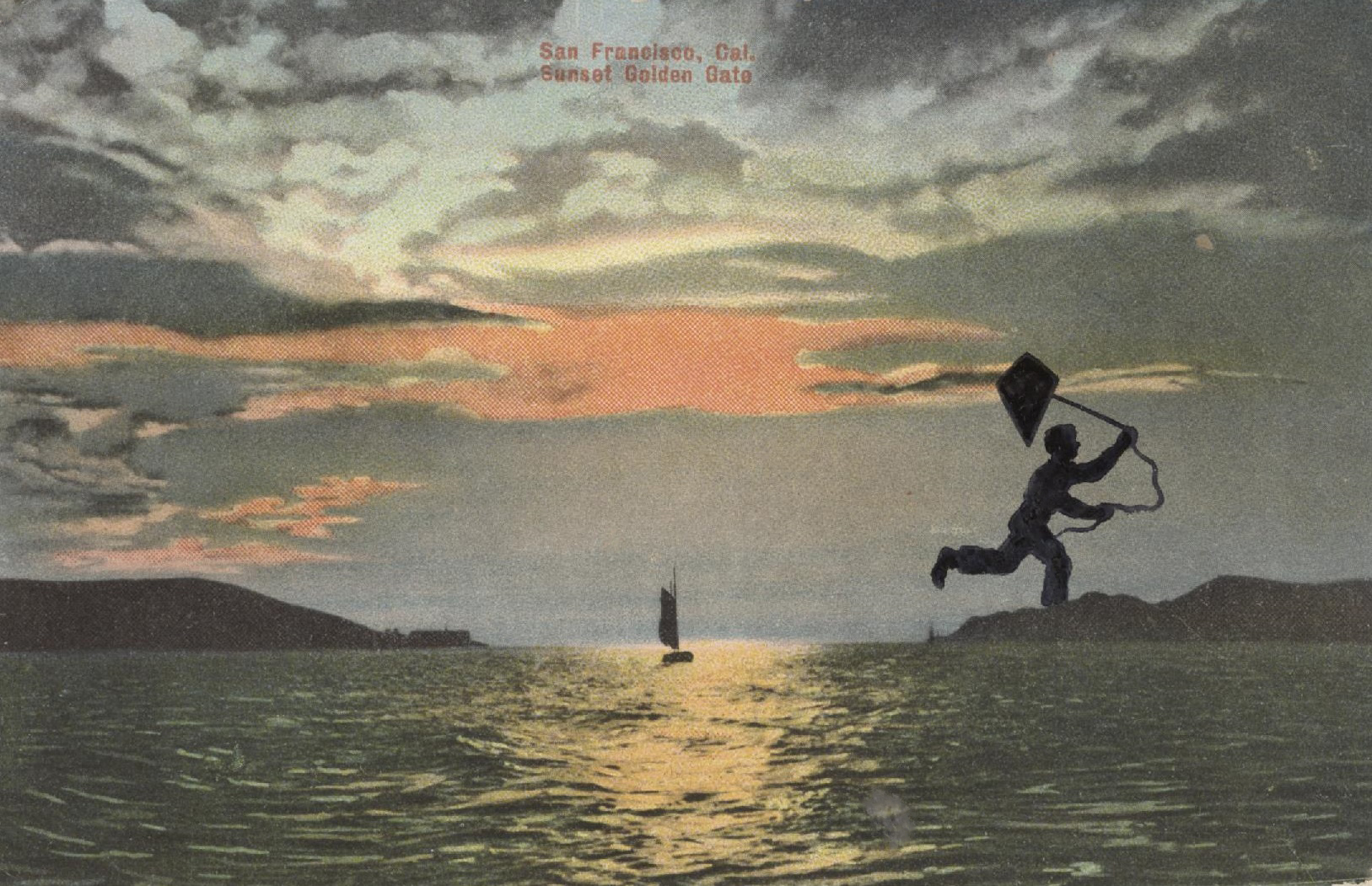
This reminds me of a popular postcard topic from the world before World War I, sunset at the Golden Gate:

This black-and-white photo was hand-tinted in a printing plant in Germany by an artist who was most likely a woman who had never been anywhere near California, but I love how painterly a job she did.

The kite runner is one of my favorite images. It reminds me of my friend Jack, who loved kites and who mounted this stamp on a block of dense wood, then gave it to me on a long-ago birthday.

I once interviewed an artist of aluminum and titanium jewelry who stamped as a sideline. I asked her how many stamps she owned; it was about 3,000. She had rolling shelving units all over her studio. But how many did she regularly use? That was about 150. From then on, I tried to keep my own collection to about 150 stamps. There are some that I use only once a year, because of somebody’s name or a message or a special occasion. I mostly keep only those stamps I regularly stamp with. It saves space and frees up my brain for other uses…such as gloating about the midterm elections. And I am not done gloating.

I wanna make him stay up all night

I recently applied for a fellowship. I know I said I wasn’t going to do that again, but to quote Jayne Cobb from an episode of Firefly, “I got stupid. The money was too good!”

The organization in question, which works diligently to help artists, made the application process easy. They only wanted a 5,000-word writing sample, and I had a story exactly that length that’s probably my best, so I filled everything out and shipped everything off. If I win this, I won’t live like a Trump at a Russian gangbanger wedding. But I will be, I promise, ridiculously pleased with myself.

With this application wrapped up, I was on a roll, so I applied for a week at a writing residency. Unlike the ultra-prestigious ivy-covered yacht-club residencies, which are thousands of miles away from my home in the Upper Left Corner, this one I could get to by train and it wouldn’t take all day, either. They asked for a 6,000-word writing sample. Wonderful. An extra thousand words to play with. I figured I’d send them the first two chapters of my novel. I will knock them dead.

Then I checked the word count for my first two chapters: 9,000 words. That’s three or four chapters, not two.1

For those of us in the novel-writing line, one of our goals is to write short chapters with enticing hooks that convince readers to carry on for another chapter or at least a few more pages. Sure, you have that early meeting tomorrow, or maybe you’re getting married, but you’ve already read this far. One more chapter won’t hurt. Next thing you know, it’s 2 in the morning and you’ve made a reader for life.2 This is what Harlan Coben calls the “novel of immersion.”

You can meet this goal of addicting your readers if your chapters are 10 or 15 pages long, but maybe not if they’re 30 pages. Or 50. The eye can tell what’s left, and if a reader fighting off sleep and with a full agenda for the next day gets into a chapter and sees a parade of pages up ahead, they are likely to give up.

I have a manuscript to rewrite, so rather than return to chapters one and two and condense the nonsense, I submitted my application with another short story.

This was a good lesson for me: Check the lengths of my chapters. Check that each chapter ends with a bang, or at least with a hook. Herman Melville and Jules Verne could get away with lengthy chapters about fish (in Moby-Dick and Twenty Thousand Leagues Under the Seas, respectively) that end with, well, fish, but they did things differently back then, mister.

I hope everyone is doing well in the writing challenge I threw down in September and that everyone forgot about, including me. Or if you’re currently embroiled in First Draft November (successor to National Novel Writing Month), I hope you’re making progress. Here’s some advice from Harlan: “Don’t show anyone your first draft.” He agrees with Anne Lamott: Write as fast as you can and don’t get hung up on quality. “You can fix your pages later. But you can’t fix nothing.”

As for me, I hope to finish my second draft by the final day of the year. And I hope that’s a good enough hook to keep you reading this blog.

Notes:

1 Word count in Word is one of the few things left in Word that isn’t powered by AI. Word.

2 Since I have not yet published a book or finished revising one, this might seem theoretical. It’s based on observations I’ve made of a novelist of my acquaintance: My wife.)

It’s morning in America

Excuse me for gloating, but I have considerable training in Gloat.

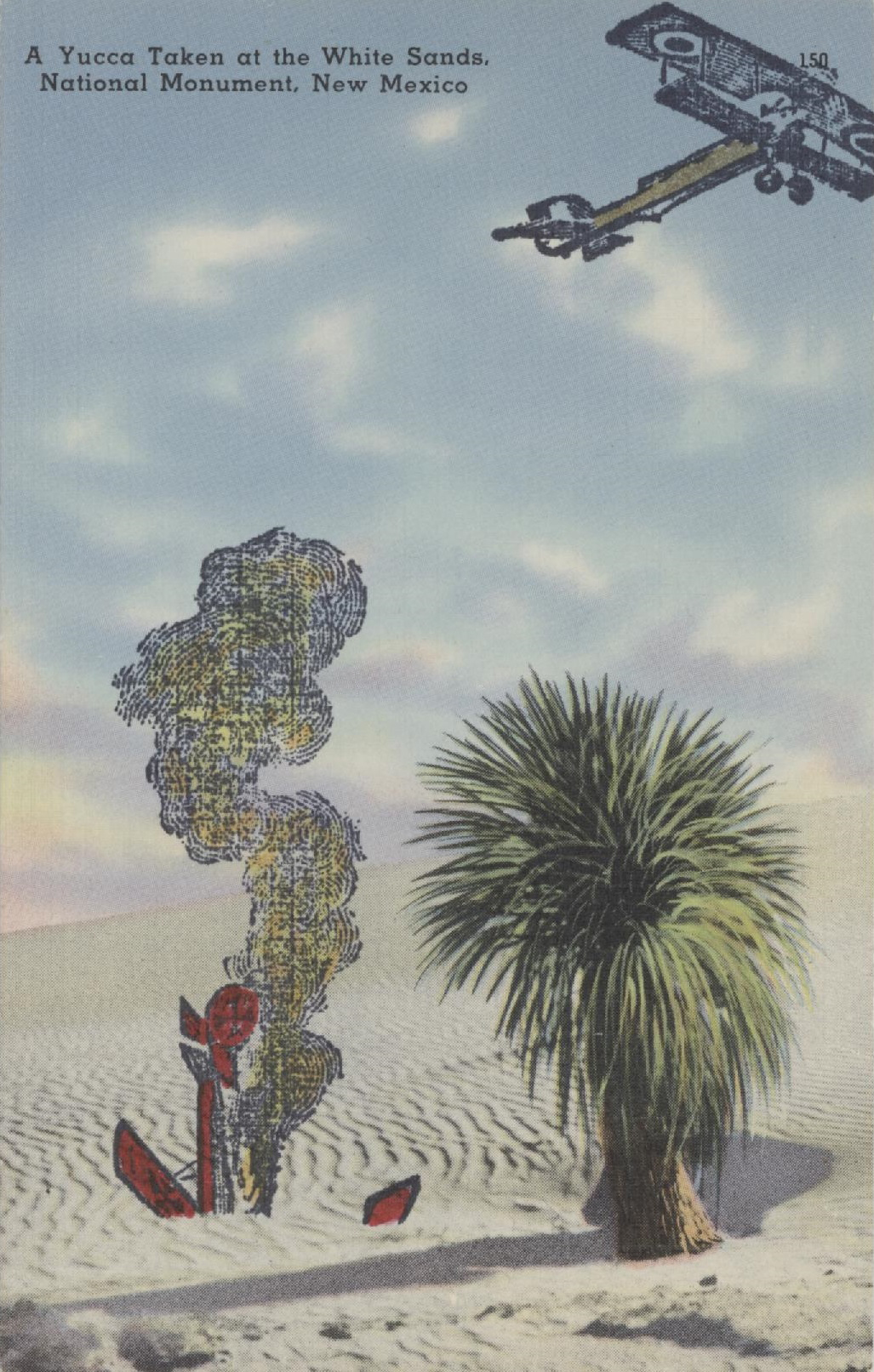
This postcard is from the 1930s or 40s. The finish is not plastic but cardboard with a cross-hatched finish, what collectors call a “linen.”

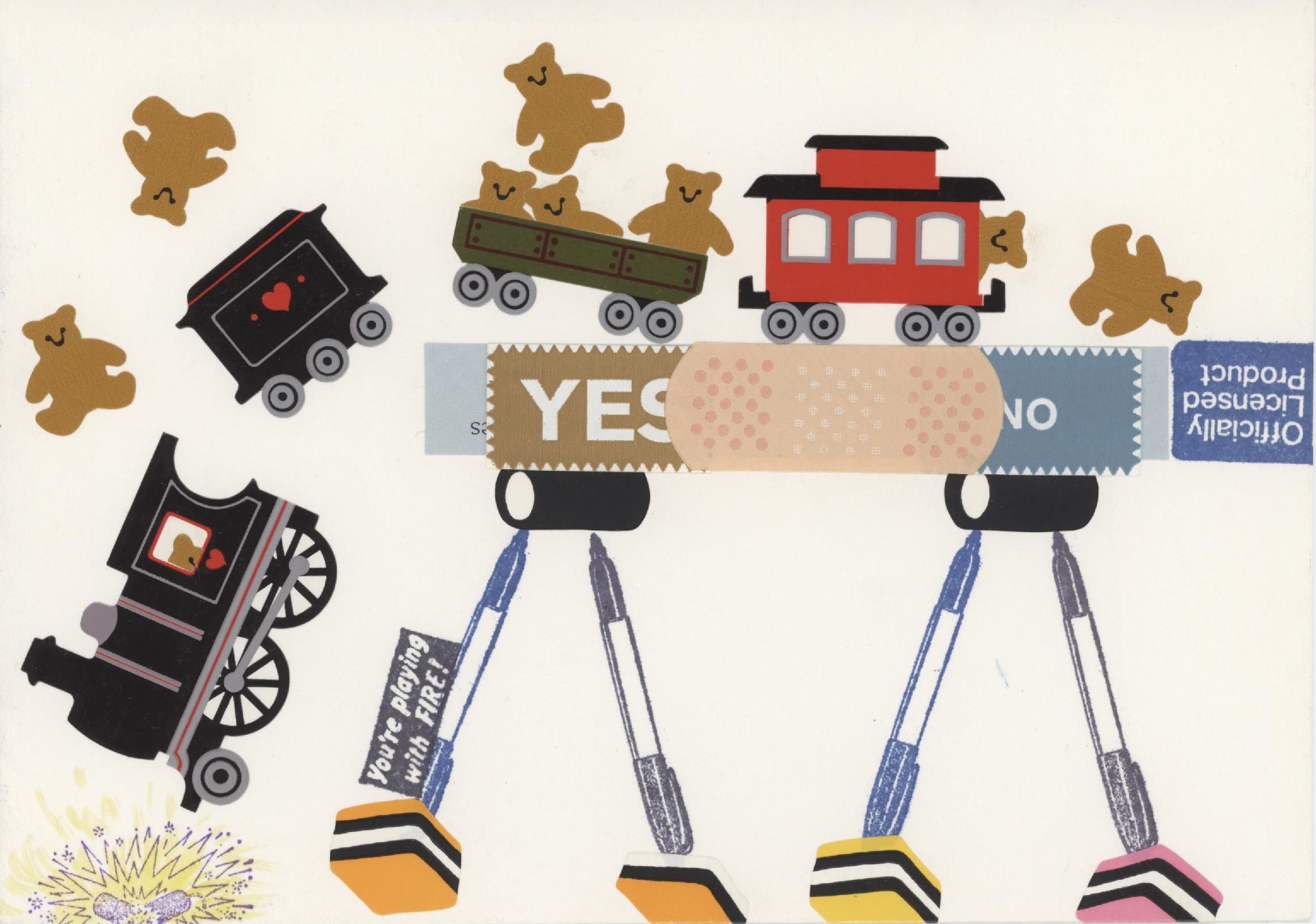
Someone once gave me a set of adorable stickers. I did what I could with them on this envelope:

Elephants would be more appropriate. Pretend the bears are Russians. Pretend that Russians were on the ballot. Oh wait, we were too busy pretending that Trump was on the ballot.

At last, Democrats control Congress. Poetry.

Thank God It’s Monday 21

Tomorrow, the United States will hold our most consequential election since Abraham Lincoln faced off against George McClellan in 1864. The only reason I’m saying this is because we had a consequential election here in 2024 and we fucked it up. Now we have Trump. I hope that tomorrow is the beginning of America’s comeback. Help us, Big Blue Bug!

The Big Blue Bug is a familiar site to anyone living in Providence, Rhode Island, or passing through on Interstate 95. Parents put their children to bed with comforting stories of the Bug and its adventures, fighting for democracy and kicking fascists to the curb with the help of its trusty sidekick, the Great Pumpkin. They stop off at Dunkin’ Donuts after every successful mission. Democracy runs on Dunkin’.

The Bug is so popular that the company is now called Big Blue Bug Solutions. Don’t tell me you don’t love the Bug!

This postcard is from the 1990s. Back then they had stacks of them, for free, in the Providence airport. I mailed them all over the country.

“…It was then that the Big Blue Bug carried you.”

Good luck to all of us, and to democracy, tomorrow.

How to talk to an editor

If you write something shorter than novels and you want to see your poem, essay, memoir, cartoon, or story published, you can publish it yourself or you can submit your work to a literary magazine.

If you self-publish, class dismissed.

If you choose a litmag, carry on reading.

Litmags (I prefer zines, but litmag is by far the more common word) are staffed by editors. Editors are people just like us. They are in love with language. They have worked their way up from fetching coffee and bagels to reading the slush pile1 to assisting the editors to being the editors.

To find your target editor, choose a litmag. Do you like their material? Do you like how they present their material? When the saints go marching in, do you want to be in their number? Our example tonight, which I just invented, is Thrilling Wonder Stories. (I would call it Litmag, but there already is a Litmag.)

Thrilling Wonder is a scrappy little litmag that opens their submissions portal on the first of every month. They have a cap, though: They only read the first 200 submissions. Today is the first day of the month, so let’s move like we have a purpose, people.

Find Thrilling Wonder’s masthead. This is usually under About. The masthead lists all of the editors and everyone else on their staff. NEVER SUBMIT TO A MAGAZINE THAT HAS NO MASTHEAD. If you don’t know who you’re dealing with, go deal with people who aren’t in a Witness Protection Program.

Once you’ve located the editors, go to the Submissions page. Submissions does not involve whips and black leather corsets. This is writing, remember. It’s not that much fun. Submissions will include the litmag’s guidelines. Read the guidelines! This is where you find out all of the following:

  • The magazine is open or closed for submissions. They read all year or, like Thrilling Wonder, they have some kind of limit.
  • The magazine pays for what they publish. Or they don’t.
  • The magazine charges a fee for each submission2. Or they don’t.
  • What they want and what they don’t want. For example, Thrilling Wonder has issued a call for submissions based on a prompt: “For our spring issue, we’re looking for stories about heroic bloggers who fight every day for truth and justice.”
  • Word count. Don’t send them a 10,000-word poem if they only want a 100-word poem.
  • Just read the whole thing. You never know what you’ll find. They might accept reprints; they might not. They might make you wait a week for a reply; they might make you wait a year. Etc.

You’ve read the submission guidelines. You’re bursting with hope. There on the screen is a big fat SUBMIT button. This is it! Click!

Uh-oh, they want a cover letter.

Stay with me.

You’ve visited the About page, so you know who’s running this thing. That’s half the battle.

Thrilling Wonder has an executive editor, two fiction editors, three poetry editors, 12 people listed as readers (they are the ones who make the first pass through the slush), and the office dog, Romeo. That’s a bunch. When you write your cover letter, don’t begin by saying “Dear Delta, Echo, Foxtrot, and Golf.” They are not an accounting firm. I always say, “Dear Delta, your fiction editors, and your readers.” Or simply, “Dear Delta and readers.” Don’t get cute and write to Romeo.

The rest is even easier.

Dear Delta and readers: I’m submitting a memoir of 5,000 words, “How I Found My Car Keys.” Thank you for your consideration.

If you’ve published before, mention it.

Dear Delta and readers: I’m submitting a memoir of 5,000 words, “How I Found My Car Keys.” Thank you for your consideration.

My work has appeared in Crochet World and Gardeners World. I recently wrote about the World Cup for the World Almanac.

Regards, Steve Bieler

Editors are in love with language, but they have a staggering pile of manuscripts to read every day. (The exceedingly popular magazine Tin House reported, in 2019, receiving 20,000 submissions annually.) When editors start reading a story or whatever, they want to find out ASAP if they’re wasting their time and should move on or if they’re really onto something.

They want to be onto something. When an editor loves a manuscript, she can’t think of nothin’ else. So make her job easier. Read the guidelines, find the editors’ names, and write ’em a nice short cover letter. It’s the work that counts.

Bonus: What do you do if they also want a bio?

They almost always do. The best policy is to keep it short and keep it in the third person, as if you’re looking at yourself and trying to be polite. Or keep it short and in the third person, but with a twist only you can provide. I refer you to the best advice I’ve ever read on this subject: “How To Write An Author Bio That Isn’t Boring AF.”

That’s it. Don’t overthink this, but don’t skip any of these steps. And if you want to find out what life is like on the other side of the fence, I recommend this investigative piece from Chill Subs: “So You Want to Join a Literary Magazine?”

You can do this. Good luck!

Notes:

1  “Slush pile” is a term for manuscripts the magazine didn’t ask for, but here they are anyway.

2 I hate paying for what most likely will be a rejection, but litmags are not rolling in dough. They can use some love. If I’m into the zine, I will do it.