The Tortured Bloggers Department

Taylor and Travis are getting married. Everyone is talking about this. Now I must, too.

Travis, of course, plays football, which immediately makes him of zero interest to me. Also, no character in a book, film, or song will ever be named Travis. Yuck. Imagine these famous lines with his name:

Travis, can you hear me?

You’ll have to think for both of us, Travis.

Tell me about the rabbits, Travis.

Travis Jones, I always knew someday you’d come walking back through my door.

[Whispered before dying:] Travis!

With Travis out of the way I can discuss Taylor. I recently learned that two men of my acquaintance are Swifties. I will call them Swifty 1 and Swifty 2. Swifty 1 is an internationally recognized expert on Bruce Springsteen. Swifty 2, when we lived in the same city, was in my face every day with his love for Hungarian composer Béla Bartók, plus he could catch anything hit to him in center field. Both men are devoted to Taylor, despite the fact that each of them was already a walking, talking, go-to-work-every-day adult in his 30s when Taylor was born.

Obviously, I’m missing something. Also, my wife says I’m being a grump, or just stupid, for ignoring her. And my wife is not Swifty 3. So let’s move on to Taylor and writing, because people already have, as in this workshop, “Write Like a Popstar.”

Continuing the discussion I began in our last, very exciting post, I will quickly mention a few more writing books because I believe they can help you. Just don’t get bogged down in them and forget to write. You can be sure that Taylor and Travis read these books to each other on their date nights.

In my first post, back in 2016, I wrote about Jessica Page Morrell’s Thanks, But This Isn’t for Us: A (Sort Of) Compassionate Guide to Why Your Writing Is Being Rejected. I stand by these thoughts.

You can’t go wrong with Stephen King’s On Writing: A Memoir of the Craft, and I guess that proves I’m not a grump, O my wife, because I really resisted reading this thing. The overall tone is ornery; King wrote a chunk of it while he was in terrible pain from being run down by a van in the middle of the night. But the book came along at the right time for me. I felt as if Stephen King were giving me permission to write again following a lengthy silence.

Elizabeth Benedict’s The Joy of Writing Sex (good sex scenes should always be about sex and something else) is enlightening and fun to read. It was published in 1996, when Taylor was listening to Britney and Travis was playing T-ball, but sex is still sex.

I’m not going to tell you that Bruce Holland Rogers will always be helpful in Word Work: Surviving and Thriving as a Writer, but he’ll always be friendly and I found some real inspiration in these pages:

“Even if the overall odds are terrible, a story that you wrote in the glow of overconfidence has an infinitely greater chance of publication than the story you didn’t write while you were feeling more realistic.”

Rogers includes something I have never encountered in a writing book. He believes that writers can’t make it without willpower and discipline; no argument there. But he also believes that willpower and discipline wear out. “What helps more is to profoundly overestimate your chances for success,” he writes. “This isn’t just a matter of positive thinking. You’ll perform best if you actually change your state to something that’s close to hypomania.” Dear Readers: Would one of you (other than Taylor) please try that and tell me how it goes.

Lastly, I want to mention Jane Anne Straw and Unstuck: A Supportive and Practical Guide to Working Through Writer’s Block. It’s not a great book, but Straw is unflaggingly honest, and frankly, reading about how screwed up she is, and her writing clients, I felt better about how screwed up I am.

Straw says good things about your writing practice, writing as a process and a product, “positive interactions with the page,” and the importance of showing up for yourself. She also suggests that you take your book on vacation. Just as sales people follow the rule of ABC (always be closing), you should always be writing. The only complication with this advice is taking your book on vacation while you are also taking your partner on vacation. On a nine-day road trip through the Great Cities of the Pacific Northwest in July, I managed to write three days out of nine while successfully maintaining my marriage. A .333 batting average was probably the best I could have hoped for.

And that’s my writing advice for my favorite tortured poets, Taylor and Travis.

Word count: 68,217. Sometimes I leap forward and sometimes I’m learning to crawl. That’s Steve’s version.

Keeping cool in the dog days of summer.

Put that writing book back where it came from or so help me

I’ve been interviewed three times.

The first time was in 1982 at a science fiction convention in Vancouver, B.C. The interviewer, a woman from a local TV station, thought I was Frank Herbert. The interview ended abruptly when she asked me, looking back, what I thought of Dune and I told her.

The second time was in 1991 when a reporter on the environmental beat asked me how I had conquered junk mail. I don’t ever expect to field a question on this topic again.

The third time was in 2023 when I won a contest at Moment magazine. One of the editors asked me for writing advice for beginners. I told her that there’s so much writing advice flying around the world that it could make you insane trying to make sense of it. As a writer, I could’ve offered some subtle imagery (roll up your sleeves, dive into the deep end, step up to the plate, fish or cut bait, cut the tape, cut the crap, the longest journey begins with a single step), but instead I kindly suggested that you just do it. I don’t believe I quoted William Zinsser, but I should’ve: “Write it first. We’ll figure out what it is later.”

I can’t predict if anyone will ever ask me this again (if they do, I have Hemingway cued up), but I do stand by my statement that there’s too much writing advice in the world. My favorite used bookstore has an entire bookcase of barely used how-to-write books. My second favorite used bookstore could boast the same if they ever got organized enough to fill up a bookcase with these hopeful yet unwanted books.

This is the part where I contradict myself

Are all writing books useless? Here’s a definitive answer: Yes and no. Yes because you could easily substitute learning about writing for writing. No because a few have spoken to me. They might speak to you. Here’s one:

Dorothea Brande’s Becoming a Writer was published in 1934, which might make it the first book ever published on the topic. (If I’m right, the second would be Brenda Ueland’s If You Want to Write, published in 1938.) Becoming a Writer still sings. Ray Bradbury read this in high school a year or two later, and it meant a lot to him; Becoming a Writer is mentioned 10 times in Becoming Ray Bradbury.

Brande believed that writing could be taught, that we all have some genius inside us, and that writing is usually taught wrong: creative writing classes only teach the technical aspects, when they should be investigating the personality flaws that get in our way. She had a lot to say about unlocking the unconscious.

She divided beginning writers into four categories:

  • The person who finds it difficult to write anything at all.
  • The one-book writer.
  • The occasional writer (writes well but suffers long silences).
  • The uneven writer (excels in some things but not in others, creating no satisfactory whole).

Brande’s diagnosis of the beginning writer’s troubles made me think of Thomas Mann: “A writer is a person for whom writing is more difficult than it is for other people.”

Brande’s ideas about the unconscious reminded me of something Brenda Ueland wrote in her autobiography, Me: “I learned that you should feel when writing, not like Lord Byron on a mountain top, but like a child stringing beads in kindergarten, happy, absorbed, and quietly putting one bead on after another.”

Finally, Brande, almost a hundred years ago, gave me my motto:

“It is well to understand as early as possible in one’s writing life that there is just one contribution which every one of us can make: we can give into the common pool of experience some comprehension of the world as it looks to each of us.”

If you read the edition with the introduction by John Gardner, you’ll find that it’s appreciative for a while, but soon veers into a defense of creative writing classes. This strikes me as a dick move.

Jeremiah Murphy was a Boston Globe columnist who was one of my journalism teachers in college. “Throw the semicolon key right out of your typewriter!” he said in our first class. He taught us how to write an obituary, which has served me well. He was probably as scared of us as we were of him.

Jeremiah Murphy’s Boston is not a writing book, and because it was published in 1974 I don’t recommend it unless he was your teacher, too, or you lived in Boston in the 1960s. But Murphy learned an important lesson early his career when the paper sent him to Rome to cover the elevation of a Boston cardinal.

“When I got to Rome I somehow got my identity mixed up and decided I was Harrison Salisbury or Scotty Reston of The New York Times or somebody like that,” he recalled. “My stories were flat.”

His editor, after reading these stories, called him and said: “I want you to write this story just the way you would write it from South Boston.”

After the ceremony, “I walked part of the way back to the hotel in the rain. I needed time to get the lead just right in my mind. I got up to my room and ordered a big steak and a lot of beer, and then I sat there in my skivvies and wrote that story just the way I would have written it from South Boston.”

So the editor’s advice (“I suspect now it was really an order”) “taught me that when you get behind a typewriter you have to be yourself, and this is what I always try to do.”

Good advice; thanks.

My word count: 67,575. I might be able to finish the first draft by the end of the Labor Day weekend. As of this evening, I have my protagonist hanging by a thread over a pit full of Bengal tigers who are really angry about colonialism. All I need is a timely rescue and an epilogue.

Not Bengal tigers, but still dangerous.

My origin story

Sometime between the Spanish Armada and the first cat video, I was a science fiction fan. I went to fannish parties. I published fanzines. I went to conventions. I danced at convention dances (“Mr. Roboto,” “Rock Me Amadeus,” “Rasputin,” “Paradise By the Dashboard Light,” “Don’t Stop ‘Til You Get Enough”). I made love to fannish women (thank you!). And I hoped that someday the Worldcon would come to a nearby city so I could go there, wear a lanyard, hand out zines, take home merch, dance to “Rock Me Amadeus,” make love to fannish women, etc.

In 2023, I learned that Worldcon was coming to Seattle in 2025.

This presented a problem. I haven’t been a fan since the internet discovered the browser. I haven’t written a genre story or even attempted one in all that time, except for a time travel story I occasionally fiddle with, though I suspect it’s more about me yelling at the modern world and less about time travel. My understanding of the speculative fiction genre fell over and died around 1997.

Then I thought, maybe I should go anyway?

I vowed that if I did go, it would be with a credential that’s fresher than my last published skiffy story (1991). So I set to work. I eventually decided not to attend Worldcon. (Eels put it best: “The trouble with dreams is you never know/when to hold on and when to let go.”) But I kept writing, and after 2,700 words I was done. The result displays the two major literary influences of my childhood: Andre Norton and the original Twilight Zone. Although in 2023, while I was writing it, I was also reading a lot of Isaac Bashevis Singer. Draw your own conclusions.

Actually, you can draw your own conclusions, because “My Spring Cleaning” was published on Aug. 3 in the Summer issue of Fantastic Other. Worldcon starts on Aug. 13. That’s right, bitches. With 10 days left on the shot clock and the entire season on the line, I threw the Hail Mary for the win. Unbelievable!

Maybe you can go home again. I didn’t even have to slingshot around the sun.

Amadeus, Amadeus. Amadeus.

Back to my book. Word count as of today: 65,000!

Time enough at last

When I turned 13, my pre-school sister believed that I had attained godhood. “You’d better watch out,” she told some preteen hooligans at the beach. “He’s a teenager, you know!” This almost got me into a fight with a pack of pudgy 11-year-olds. I would’ve had to hack my way out with a paperback copy of Starship Troopers or a rolled-up issue of The Writer.

I don’t know how I got hooked on The Writer, but I do know that The Writer introduced me to Lesley Conger. Each month, Ms. Conger (a pen name for Shirley Suttles) wrote a column called “Off the Cuff” that seemed written expressly for beginners, dreamers, and starry-eyed dragon-slayers. Count me in. She was the only writer I knew (I felt as if I knew her) and she was encouraging. Her plain talk made a career in writing seem possible.

(I’ve just been informed that WordPress will not allow me to bring my parents back from the dead to offer their perspectives on their son’s choice of career.)

Ms. Conger, in a reflective moment, wrote that in high school her vision of herself as a writer included a Swiss chalet, a fire in a stone fireplace, reams of fresh typing bond, and her typewriter. No worries, no responsibilities, no interruptions. Just words dancing down the page. In high school, I tried to replicate her vision in my parents’ basement, excavating a place for myself in the gloom of the cast-off and the forgotten, but after awhile it began to seem like solitary confinement down there.

Recently, I learned about writing residencies.

There are more than 500 residencies in the United States. Their programs are, literally, all over the map. Some offer you a cabin in the woods, where you can sit all day and open a vein and try to write and they bring you meals until you blow your brains out. In other programs, they want you to write but they also want you to teach a class, deliver a lecture, visit folks in a nursing home, pull toddlers from a three-alarm fire, and collaborate with your fellow residents, who could include artists, sculptors, choreographers, UFO contactees, etc.

I am not moving to a chalet in Switzerland or anywhere else, but I could go away to one of these cabin-in-the-woods places for two weeks. That sounds like a dab of heaven, and a lot more comfortable than a basement. There are pluses and minuses, though. No dogs to walk, for example, but also, no dogs. No wife to contend with, but also, no wife. This summer, after some discussion with my wife and many guilt-ridden biscuits supplied to dogs, I applied to two programs where the only money I have to come up with is for transportation there and back again.

If this doesn’t work…I’ll stay here and keep dancing down the page. Word count as of today: 63,200.

Tango dances down the log.

How to unstructure a novel

We like to go dancing on New Year’s Eve. We never know what kind of band will play for us. The earnest young people who tone down their playing so as not to spike Boomer blood pressure? The cool old guys who always wear Hawaiian shirts?

The uncertainty is part of the festivities, but there was a band years ago that swung into “Sharp Dressed Man” and immediately revealed that they didn’t know it. Deborah thought maybe someone had described it to them. Why else would they rip the bass line out of “Smoke on the Water”?

Years ago, I envisioned the climactic scene of my novel, from the circumstances that birthed it to the moment when the Forces of Good triumph. I even imagined the soundtrack. I started writing this scene in late May, and here it is July and I am still writing it. The scene, which keeps surprising me, so far covers two chapters and 25% of the entire book. Perhaps my readers could read that and skip the rest. It would save time.

Anyone reading what I’ve written so far would wonder if I had ever read a novel. Perhaps I’ve only had a novel described to me.

Well, it’s the first draft. I’ll fix it in post.

Word count as of today: 61,144

Until next time, keep your head in the clouds and your paws on the ground.

What I did with my New Year’s resolutions

To start the new year, I always make one or two resolutions. This is because I once interviewed a psychologist who told me that if you make more than two, you’ll make yourself sick. And to put an extra string on my bow, I try to start a few weeks early.

In 2024, after I had recovered from everything I ate at Thanksgiving, I resolved that in 2025 I would finish writing the first draft of my novel. I estimated I was writing a 65,000 word book, which is on the slim side for a novel, and I further resolved that I would finish it yesterday–the day of my birthday party. I usually make an absurd speech at my birthday party, and brandishing a first draft in one hand and a bottle of champagne in the other seemed like it would impress everybody, even people who know me.

In May, I realized I was writing a much longer book. There was no way I could make my deadline, and, in fact, I didn’t. But the day before the party, while I was writing, I arrived at a gap in the narrative, or in my brain. I turned to the skies and waited for an inspiration. There was no inspiration. But when I again looked at my screen, I glanced at the word count and the number I saw was something I should play in the lottery or something I should announce to a sunny backyard full of friends who were eagerly awaiting their crack at the frosted cupcakes.

I chose the announcement. Here’s the number: 59,590.

The psychologist I interviewed said that it’s OK if, by the end of January or the end of June, you haven’t achieved your goals. So long as you’re still trying, you’ll be far happier than everyone who gave up or forget most of their resolutions in the first month. I’m happy. And not just because I love cupcakes.

I miss rejections!

I don’t miss the act of an editor saying “No.” What I miss is the hope. For example, starting the new year by submitting five stories to 25 magazines. Off they go, and I wait patiently to see which one will change my life.

Will a “Yes” change my life? I can think of two that did. The first time I sold a story, I decided to keep going. And years later, when I won my only contest, I decided to keep going. If I’m submitting stories, I’m part of a literary conversation, even if I’m the only one who knows it’s a conversation. It gives me hope. As Mr. Micawber said in David Copperfield, “Something will turn up.”

When I got serious about finishing the first draft of my novel, I decided to eschew distractions. I couldn’t eschew my wife and our dogs, but I stopped hunting down magazines and editors and submitting stories. In fact, I stopped writing stories. Been there, done that, went somewhere else.

And then I hit that point in the novel-writing game where you ask yourself, “What am I writing here?” And “What happens next?” And “What the fuck…” I didn’t panic. I knew I’d find my way. But I decided to fall back on something familiar.

I have two stories that have been sitting in limbo since the day I finished them. It could be that I never sold them because I think they’re finished but they really aren’t. I don’t know. But I’m giving them one last chance.

For story #1, I hired a service that reads the story, considers what I want (money and social media activity, primarily), and then recommends 10 places to send it. I attended a webinar run by the two editors running this thing and they impressed me. The 10 zines they chose surprised me. They were all lively, interesting, and appeared to be part of a larger conversation. This service cost me $50.

For story #2, I followed my usual strategy of choosing 10 places based on what they pay.

The way literary magazines work, some will be open for submissions when you visit their site and some won’t open until September. Some editors will respond to you within a week and some within a year. Most will say “No.” Stephen Marche, in a depressing book with the uplifting title of On Writing and Failure, wrote that “rejection is the river in which we swim.” He’s right; the majority of us will receive far more rejections than acceptances. Everyone else says to grow calluses; Marche says we should “relish the rejection.” Don’t go down that road. Note the rejection in your log or diary or scratch it into the wall and submit the next thing. Get back to work.

The lesson I learned from this exercise (this vacation from my book) is that I don’t want to submit stories anymore. It takes too long, even though they don’t call them short stories for no reason. They’re only a few thousand words each. A novel, a single work, suddenly seems simpler.

Well, I’ll let you know if I get any takers. Meanwhile, my break is over, and I am again forging–slowly–ahead. I just reached 56,004 words.

How to get things done even if you have to sleep, eat, wash, earn a paycheck, and talk to your family

A writer of my acquaintance once told me that she could only write when she was sitting at her desk, with her cup of tea, with the light entering the window and refracting at an exact angle through the crystal she’d hung there. She didn’t say what happened to her writing when the Earth continued to rotate. She also didn’t say what happened when there was no traveling sunbeam entering the crystal. We lived in a gray, rainy place.

I don’t mean to pick on her. Writing is difficult work, and if the adverbs and the world’s indifference don’t kill you, the solitude will. But if your plan is to write only when conditions are right…you are not going to write.

A routine is more important than whatever you hang in your window. But if you have a life, how the heck can you fit another routine inside it? I struggled with this issue for years, until I read “How I wrote a book in 15 minutes a day” by Julia Dahl.

Dahl believes that all of us can find 15 minutes each day to write, and when she wrote this essay she had a job, a baby, and a husband to contend with. Writing in micro-units is not a new idea—Brenda Ueland suggested it back in 1938 in If You Want to Write: A Book about Art, Independence and Spirit. (Ueland suggested stealing the time from your day job, a suggestion I ran with for decades.)

It’s an idea that has been promoted in other fields as well:

Carving out 30 minutes a day to spend in the garden might be a challenge for you at first, especially if it’s winter and dark for much of the day. But it is amazing how quickly half an hour disappears when you get involved in something you enjoy. (Greg Loades, The 30-Minute Gardener)

I am not a morning person. Ask anyone who ever tried to manage me. Neither is Julia Dahl; she writes in the middle of the day. I am more the type of person to hits his stride after midnight. But I did it. I trained myself to wake up before 6am, an idea I once would’ve considered blasphemy. As soon as I had armed myself with coffee, music, headphones, and my lucky hoodie, I found I had no trouble writing for 15 minutes. 15 minutes was not intimidating at all. In fact, I often wrote for up to two hours, which is exactly what Dahl found when she tried this. Somehow her baby grew up. Somehow my wife contends. This experiment went so well that I often returned to my task later in the day.

That was in October 2024. It was tough sledding for me at first, especially at Thanksgiving, the holiday that throws most of us off the rails. But here I am on June 1, 2025, and the word count on my novel stands at 55,407.

My writing slowed in May as I plowed into the climax of my book, which I envisioned years ago. What I didn’t envision was how difficult it would be to write it so that readers would understand it. I feel like I’m driving a Norwegian icebreaker named Fraya through the Barents Sea.

Many mystery readers enjoy a police procedural, and when the characters and the story are sufficiently compelling, that book will escape genre boundaries. But if, in writing the current scene, I turn this book into a train procedural, no one will read it except for the people who real railroaders fondly refer to as Fucking Rail Nuts. And all the FRNs will do is complain that I got the gear wrong. I am not writing for middle-aged male rivet-counters. Who buys most of the books? The middle-aged women who hold the world together. Their only experience with trains might be the Polar Express or your man Thomas.

My point is that this is how you get things done, or this is how I get things done: One step at a time. Sometimes, very small steps. When the time comes to revise, I’ll set aside a bigger chunk of my day. But for now, and because I have no publisher waiting for me, I’ll take my little slice of dawn. The dogs will wait.

Scoreboard update

As I write this, I have published four stories in four years. How have I maintained this blistering pace? When the railroad was invented in the 1830s, scientists were concerned that women were too delicate to travel so quickly. A forward velocity of 20 miles per hour would surely make a woman’s head explode, whereas we now know their heads explode because of Donald Trump.

I was paid well by today’s standards for all four stories. That’s a miracle here in the 21st century, when writers are so often compensated with likes, hearts, clicks, and “exposure” (that thing you die from). I remember Harlan Ellison hollering “Pay the writer!” in a documentary about his life. “Are you paying your printer? Your webmaster? Your artist? Pay the writer!”

Two of my stories featured women and three featured people in middle age (another miracle, given that most editors graduated from college about a week ago). Two are behind a paywall. My topics included chess, trains, sex, family, marriage, and baseball. All the major food groups. They were all fun to write, though the one I wrote based on my parents came close to killing me.

I find it interesting—to me, anyway—that I’m finding homes for these stories after I decided not to write more short stories. I swore an oath to the head of my order to write novels from now on.

That brings me to my first novel and my first draft, which today hit 52,300 words. I ended last week with 51,920 words. 380 words in one week? That’s barely more than 50 words per day. That’s how things go in the first draft, I suppose. Sometimes the words flow and sometimes I have a lot to think about. Anyone watching me would commit suicide to escape the boredom.

I’d like to finish my first draft by the end of June. How long will my draft be? My guess is 65,000 words. That means I have 12,700 words to write, or 2,546 words per week, or 363 words per day. That’s just a long email…if you know where you’re going.

I’ve been writing 10,000 words per month since December, so I’m confident I can do this. 10,000 words per month, or 120,000 words per year, isn’t much. Barry Malzberg, at the height of his career, claimed to be writing a million words per year. I imagine that Ray Bradbury, Norah Roberts, Danielle Steele, Stephen King, Dean R. Koontz, Robert Silverberg, and several others, in their prime, hit one million per year. They are out of my league. My current pace will get me where I want to go, and without my head exploding.

Lucky and Tango rest after a some major deconstruction in my archives.

The blog that came in from the cold

I published my first story in 1979. I received $21.50 and the sense that the world was mine. Neither of these things lasted long.

This week I published my latest story, in the Lemonwood Quarterly. “Two Tickets to Gumstump” is about marriage, trains, recycling trains, and recycling marriage. I was paid $200. I am feeling just as good as I did on that day in 1979 when I opened my mail and found that check from my new editor.

The only sensible ends of literature are, first, the pleasurable toil of writing; second, the gratification of one’s family and friends; and last, the solid cash. (Nathaniel Hawthorne)

Obviously, this kind of money is not going to change my life. (Though in Hawthorne’s time, with $21.50 you could outfit a family of 10 and a Conestoga wagon. With $200, you could burn down Chicago and then rebuild it.) But this sale still counts as solid cash.

Here’s how to follow Lemonwood, which has now released its second issue. There’s no paywall, no account to set up, and you don’t have to click an endless series of photos of bikes or bridges to prove you’re human:

Bluesky

Instagram

Facebook

Publishing my fourth story in five years seems like a good time to light a fire under this old blog. Yes, as you can see, I am still blogging, not vlogging, podcasting, TikTokketing, or whatever new thing will be invented this year that will eviscerate all the old things by next year. I’ve been blogging with WordPress since 2009; so long, in fact, that I have a sweetheart deal with them. They’re practically paying me to write this [citation needed]. At least I’m no longer writing and mailing a paper zine.

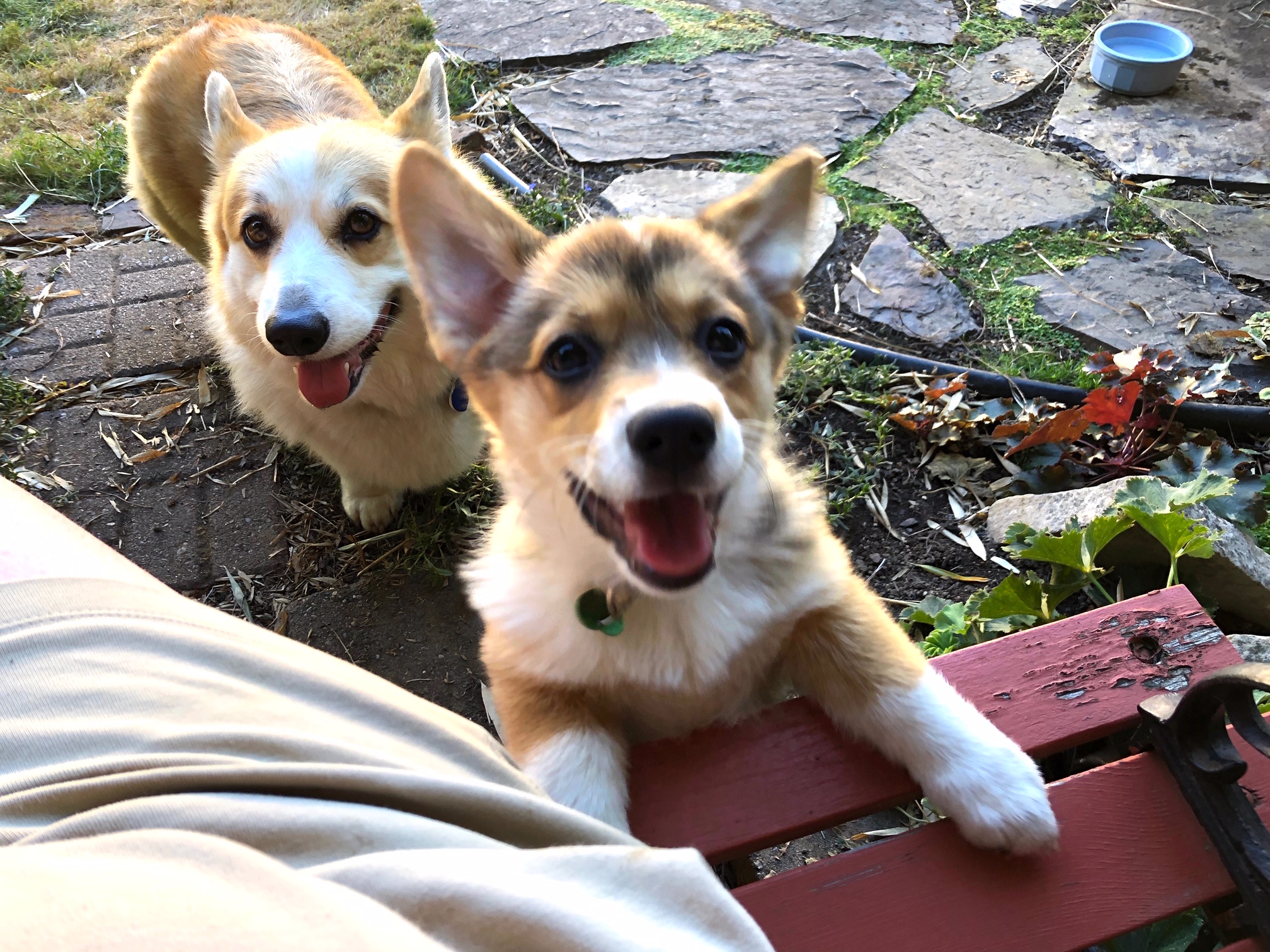
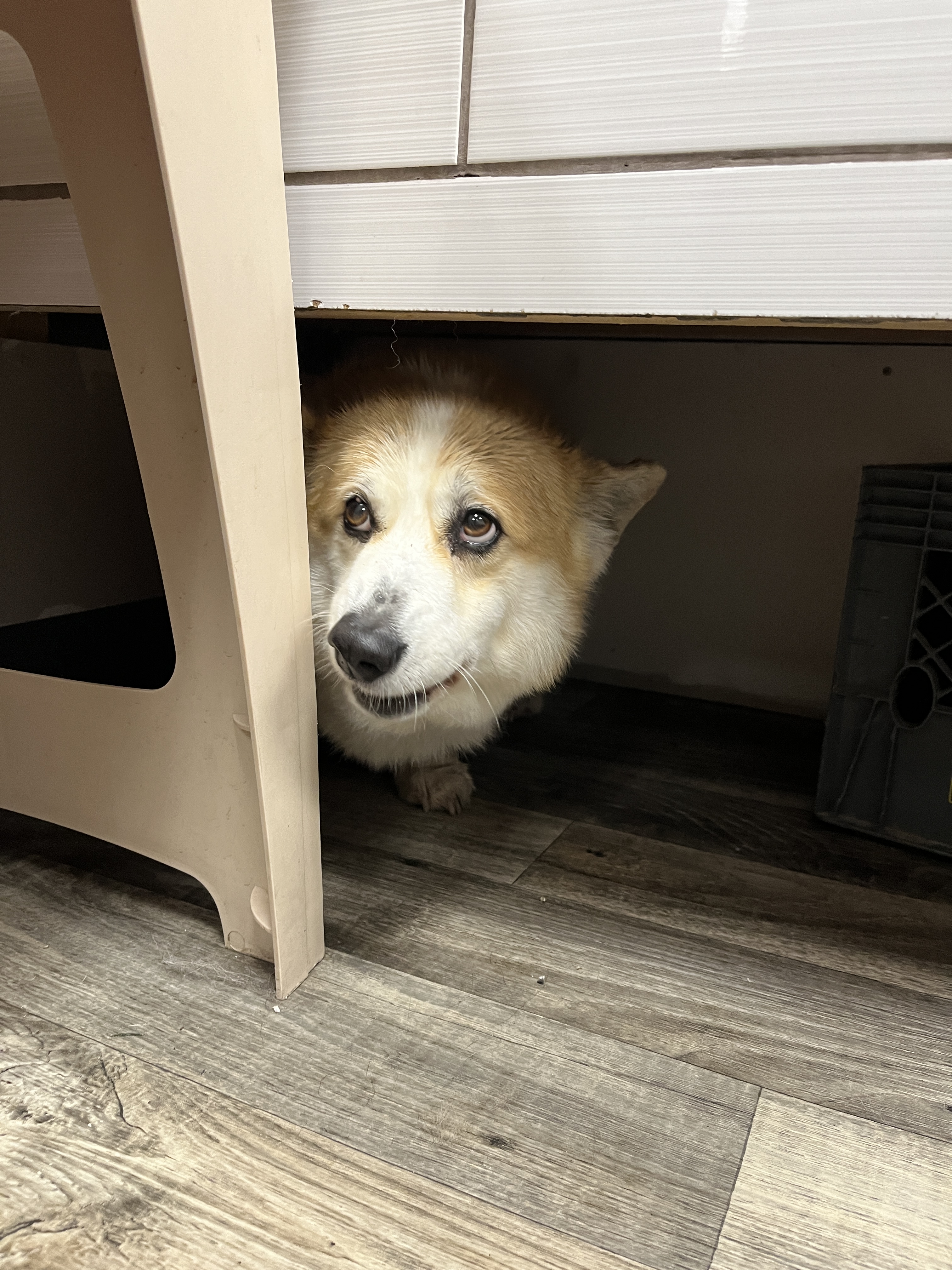
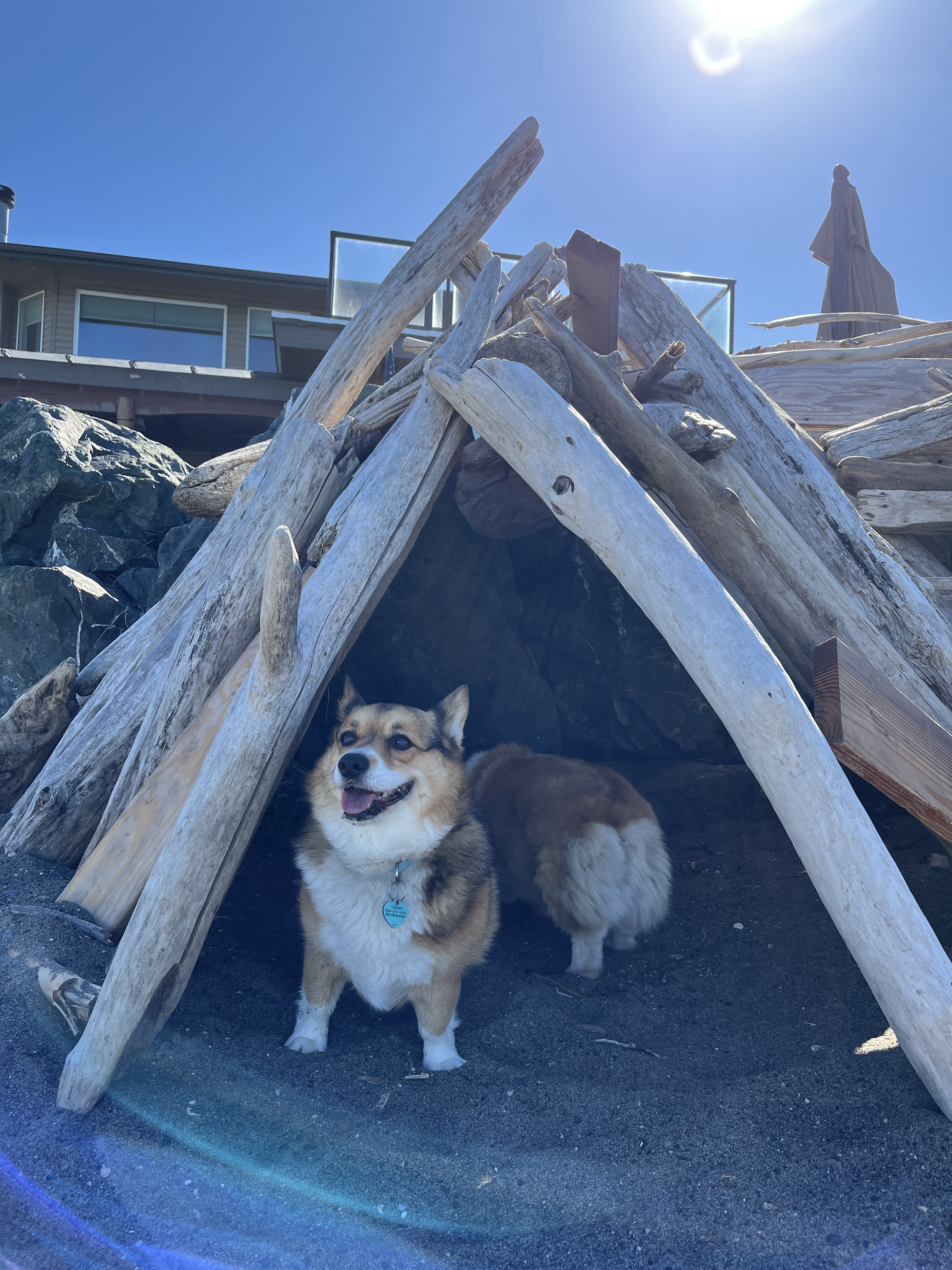
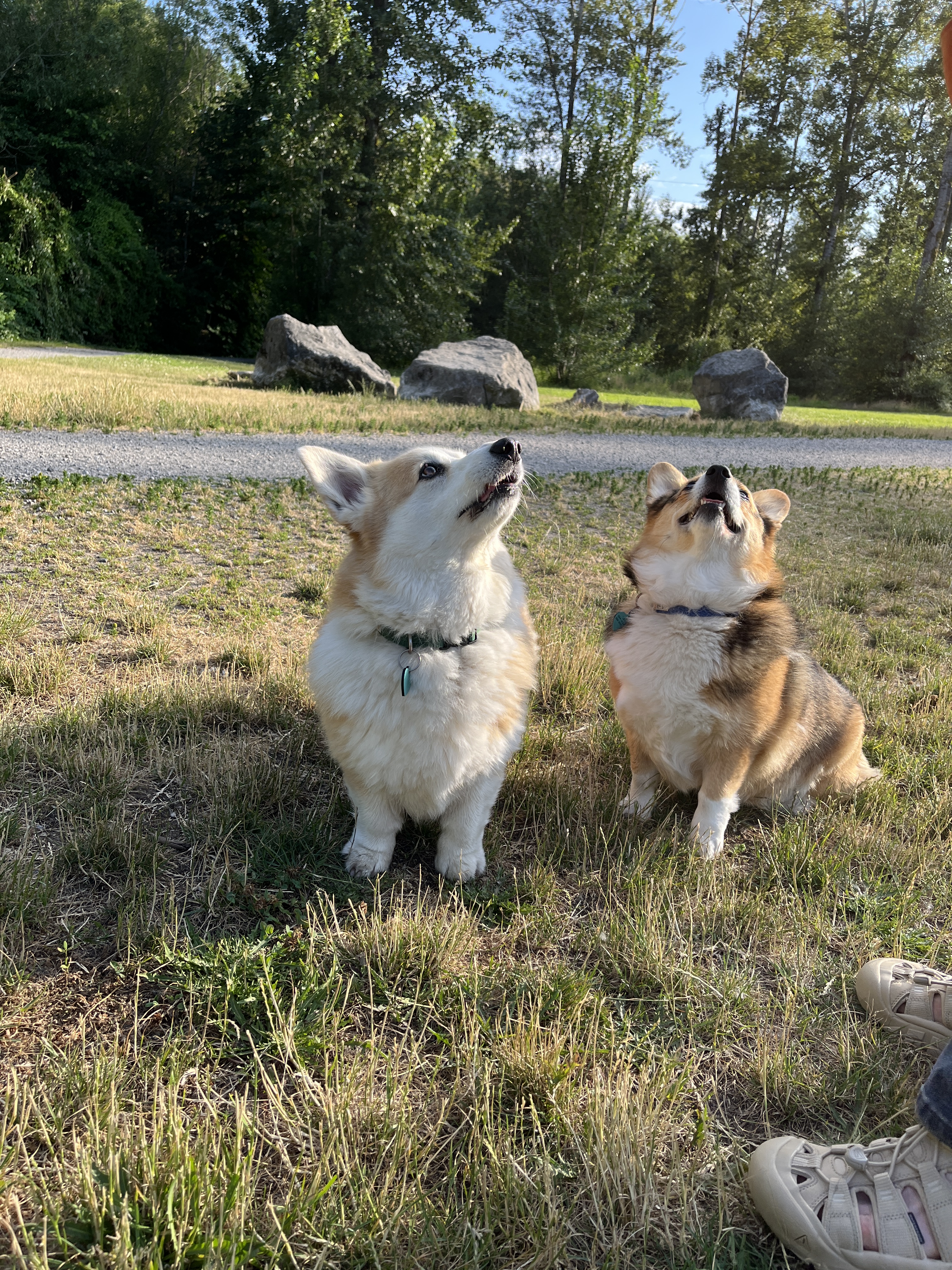
I’m going to post every Sunday. Next week: What am I doing in this canoe and what’s happened to my writing? Also, more photos of corgis on the attack. Thanks for reading.

Here’s the latest word count on the first draft of my novel as of Sunday, May 11:

51,920