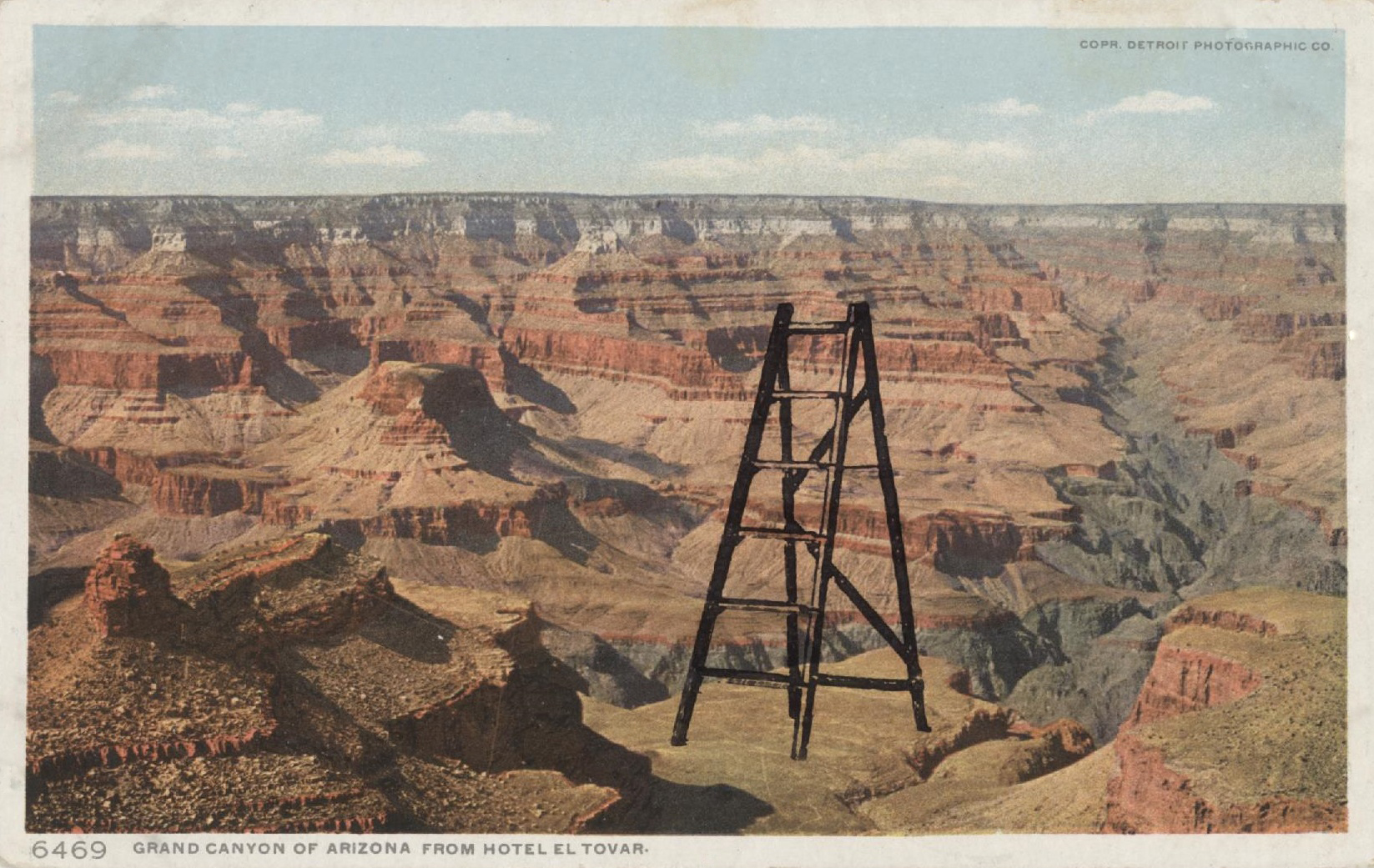
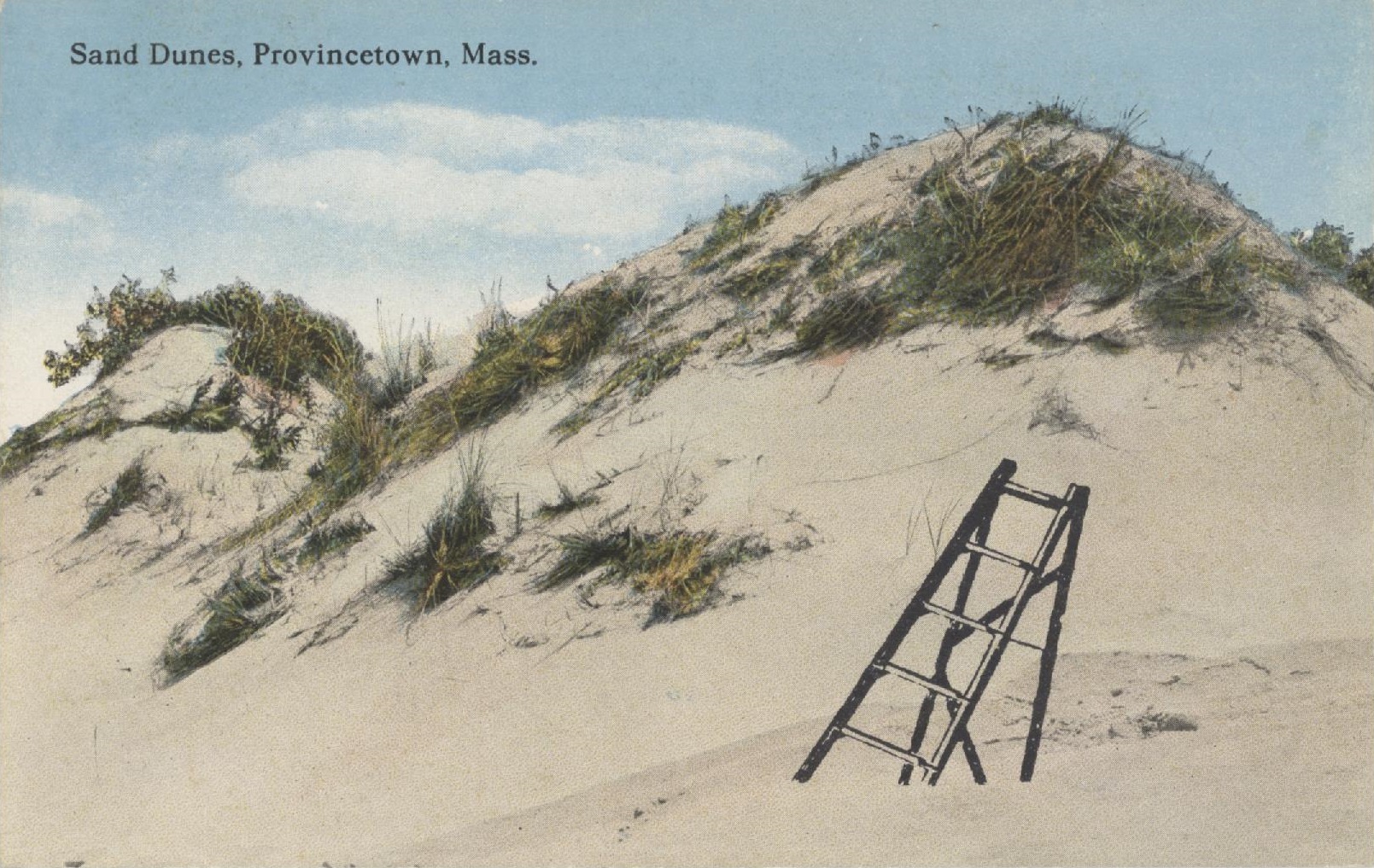
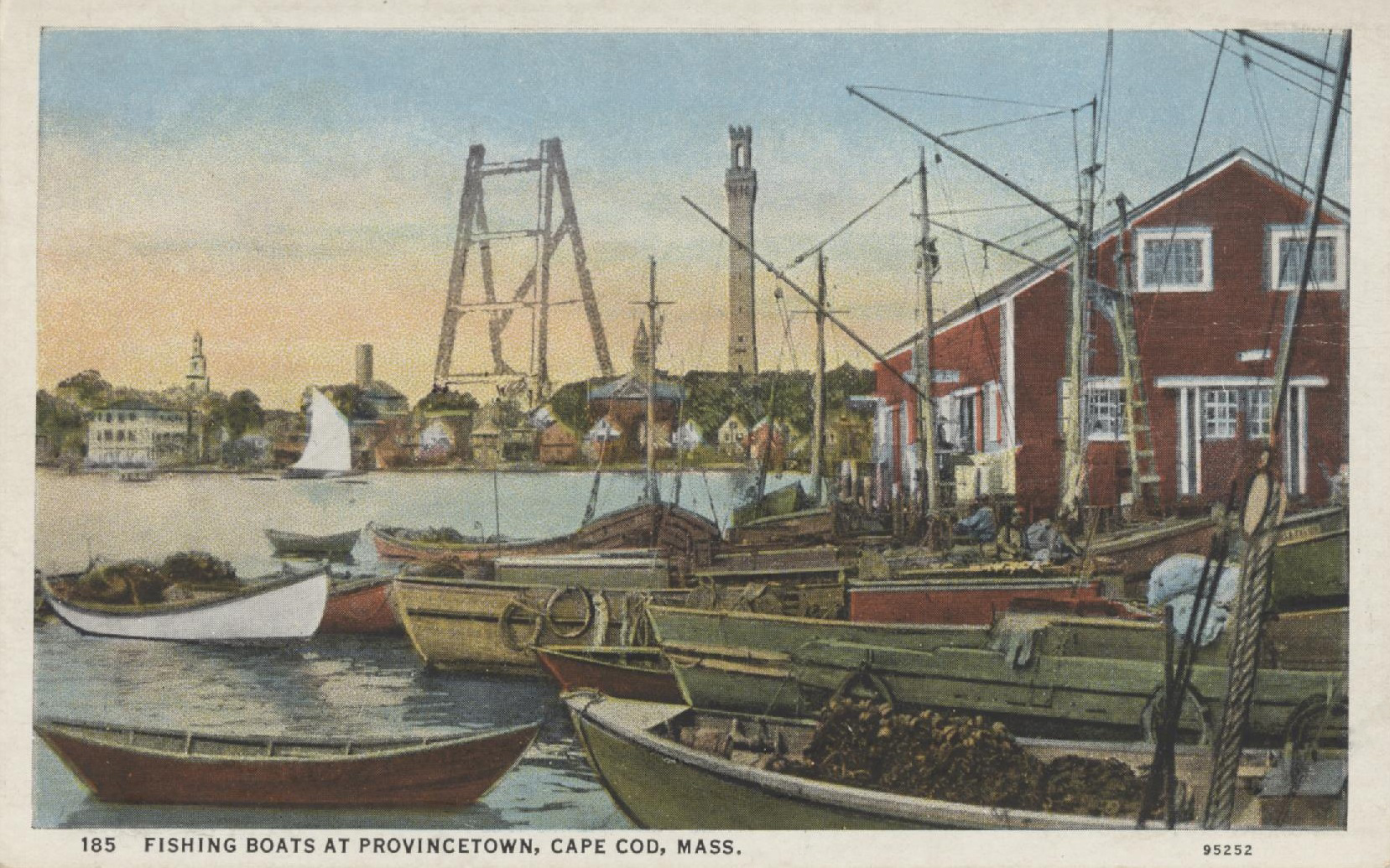
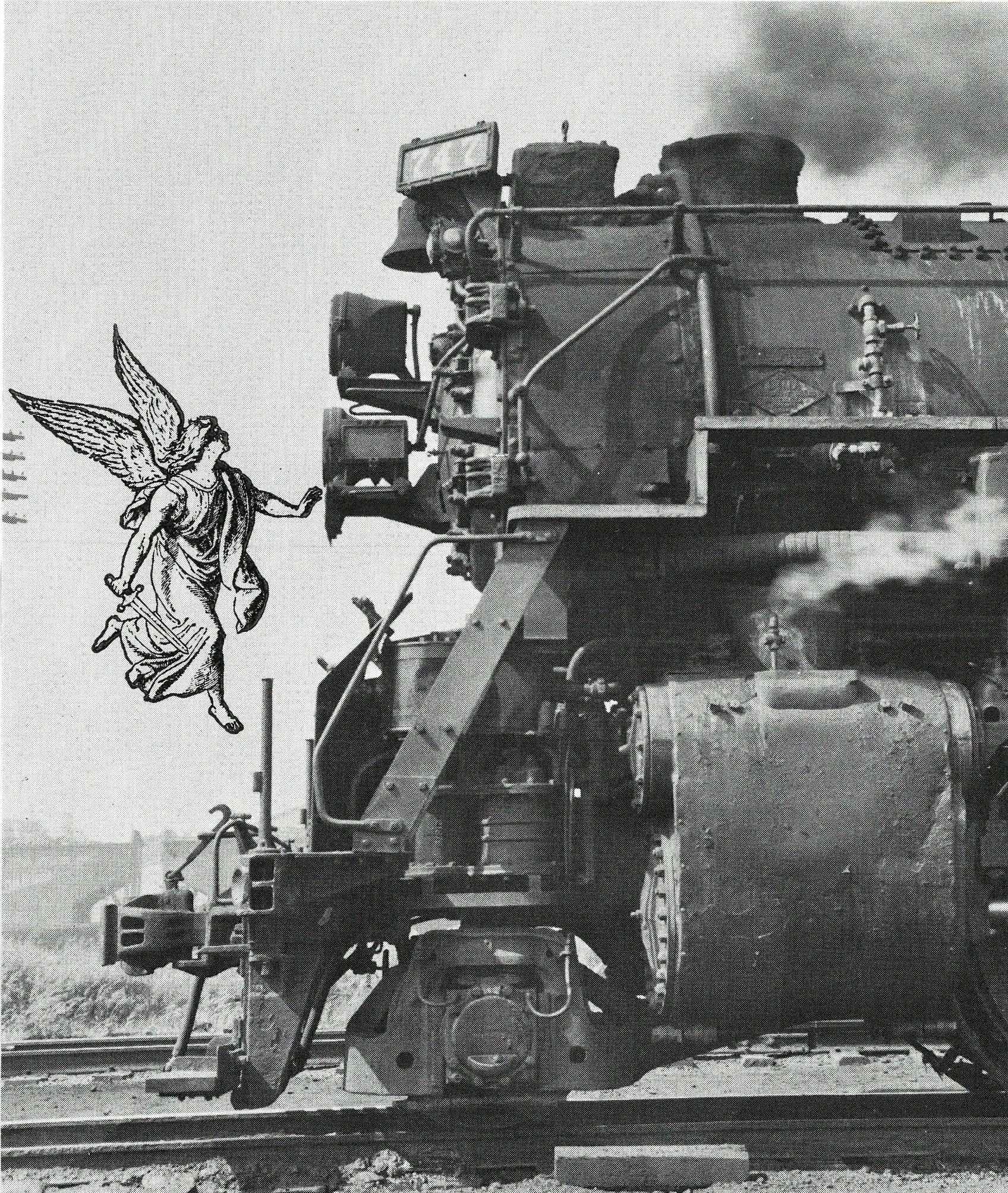
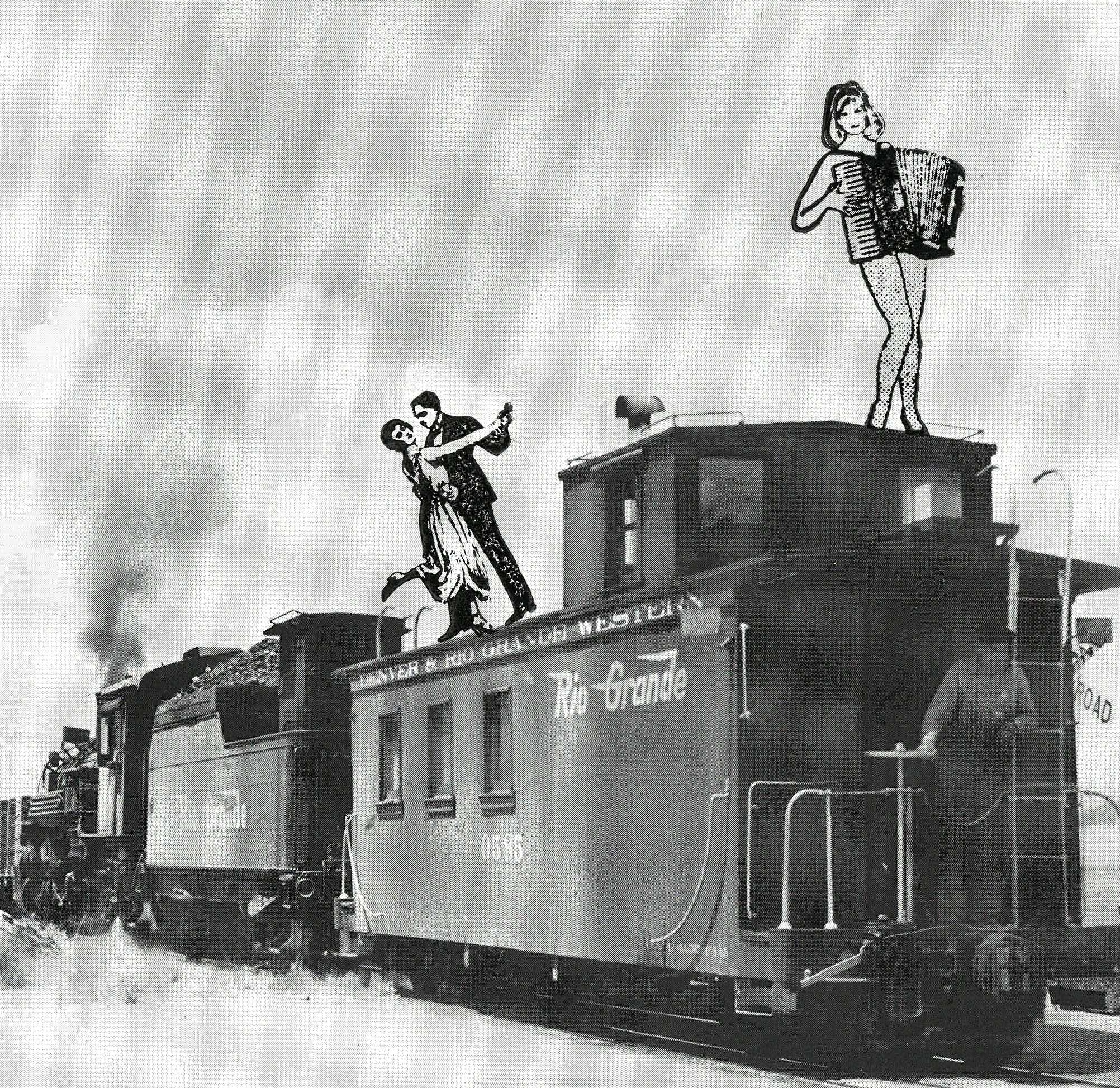
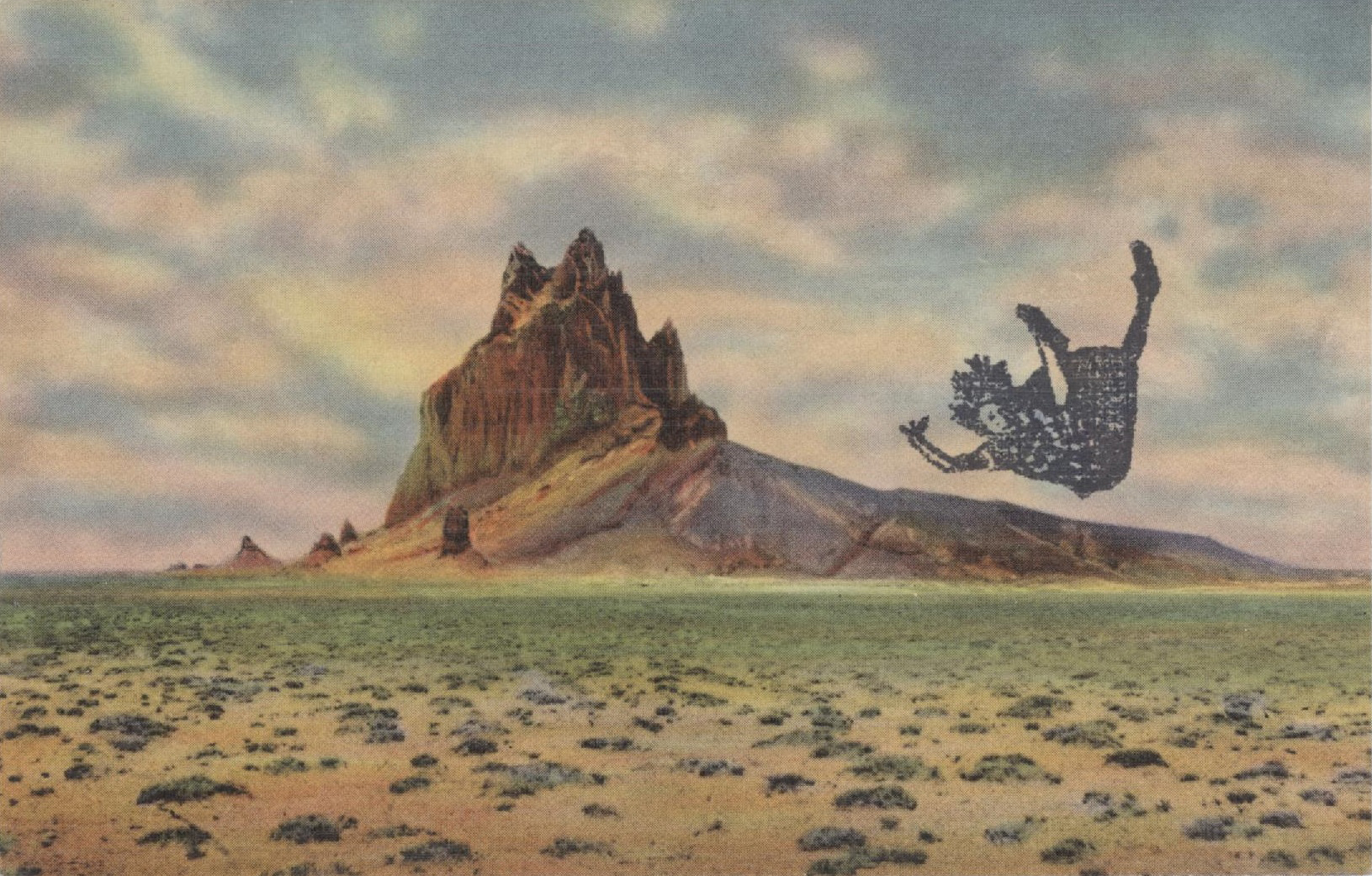
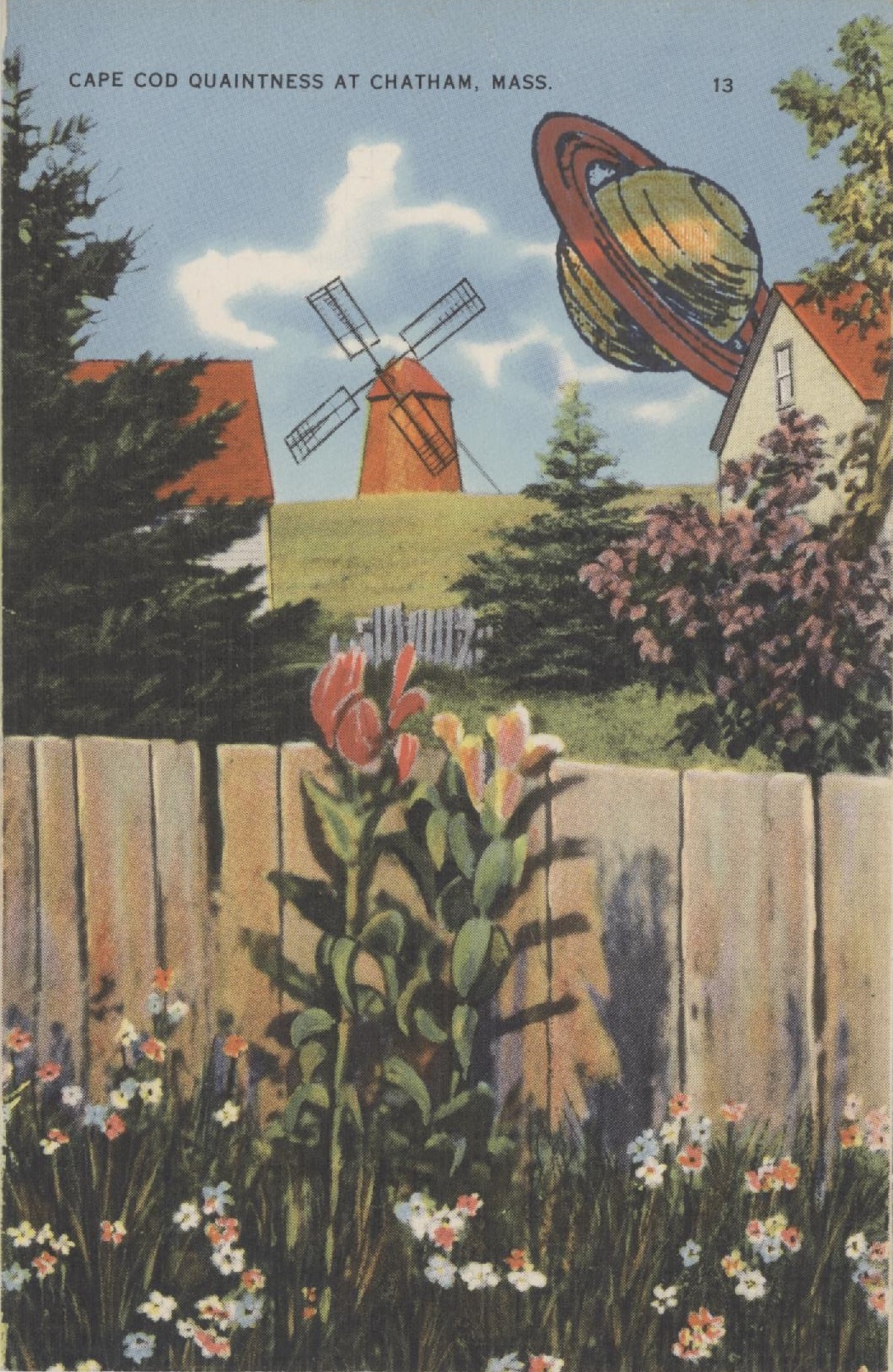
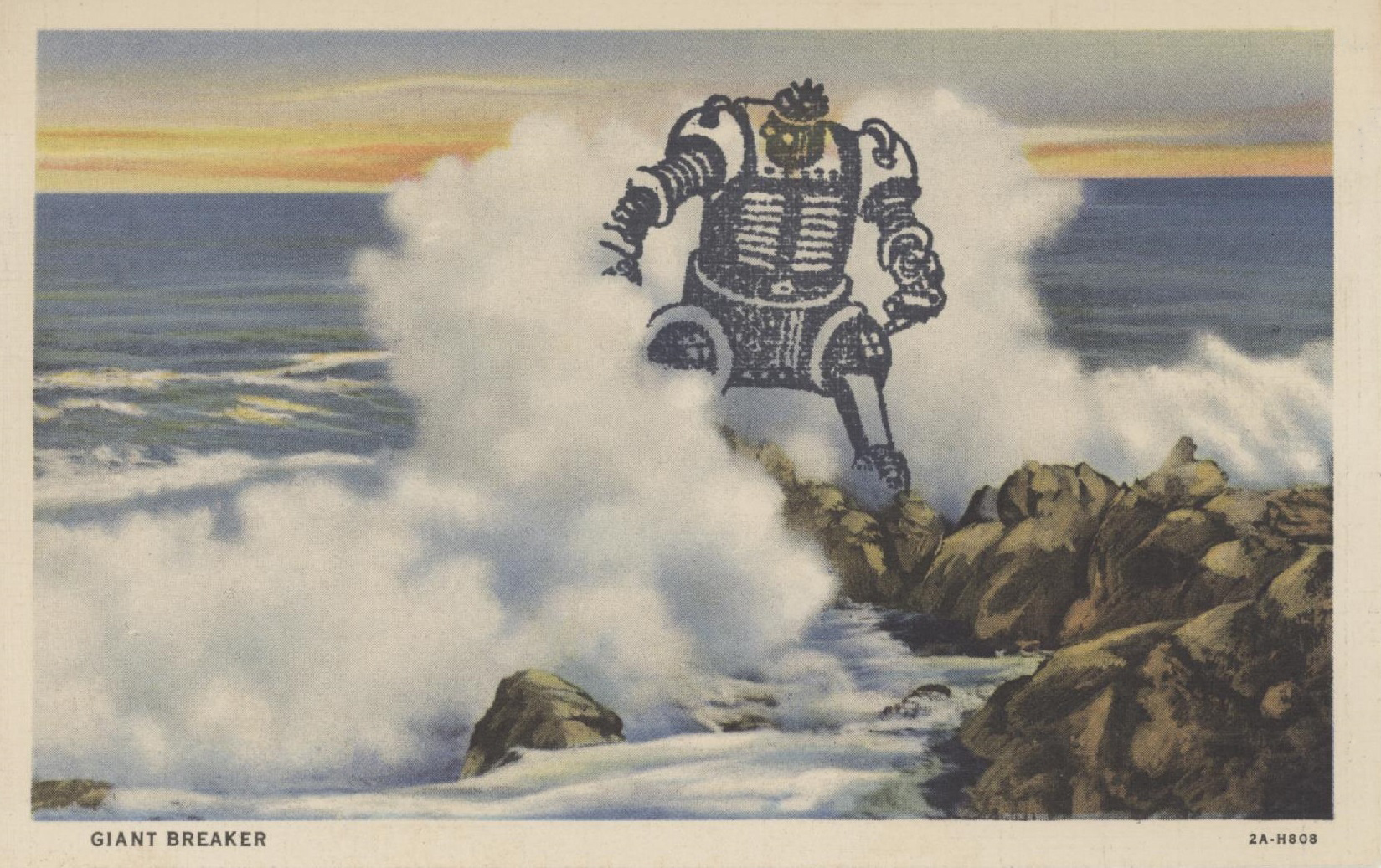
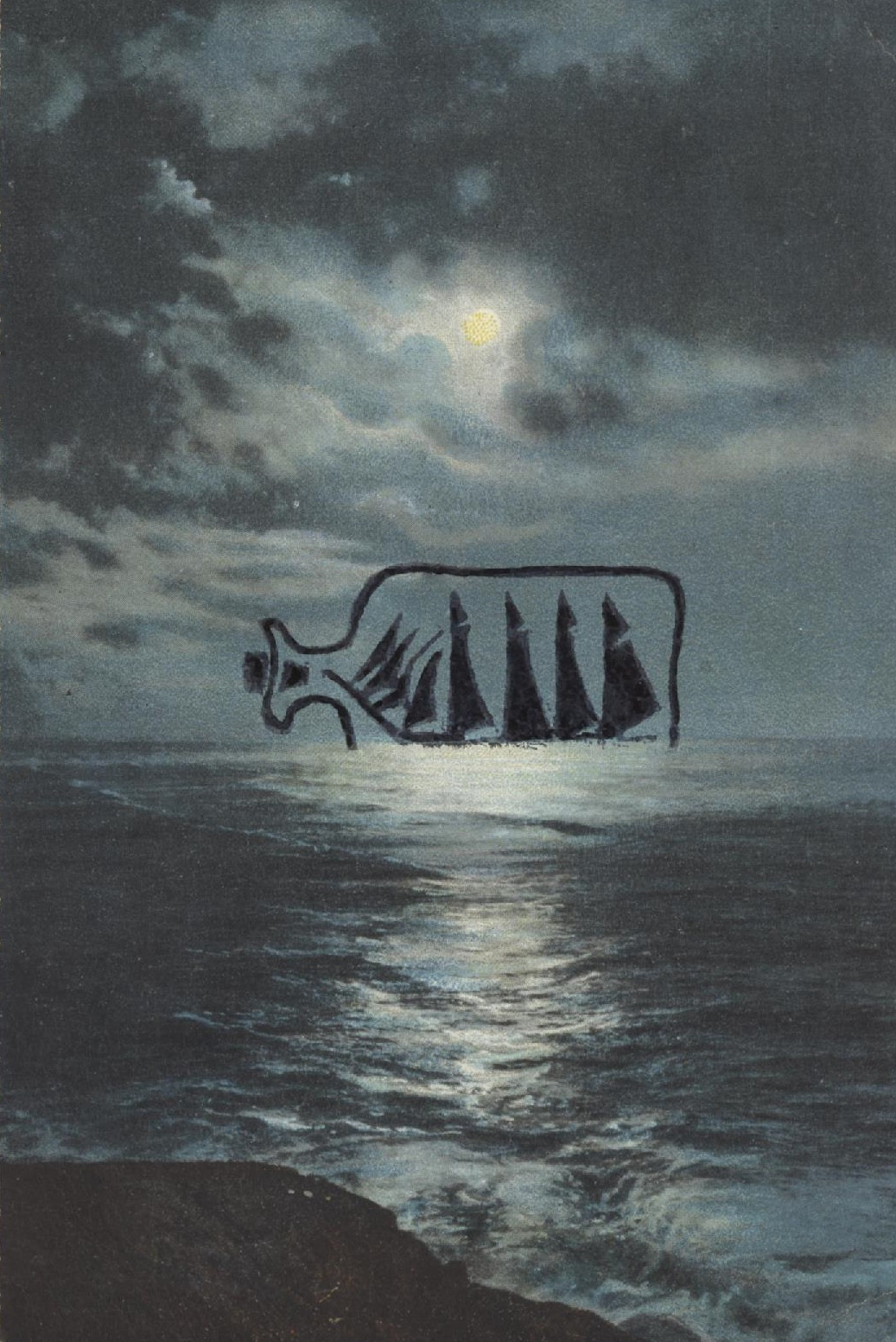
I admit that it’s Tuesday and not Monday. Why didn’t I post my next postcard yesterday? “I hate Mondays.”
This week I continue my seafaring theme with a very useful stamp produced in 1993 by A Stamp in the Hand Company. In the tradition of most rubber-stamp companies, they seem to have disappeared.
What makes this stamp useful is that it’s mostly an image of a glass bottle. If you stamp it over a postcard, the features behind it will show through…exactly as if you were looking through a real glass bottle. It looks real, or as real as a giant glass bottle on the horizon can look.
It also helps that the sails are black, as if seen in shadow.
This card is a black and white image that was hand-tinted in Germany before World War I.
Happy belated Monday, everyone. Stay safe out there.
Alice Mattison is the author of The Kite and the String: How to Write with Spontaneity and Control—and Live to Tell the Tale. I’ll bet her publisher saddled her with all the promise in that subtitle. But I can promise you that Mattison has some pertinent, honest, off-the-wall things to say.
About expectations:
A piece of writing may begin with what’s personal, but by the time we offer it for publication, we had better think of it as a work product….Your writing is not your child; it’s work, but unfortunately a kind of work that is often unpaid, badly paid, or weirdly paid: writers who make lots of money are often as baffled as the rest of us….The money, though there may be some, will never make sense.
About revision:
To read your work objectively, it’s helpful to surprise your piece of writing into thinking you’re someone else. To do that, put it aside for anywhere from a day to three years, the longer the better (up to a point). Then take it to a part of your house where you never write, or go elsewhere, and wear something unusual so it won’t recognize you—a cap, perhaps, or a jaunty scarf, especially if you are not jaunty.
About persistence:
Someone who has been unable to publish three or four novels and is on the third draft of her current novel may still have to start over, and even that doesn’t mean she’s hopeless or the book is hopeless. On the contrary, she may finally be on the verge of learning to write a novel—yet that often seems to be the moment when she decides to give up.
Mattison also gives us her eight disadvantages of being a writer:
No money
No respect
No response for a long time to what you’ve written
No structure helping you to get started
No structure warding off interruptions (no guardian to say, “She’s in a meeting”)
No guarantee that you’ll ever write anything that does anyone any good
No guarantee that, even if you do, the particular piece you’re writing right now is worth your time
No colleagues
And the one advantage, which outweighs the Evil 8: “The pleasure of it, the pleasure of words, the pleasure of telling a story.”
I admit I didn’t finish The Kite and the String; I tend to skim writing books looking for what speaks to me. Mattison is a teacher of literature as well as writing, and much of her book reads like a tour through English lit. She can be an amusing tour guide. She sums up the plot of Moby-Dick as one question: Where is that whale? The chapters everyone skips, which are about fish, she compares to an Amazon driver having to divert down several cul-de-sacs before it can get back on the highway.
“Being a writer is a profession, not the last scene of a romantic comedy,” Mattison writes, as she tackles the wide world of misconceptions. As one of my coaches used to say, though usually not to me, “Boy you got that right.”
This book is fun for veteran scribes, particularly the chapter “Rethinking Our Thought Bubbles,” and informative for rookies. Four paws up.
Jeff Goins wrote Real Artists Don’t Starve. I’m not recommending this book. But Goins does emphasize that you should never create for free. I haven’t always kept to that plan–there was one story I desperately wanted to publish, and no paying market would touch it–but I’ve tried.
Goins relates an interesting statistic. The majority of people who take unpaid internships never get offered a full-time job. The majority of people who take PAID internships do get offered a job. So when someone offers you exposure instead of cash, ask yourself how much coffee you can buy with exposure.
Goins, in describing artists we can all emulate, for instance Michelangelo, notes that they didn’t confine themselves to one art form. So every Monday for the rest of 2026 I’ll expand my portfolio by sharing my altered postcards.
I don’t know if I invented the art form of rubber-stamping on old postcards, but I may have been the first person to write about it (Rubberstampmadness, 1993). Today’s card was published in the 1920s. I used extra thin paper to mask the ship’s hull. I only wanted the sails and rigging. Any resemblance between this image and my government’s economic policy is coincidental.
In the United States, we are living through the most sustained stretch of violence since 1968, when the North Vietnamese launched the Tet Offensive and blacks rioted in American cities because they wanted their fair share of the American Dream. I was young and I didn’t understand. Stop, children, what’s that sound? Everybody look what’s going down. Now I’m older and I still don’t understand. Why is my country at war with my country? How long will it take to repair all this damage, from Minneapolis to the rest of the world? Longer than my lifetime, and just to warn you, everyone in my family lives to a hundred.
Life is certainly upsetting, and as a small example of my mindset these days, I offer my recent trip to the emergency room. I drove myself, but before jumping in the car I pulled Dark Side of the Moon off the shelf, popped it into the CD slot, and as I backed out of the garage I turned the volume to 11. If I was going to die, I wanted to make sure that Floyd would be the last thing I heard.
(Spoiler alert: I’m fine.)
As Donald Trump continues to transform the United States into a garbage pail (lyrics courtesy of Beck), here in my little corner I find it difficult to write a blog about writing. Who cares what I think? But I keep reminding myself that even in Wold War II, the greatest catastrophe to hit humanity, people wrote books. They sang songs, they recorded music, they acted in plays, they directed movies. They bought tickets to baseball games. There were chess tournaments in Germany and Russia despite the ongoing slaughter of millions by air, land, and sea. I’m still writing. I hope you are, too.
It’s a challenge to end on a positive note. The true positive note will come when we rid ourselves of this soul-suckin’ jerk (again, Beck). But I’ll try.
In December, while waiting for the first draft of my novel to cool on the windowsill so I could carve it up for the second draft, I launched my Word Purge. As I examined all the flotsam and jetsam I had created and abandoned, I found a 900-word fragment about a retired baseball player and his dead mother, wife, and dog. As I read, I realized that this man was recording a podcast and that his house was full of history but not life and the story took off. I found his father. I found his agent. I found his post-baseball career. I found his quest. I now have 7,500 words and a glimmer of where it’s all going.
Where the United States is going is another question. When I listen to Beck, sometimes I think he’s a god and sometimes I think he’s a goober, and sometimes I think both in the same song. His album Mellow Gold captures the times we’re coping with today. Not bad for a record he waxed 30 years ago, when the only music formats were vinyl, cassettes, and CDs, when we didn’t have mobile phones, and when Republicans thought Bill Clinton was a threat to democracy because he cheated on his wife just like they did.
Alex Pretti, murdered by agents of the U.S. Border Patrol, Minneapolis, 24 January 2026. Rest in power.
Hello to all my readers. I know you are rockin’ all over the world. Shout-outs to members of the Greenland Defense Force. (Bundle up!) Also to the kind Royal Canadian Navy sailors who showed me around their frigate when they visited Portland, Oregon, for Fleet Week. (When I asked how fast this thing could go, one of them said, “We can get a real rooster tail going!”) And I can’t forget the soldiers, sailors, and airmen of NATO, since I will soon be at war with them. Watch out, NATO, I have most of my hair and I can do as many as one (1) chin-ups.
Here in the United States we are celebrating Martin Luther King, Jr., Day. There is no mail service. The banks are closed. And our homeland has been invaded by our own Homeland Security.
Donald Trump’s attempt to refight the American Civil War doesn’t seem like a good time for the trivia I deal out in this blog: Observations on writing, reports on birthday parties and New Year’s Eve outings, and photos of my corgis, one of whom is relaxed and asleep under my desk. I know this because a few minutes ago, Lucky reached his relaxation release point. Like the Greenland Defense Force, I am ready for noxious odors from bad actors. I lit my emergency three-wick candle. Flame on!
I can only hope that what I write in here gives you a break from what is going on out there.
On Sunday I will present the 8 Disadvantages About Writing and the 1 Reason You Should Ignore Them, as enumerated in Alice Mattison’s The Kite and the String. I’ll also bring you up to date on my book and my Word Purge.
On Monday I’ll introduce a new art feature, because I spent 45 minutes today with Jeff Goins’ Real Artists Don’t Starve and he says I should expand my portfolio. His examples include Michaelangelo, Dr. Dre, and John Lasseter, the director of Toy Story. (Right. I am just like them!) Then I’ll stick to that Sunday and Monday schedule.
Stay safe, everyone. Pray for peace. Donald Trump: Don’t disturb NATO. As your eloquent SecDef phrased it, fuck around and find out.
You have to write around life. Sometimes someone is sick. Sometimes your government is sick. You can still find 15 minutes every day to do the work you love. What you can’t do is to retreat into silence. I don’t know who wins if you do that, but it certainly isn’t you.
I’ve tried to comfort myself lately with the thought that, given the immense sweep of geological time, humanity is barely a finger snap and all human misery will soon be forgotten, but somehow that hasn’t helped.
So today I’ll tell you what I’ve been doing on my summer vacation, by which I mean since I finished the first draft of my novel in October.
I knew I had to forget the book I’ve been living with since time began so I could someday return to it fresh. I turned instead to the numerous scraps, starts, and dead ends I’ve accumulated in my files. Honoré de Balzac would call these scraps & etc. evidence of my “itch to scribble.” I call what I’m doing now my Word Purge.
The first thing I did was to consolidate all the fragments in one file where I could keep an eye on them, even if it was just a teensy idea (John Muir’s “An Adventure with a Dog” set in space) or a reminder about a mental-health professional I met with twice and fired (Sandy the Self-Absorbed Psychotherapist).
The second thing was to examine the longer pieces in their individual files and see if any of them sparked anything or should I give up and shut them down. One of them must’ve been channeling Cthulhu because it immediately called me. It was 909 words long and I had abandoned it in 2022. I took it up again in December and I am surprised to say that I now have 4,200 words. Will this be my second novel? Will it be about a dog in space or a tough-love look at a man in the wrong profession? William Zinnser said it best: “Don’t worry about labels. We’ll figure out what it is after you’ve written it.”
I’ll return to my first novel on Feb. 1. And I’ll keep scribbling, no matter what happens in the world.
I had a wardrobe malfunction on New Year’s Eve. I was struggling to get into my tuxedo when a button that helps hold my suspenders to my pants decided to go somewhere on its own. This is what happens when you’re working with 1960s technology. I was wearing more moving parts than anything my wife ever wears. Deborah once again saved the day, this time with a safety pin she found in the junk drawer, and I was soon cleared for action.
When I was writing a music blog I sometimes wrote about our adventures on New Year’s Eve. I will only briefly do that here, as this is not a music blog, this is a serious blog about a serious subject, writing. Which is why I’ll start with meatballs in BBQ sauce.
The local American Legion post hosting the dance we attended went all out with the steam tables, including the meatballs. I may have eaten more than my share. Like maybe 19 of them. I worked up an appetite dancing inside a tux! Deborah responsibly enjoyed dinner and the liquid refreshments. When I returned from the bar with her first glass of wine, which was full almost to the brim, we had this exchange:
DEBORAH: That is a generous pour. ME: It should be. I paid $5 for this.
The Motown Cruisers started early, played like they meant it, and displayed a superior sense of what makes a song danceable and how to perform it. And they weren’t afraid to leave the bandstand and perform from the dance floor. This is always a gutsy move. You never know how much your customers have had to drink and how they’ll react. I’ve sometimes seen singers and guitarists enter a crowd, but this was only the second time I saw a saxophonist try it. You can’t defend yourself while you’re blowing into a sax.
The first time, the sax man was built like Usain Bolt and he also walked the bar (he had a spotter). This time, it was a middle-aged woman named Susan in a black dress. We were a good-natured crowd (they picked me out to sing the nah, nah nah nah, nah nah nah nah part of “Land of a Thousand Dances” because of how I was dressed, and everyone applauded), but still, this was beyond brave.
So here are my lessons for this new year of 2026:
If you only wear an outfit annually, remove it from the closet ahead of time and let it enjoy some fresh air. Also, practice putting it on.
Never eat meatballs in BBQ sauce again. Or if you do, practice first.
There’s a scene early in the film Gallipoli when two young Australians learn that the British empire has gone to war with the German empire. They are loyal British subjects who, like too many young men, hunt for glory. They make up their minds to join the army and join the fight. They confide their decision to a man who’s been mining in the Outback for so many years, he barely knows that the outside world exists. The miner can’t comprehend what they’re talking about. He finally says, “I knew a German once. Seemed like a nice bloke.”
I don’t lament the way the news ricochets around the world and knits us together. I lament the way hate leaps the oceans and breaks us apart.
After the shooting at Bondi Beach in Australia, after the people trying to celebrate the first night of Hanukkah were murdered, what could we do in our little corner of the world except light our own candles. But first we went to a public menorah lighting at the mall, sponsored by our local chapter of Chabad. It was odd to hear the ancient Hebrew blessings sung between the food court and the bottles of supplements in the window of the GNC.
But it was good to be part of a crowd. The rabbi reminded us that we light candles in the darkest days of the year not just to commemorate a victory from deep in the past but also for the simplest of reasons: To dispel the darkness. Traffic at the mall can’t stop us. The weather can’t stop us. Misguided men with guns can’t stop us.
When I launched this writing blog, I intended to keep world events out of it, but events happen and then the world demands our attention.
Blessing the Hanukkah dogs. We haven’t had a dog yet who didn’t know to report to the menorah as soon as it was fired up to receive my blessing and an Alpo Snap.
I’ve been reading Honoré de Balzac. What that man couldn’t do with the character of the miser! Also the suffering, self-sacrificing mother; the young man scheming to catch the attention of a rich married woman; the rich married women who can juggle a husband and a string of lovers while dancing with the king and wearing 10 layers of clothing; the hopeless pensioners and small-time grifters; and, amid all this 19th-century claptrap, the most cynical character I’ve ever met in literature. What a feast.
Balzac (he added the “de” because it was awesome) was probably the first writer to write about life as it was actually lived, which explains his knowledge of and fascination with money: francs, sous, livres, and gold gold gold. Balzac died in 1850, but whatever year he was writing in, in his head it was 1825. This makes him a tough sell for modern readers, given our lack of knowledge of post-Bonaparte France and our low tolerance for an author who loved to intrude with his thoughts on life, love, and morality. When I read his books I want to yell, “Good God, man, get on with your story,” but when I read them they own me.
Lately I’ve been wondering how I could replicate Balzac’s success. The obvious answer is “talent.” Other answers are discipline (Balzac wrote from 1am to 8am) and nutrition (he supposedly drank 50 cups of coffee a day). Zut alors, am I stuck? Like the typical Balzac hero, could I succeed instead by inheriting or marrying wealth?
A quick check with my wife gave me the answer to that question (no), along with the request that I do something about the bathroom fan. But, in my own way, I have been pursuing a shortcut to success. Over the years, I’ve applied for grants (“Here are your gold francs, Monsieur Bieler”), fellowships (you get the gold francs, but you also get an assignment, for example, throwing a ring into a volcano), and residencies.
The closest I’ve come to winning was the year that a judge wrote to me to say how much he enjoyed my writing. His voice was the minority voice on the panel. Also, a grant I missed went instead to a young Sherman Alexie, so I can’t get too upset about that one. I was recently informed that a writing residency I had applied for—and they really regret this, seeing as how I’m such a nice guy—was going instead to someone a little bit nicer. They hope I will think of them next year.
At that point I put down my 42nd cup of coffee and thought, What am I doing? These arts organizations and their donors are generous people. They genuinely want to do the most they can for the most deserving artists they can find.
Why would they want to help someone as old as me?
Balzac would see this clearly. (He would also, of course, burst into the narrative to deliver a lecture on the passage of time and the depths of denial as well as my endless self-regard.) If you had cash to dole out or a room you’re funding at a beach house or a ranch house or a townhouse, whom would you rather help? A writer who could have a 20- or 30-year career if she just caught a break, or an aging white male who has escaped into a comfortable retirement complete with a wife, two dogs, most of his hair, and a bathroom fan that makes too much noise?