What I did with my New Year’s resolutions

To start the new year, I always make one or two resolutions. This is because I once interviewed a psychologist who told me that if you make more than two, you’ll make yourself sick. And to put an extra string on my bow, I try to start a few weeks early.

In 2024, after I had recovered from everything I ate at Thanksgiving, I resolved that in 2025 I would finish writing the first draft of my novel. I estimated I was writing a 65,000 word book, which is on the slim side for a novel, and I further resolved that I would finish it yesterday–the day of my birthday party. I usually make an absurd speech at my birthday party, and brandishing a first draft in one hand and a bottle of champagne in the other seemed like it would impress everybody, even people who know me.

In May, I realized I was writing a much longer book. There was no way I could make my deadline, and, in fact, I didn’t. But the day before the party, while I was writing, I arrived at a gap in the narrative, or in my brain. I turned to the skies and waited for an inspiration. There was no inspiration. But when I again looked at my screen, I glanced at the word count and the number I saw was something I should play in the lottery or something I should announce to a sunny backyard full of friends who were eagerly awaiting their crack at the frosted cupcakes.

I chose the announcement. Here’s the number: 59,590.

The psychologist I interviewed said that it’s OK if, by the end of January or the end of June, you haven’t achieved your goals. So long as you’re still trying, you’ll be far happier than everyone who gave up or forget most of their resolutions in the first month. I’m happy. And not just because I love cupcakes.

I miss rejections!

I don’t miss the act of an editor saying “No.” What I miss is the hope. For example, starting the new year by submitting five stories to 25 magazines. Off they go, and I wait patiently to see which one will change my life.

Will a “Yes” change my life? I can think of two that did. The first time I sold a story, I decided to keep going. And years later, when I won my only contest, I decided to keep going. If I’m submitting stories, I’m part of a literary conversation, even if I’m the only one who knows it’s a conversation. It gives me hope. As Mr. Micawber said in David Copperfield, “Something will turn up.”

When I got serious about finishing the first draft of my novel, I decided to eschew distractions. I couldn’t eschew my wife and our dogs, but I stopped hunting down magazines and editors and submitting stories. In fact, I stopped writing stories. Been there, done that, went somewhere else.

And then I hit that point in the novel-writing game where you ask yourself, “What am I writing here?” And “What happens next?” And “What the fuck…” I didn’t panic. I knew I’d find my way. But I decided to fall back on something familiar.

I have two stories that have been sitting in limbo since the day I finished them. It could be that I never sold them because I think they’re finished but they really aren’t. I don’t know. But I’m giving them one last chance.

For story #1, I hired a service that reads the story, considers what I want (money and social media activity, primarily), and then recommends 10 places to send it. I attended a webinar run by the two editors running this thing and they impressed me. The 10 zines they chose surprised me. They were all lively, interesting, and appeared to be part of a larger conversation. This service cost me $50.

For story #2, I followed my usual strategy of choosing 10 places based on what they pay.

The way literary magazines work, some will be open for submissions when you visit their site and some won’t open until September. Some editors will respond to you within a week and some within a year. Most will say “No.” Stephen Marche, in a depressing book with the uplifting title of On Writing and Failure, wrote that “rejection is the river in which we swim.” He’s right; the majority of us will receive far more rejections than acceptances. Everyone else says to grow calluses; Marche says we should “relish the rejection.” Don’t go down that road. Note the rejection in your log or diary or scratch it into the wall and submit the next thing. Get back to work.

The lesson I learned from this exercise (this vacation from my book) is that I don’t want to submit stories anymore. It takes too long, even though they don’t call them short stories for no reason. They’re only a few thousand words each. A novel, a single work, suddenly seems simpler.

Well, I’ll let you know if I get any takers. Meanwhile, my break is over, and I am again forging–slowly–ahead. I just reached 56,004 words.

Scoreboard update

As I write this, I have published four stories in four years. How have I maintained this blistering pace? When the railroad was invented in the 1830s, scientists were concerned that women were too delicate to travel so quickly. A forward velocity of 20 miles per hour would surely make a woman’s head explode, whereas we now know their heads explode because of Donald Trump.

I was paid well by today’s standards for all four stories. That’s a miracle here in the 21st century, when writers are so often compensated with likes, hearts, clicks, and “exposure” (that thing you die from). I remember Harlan Ellison hollering “Pay the writer!” in a documentary about his life. “Are you paying your printer? Your webmaster? Your artist? Pay the writer!”

Two of my stories featured women and three featured people in middle age (another miracle, given that most editors graduated from college about a week ago). Two are behind a paywall. My topics included chess, trains, sex, family, marriage, and baseball. All the major food groups. They were all fun to write, though the one I wrote based on my parents came close to killing me.

I find it interesting—to me, anyway—that I’m finding homes for these stories after I decided not to write more short stories. I swore an oath to the head of my order to write novels from now on.

That brings me to my first novel and my first draft, which today hit 52,300 words. I ended last week with 51,920 words. 380 words in one week? That’s barely more than 50 words per day. That’s how things go in the first draft, I suppose. Sometimes the words flow and sometimes I have a lot to think about. Anyone watching me would commit suicide to escape the boredom.

I’d like to finish my first draft by the end of June. How long will my draft be? My guess is 65,000 words. That means I have 12,700 words to write, or 2,546 words per week, or 363 words per day. That’s just a long email…if you know where you’re going.

I’ve been writing 10,000 words per month since December, so I’m confident I can do this. 10,000 words per month, or 120,000 words per year, isn’t much. Barry Malzberg, at the height of his career, claimed to be writing a million words per year. I imagine that Ray Bradbury, Norah Roberts, Danielle Steele, Stephen King, Dean R. Koontz, Robert Silverberg, and several others, in their prime, hit one million per year. They are out of my league. My current pace will get me where I want to go, and without my head exploding.

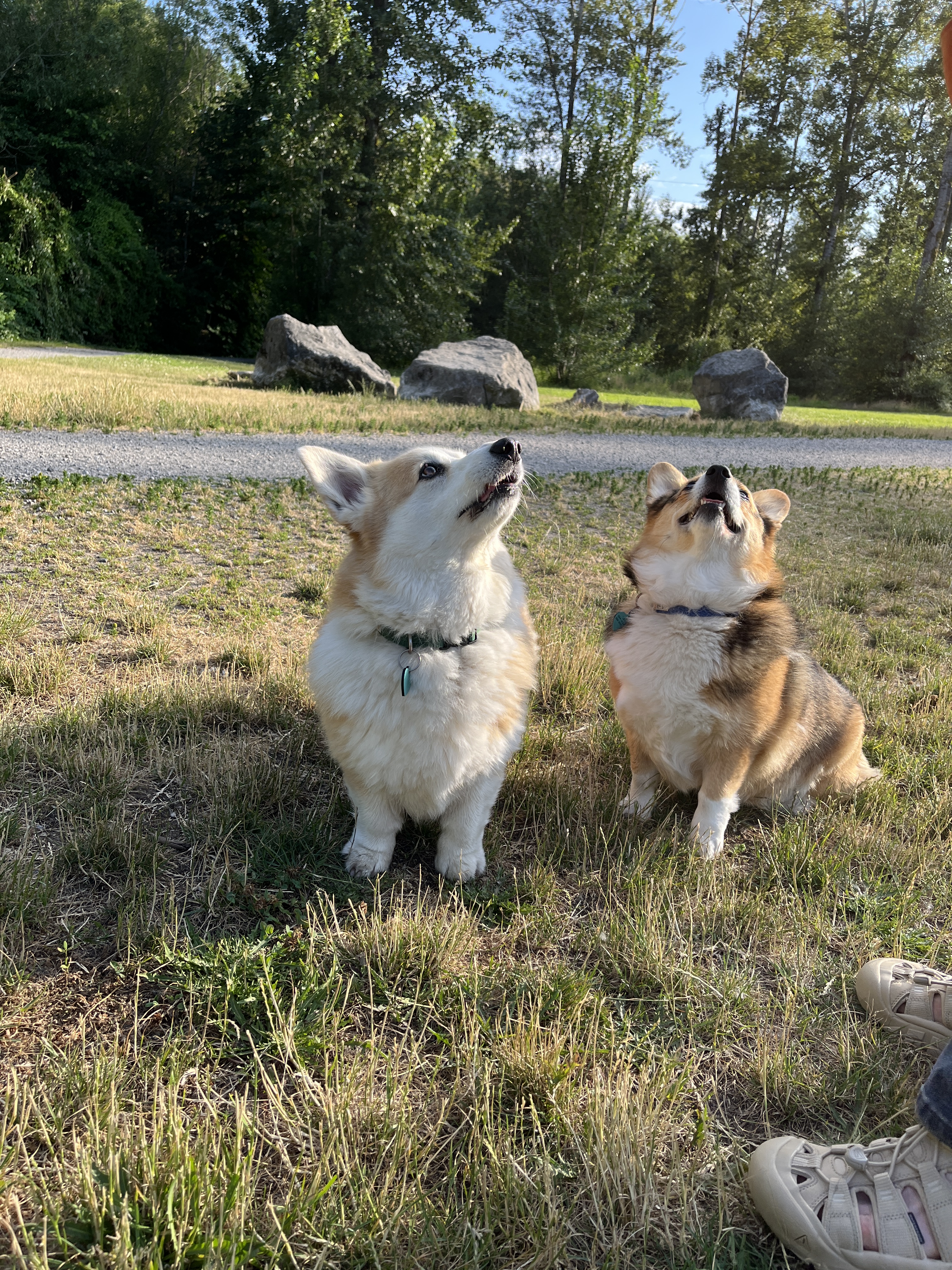
Lucky and Tango rest after a some major deconstruction in my archives.

My biggest victory as a writer

Have you ever won a contest? I haven’t. Not the contests I entered as a kid to win a pocketknife with 100 blades or a BB gun to blast Nazis. Not the contests I’ve entered as an adult, like The New Yorker cartoon caption contest, or the time I was trying to win Arcade Fire tickets but ended up with Lady Gaga.

I’ve won a few chess tournaments. That’s not the same. It was hard work. I want something for nothing.

The contests I’ve entered as an adult have mostly been writing contests. As I am white and male, I have sufficient wealth to pay the entry fees without having to skip meals or sell one of my dogs. But the fees add up, even in my privileged life. At the start of 2022, I said enough is enough. But in June of that year, while reading The Practicing Writer newsletter, I learned about the 2022 Moment Magazine-Karma Foundation Short Fiction Contest.

Moment is a Jewish magazine. I’m Jewish, my parents had recently died, I wanted to write about them, and I had eight weeks. OK, I thought, I’ll try. One last time! I wrote the story. I wrote most of it while sitting under a tree at a coffee shop. I wrote it even though I stopped writing for two weeks while I thought about it. I called the story “Arguing with Reinfeld.” I sent it to Moment on the day before the deadline.

The months passed. I forgot the story. Then in May of 2023, Moment contacted me. I had won the 2022 contest.

What?

I fucking won?!

They interviewed me. They posted my story. They illustrated my story. They recorded me reading the story. They printed the story in their Fall issue. And it’s all because a) I never give up, b) I never surrender, and c) I am too much of a nitwit to do anything else.

(Editor’s note: Mr. Bieler was very close to giving up until he won this thing. But he’s still a nitwit.)

The second- and third-place finishers are half my age. That means I’m still relevant.

If you’re wondering how my life has changed since my victory, it’s too soon to tell. I appear to be married to the same person. I am no taller or shorter. I haven’t been a guest or a guest host on a late-night talk show. And I have, despite this victory, broken my record for most rejections in a year.

I will continue to write, but I’ll probably not go on writing short stories. I just won a short story contest sponsored by a magazine that was founded by Elie Wiesel. They paid me a lot of money. I’m done. When the Red Sox won the 2004 World Series, ending their run of 86 years of not winning the World Series and lifting the curse from my New England childhood, I felt released. I never had to watch another baseball game again. Baseball ceased to exist in the wake of the ground ball that ended game four.

From now on, I’m only writing novels, which I will report on here.

And no more contests.

Because I won!

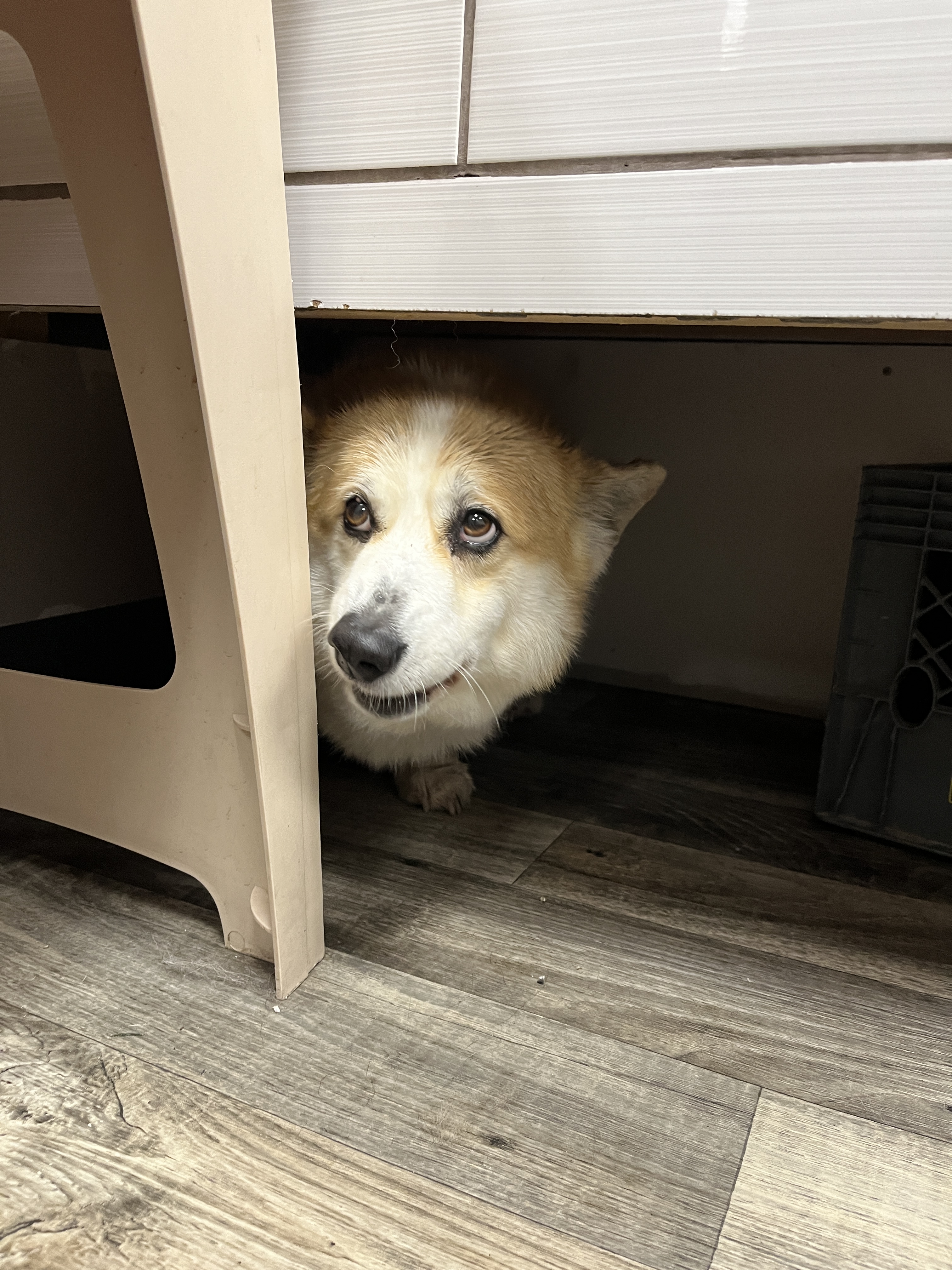
Let’s celebrate with some strategies for defending yourself against a corgi.